CRM

State of the art Deep Learning Model for Question Answering

We introduce the Dynamic Coattention Network, a state of the art neural network designed to automatically answer questions about documents. Instead of producing a single, static representation of the document without context, our system is able to interpret the document differently depending on the question. That is, given the same document, the system constructs a […]

State of the art Deep Learning Model for Question Answering Read More »
Multiple Different Natural Language Processing Tasks in a Single Deep Model

Humans learn natural languages, such as English, starting from basic grammar to complex semantics in a single brain. How do we build such a single model to handle a variety of natural language processing (NLP) tasks in computers? As a first step towards this goal, we have developed a single deep neural network model which

Multiple Different Natural Language Processing Tasks in a Single Deep Model Read More »

A way out of the Odyssey: Analyzing and Combining Recent Insights for LSTMs

LSTMs have become a basic building block for many deep NLP models. In recent years, many improvements and variations have been proposed for deep sequence models in general, and LSTMs in particular. We propose and analyze a series of augmentations and modifications to LSTM networks resulting in improved performance for text classification datasets. We observe

A way out of the Odyssey: Analyzing and Combining Recent Insights for LSTMs Read More »

Knowing When to Look: Adaptive Attention via a Visual Sentinel for Image Captioning

Automatically generating captions for images has emerged as a prominent interdisciplinary research problem in both academia and industry. It can aid visually impaired users, and make it easy for users to organize and navigate through large amounts of typically unstructured visual data. In order to generate high quality captions, the model needs to incorporate fine-grained

Knowing When to Look: Adaptive Attention via a Visual Sentinel for Image Captioning Read More »

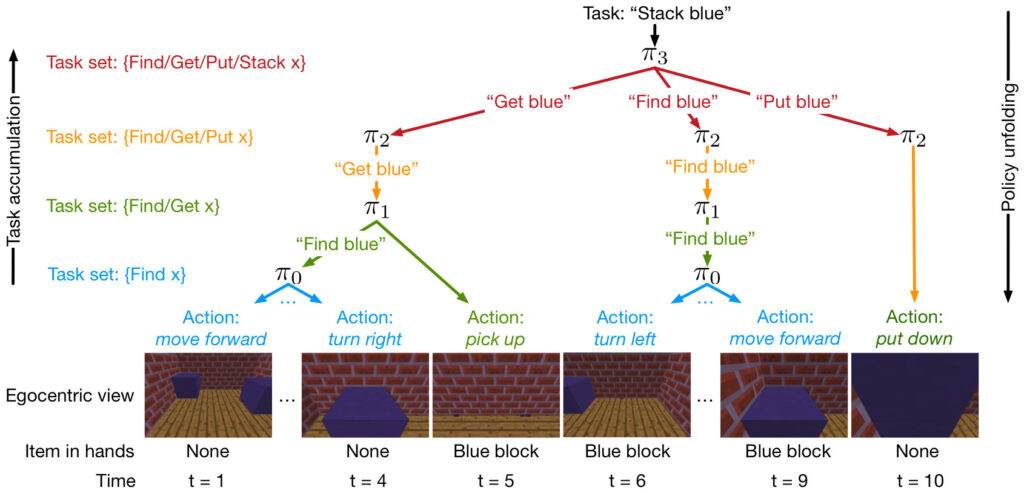
Thinking out Loud: Hierarchical and Interpretable Multi-task Reinforcement Learning

Deep reinforcement learning (deep RL) is a popular and successful family of methods for teaching computers tasks ranging from playing Go and Atari games to controlling industrial robots. But it is difficult to use a single neural network and conventional RL techniques to learn many different skills at once. Existing approaches usually treat the tasks

Thinking out Loud: Hierarchical and Interpretable Multi-task Reinforcement Learning Read More »

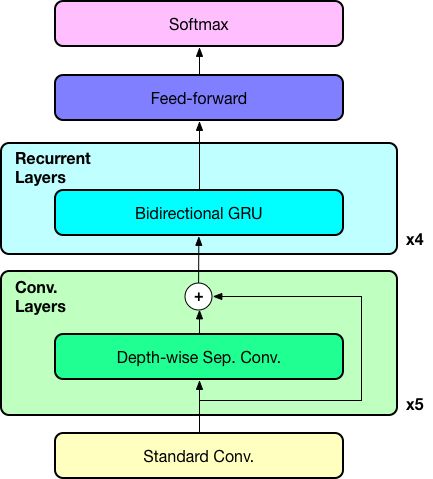
Improving end-to-end Speech Recognition Models

Speech recognition has been successfully depolyed on various smart devices, and is changing the way we interact with them. Traditional phonetic-based recognition approaches require training of separate components such as pronouciation, acoustic and language model. Since the models are all trained separately with different training objectives, improving one of the components does not necessarily lead

Improving end-to-end Speech Recognition Models Read More »

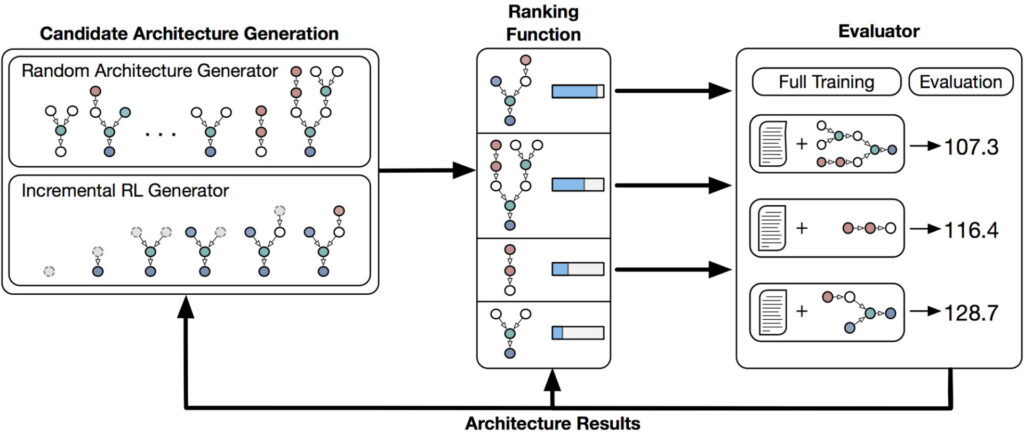
A Domain Specific Language for Automated RNN Architecture Search

When humans generate novel neural architectures, they go through a surprisingly large amount of trial and error. This holds true almost regardless of how much experience in deep learning that person might have! In an optimal world, the neural networks themselves would explore potential architectures and improve themselves over time. Without human intuition and insights

A Domain Specific Language for Automated RNN Architecture Search Read More »

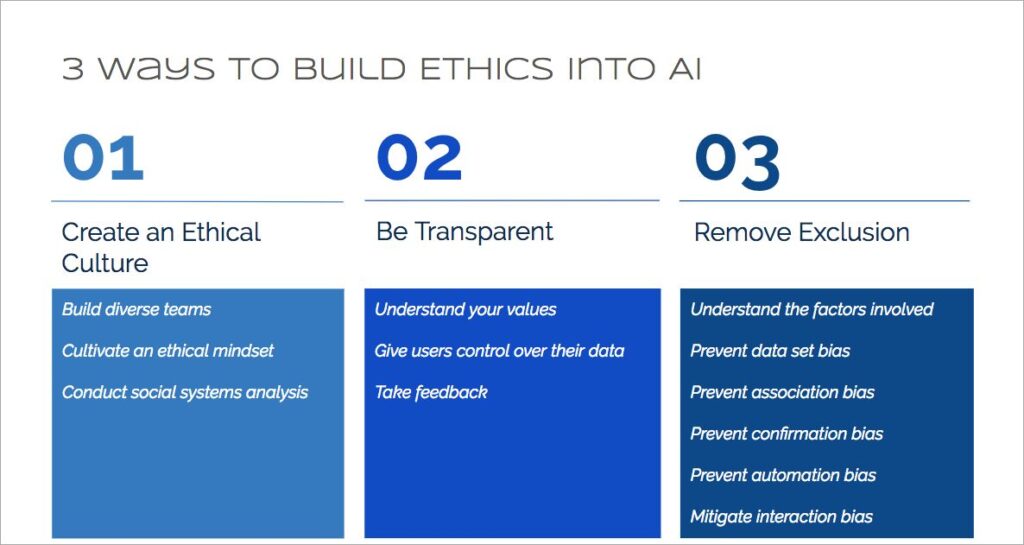
How to Build Ethics into AI - Part IIResearch-based recommendations to keep humanity in AI

Published: April 2, 2018 This is part two of a two-part series about how to build ethics into AI. Part I focused on cultivating an ethical culture in your company and team, as well as being transparent within your company and externally. In this article, I will focus on mechanisms for removing exclusion from your

How to Build Ethics into AI - Part IIResearch-based recommendations to keep humanity in AI Read More »

How to Build Ethics into AI - Part IResearch-based recommendations to keep humanity in AI

Published: March 27, 2018 This is part one of a two-part series about how to build ethics into AI. Part one focuses on cultivating an ethical culture in your company and team, as well as being transparent within your company and externally. Part two focuses on mechanisms for removing exclusion from your data and algorithms.

How to Build Ethics into AI - Part IResearch-based recommendations to keep humanity in AI Read More »