Search Engine Marketing

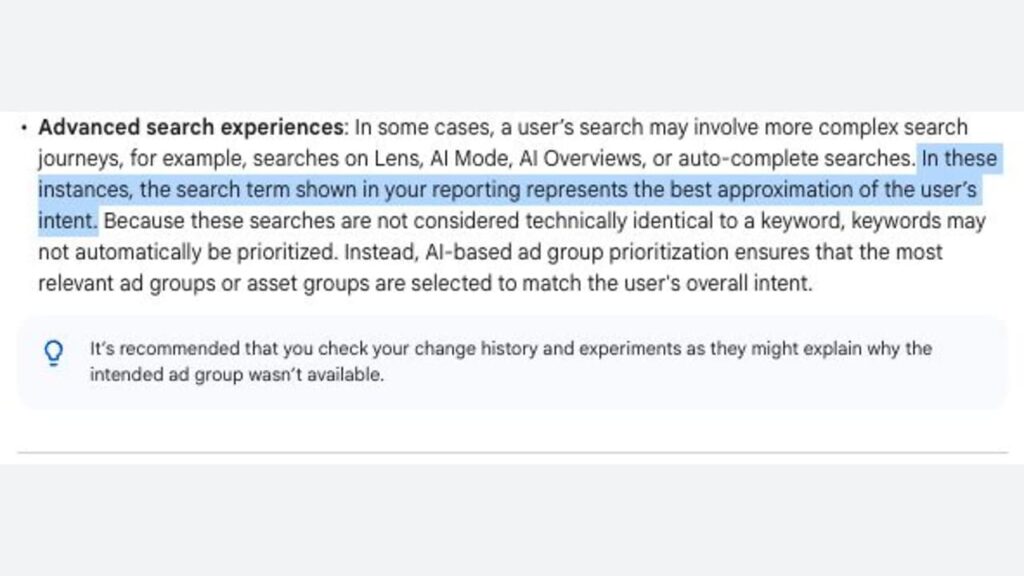
Google Quietly Changed How Search Terms Are Reported For Some AI Queries via @sejournal, @brookeosmundson

Google quietly updated Search Terms reporting for AI Mode, AI Overviews, Lens, and autocomplete. Here’s why advertisers may be concerned about interpreted queries. The post Google Quietly Changed How Search Terms Are Reported For Some AI Queries appeared first on Search Engine Journal.

Google Quietly Changed How Search Terms Are Reported For Some AI Queries via @sejournal, @brookeosmundson Read More »

Google says Search Query Reports may not show actual user searches

Google Search Query Reports are becoming less literal and more AI-interpreted, reflecting inferred intent rather than exact user searches. What’s happening. Google has clarified that the search terms shown in Search Query Reports may not exactly match what users typed. Instead, the platform may display the “closest approximation” of a query because of the complexity

Google says Search Query Reports may not show actual user searches Read More »

Condé Nast expects search to become a single-digit of its traffic

Condé Nast now plans its business “as if search is zero” after years of Google algorithm updates and AI Overviews reducing visits to publisher websites. That’s according to CEO Roger Lynch, who was interviewed on TBPN, the tech media network that bills itself as “technology’s daily show” and was acquired by OpenAI in April. What

Condé Nast expects search to become a single-digit of its traffic Read More »

Why TurboQuant could accelerate the shift to entity-driven SEO

The release of TurboQuant will completely change how we think about AI and SEO. This new algorithm from Google will greatly reduce computing power and energy by allowing for the massive compression of LLMs and vector search engines. Using six times less memory and running eight times faster, all without losing accuracy, the high cost

Why TurboQuant could accelerate the shift to entity-driven SEO Read More »

Why your brand isn’t making the AI recommendation set

We’ve been flooded with generative engine optimization (GEO) advice over the last couple of years – from checklists for AI citations to signal frameworks and technical guides explaining how to structure content for large language models. Most GEO advice converges around the same idea: If you want to be visible in AI-generated answers, you need to

Why your brand isn’t making the AI recommendation set Read More »

Why good content still loses in Google Search

Create helpful, high-quality content, and you’ll rank. That’s been the prevailing wisdom in search for over a decade. But “create great content” was always an incomplete recommendation. It treated one input in a multi-layer ranking system as the entire strategy.  Content can be well researched, technically accurate, and aligned with search intent, and still struggle

Why good content still loses in Google Search Read More »

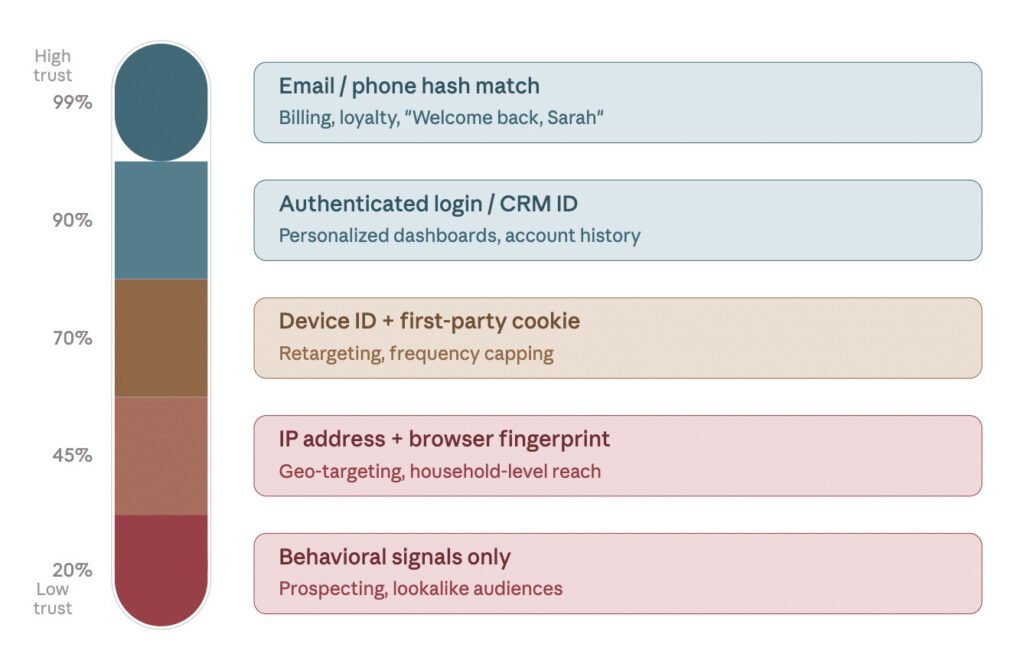
How to eliminate the skepticism tax in marketing data

Marketing teams often operate with a hidden skepticism tax. Because they don’t fully trust their data, they spend enormous amounts of time cleaning spreadsheets, reconciling conflicting reports, and second-guessing both attribution models and AI outputs. The result is slower execution, weaker alignment across teams, and decisions built on uncertain foundations. Take branded search. It often

How to eliminate the skepticism tax in marketing data Read More »