Key Takeaways
Launching an online store is just the beginning of your ecommerce journey. To turn a good idea into a thriving business, you need the right digital ecosystem. The days of simply selling products are over; today’s customers demand personalized experiences, seamless service, and lightning-fast fulfillment.
And so, we’ve compiled a list of the top ecommerce tools for growing businesses, startups, entrepreneurs, and business leaders looking to grow fast. These ecommerce platforms stack up against each other and we review the key capabilities, features, benefits, and costs — and you get to choose which one is right for you. Let’s find out.
Why ecommerce tools are key for small business growth
Small-to-midsize businesses (SMBs) are the lifeblood of the global economy, and their success is increasingly tied to digital proficiency. Modern SMBs need integrated digital tools like a customer relationship management (CRM) platform to compete with large retailers, manage growing complexity, and deliver personalized customer experiences that build lasting loyalty.
According to the Salesforce State of Commerce Report, ecommerce is on its way to delivering the majority of sales revenue across most industries. What’s more, 53% of customers prefer to engage digitally. This immense scale means every small business must adapt its digital strategy to capture its share of the market. Choosing the right software stack is no longer optional: it’s the primary driver of digital transformation.
This list breaks down the top ecommerce tools for small business, categorized by their core function, to help you build a strong, scalable online operation.
Top 5 ecommerce tools for small business
These platforms offer capabilities ranging from secure payment processing to advanced workflow automation. Here’s the list:
Sell More With Salesforce For Small Business
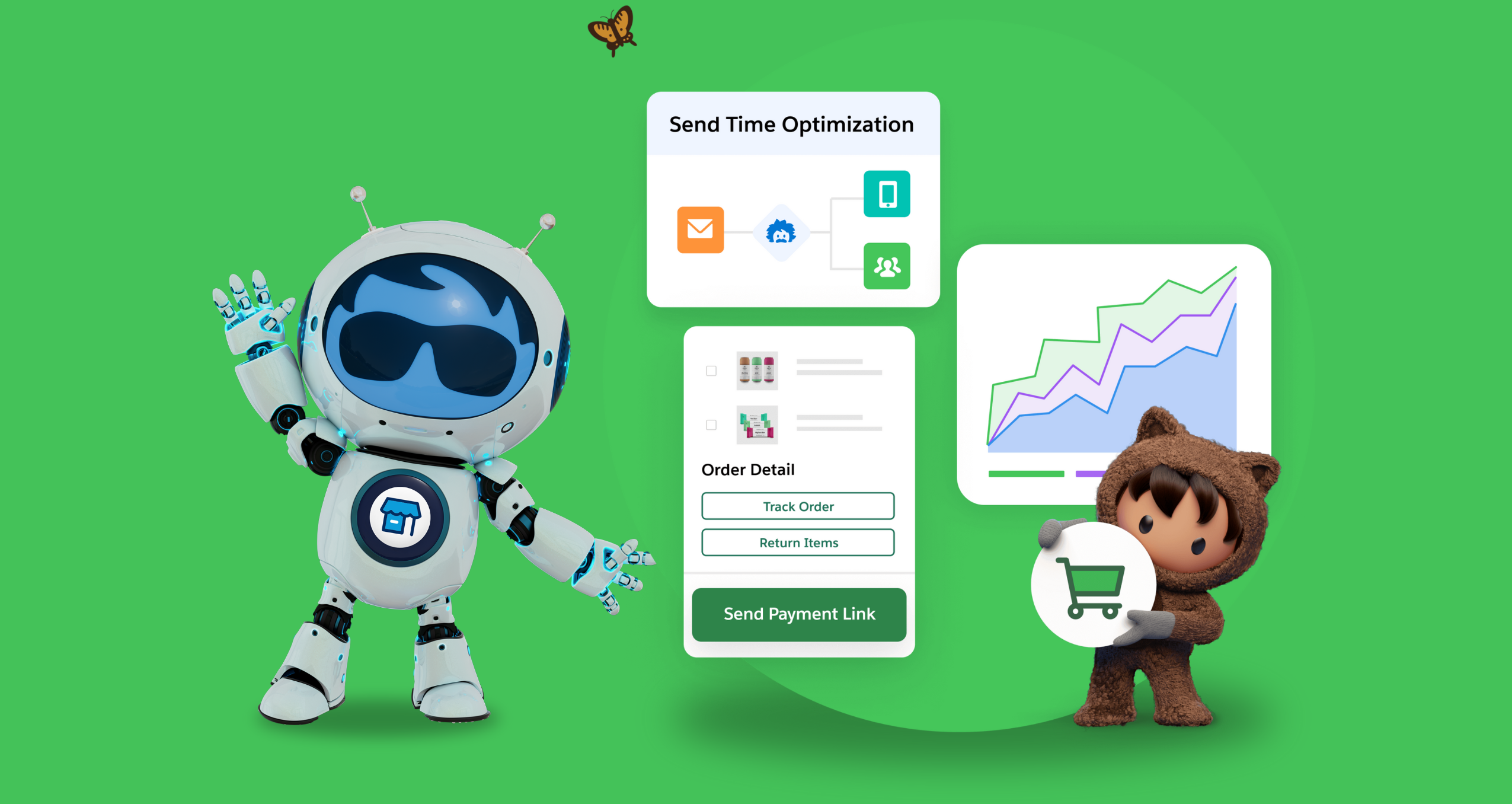


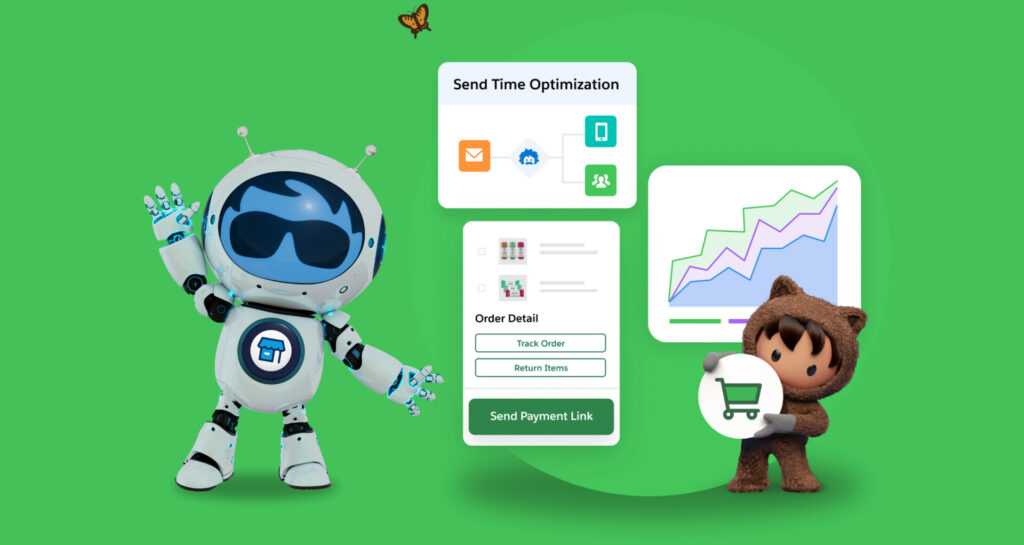
1. Salesforce Suites: Starter and Pro
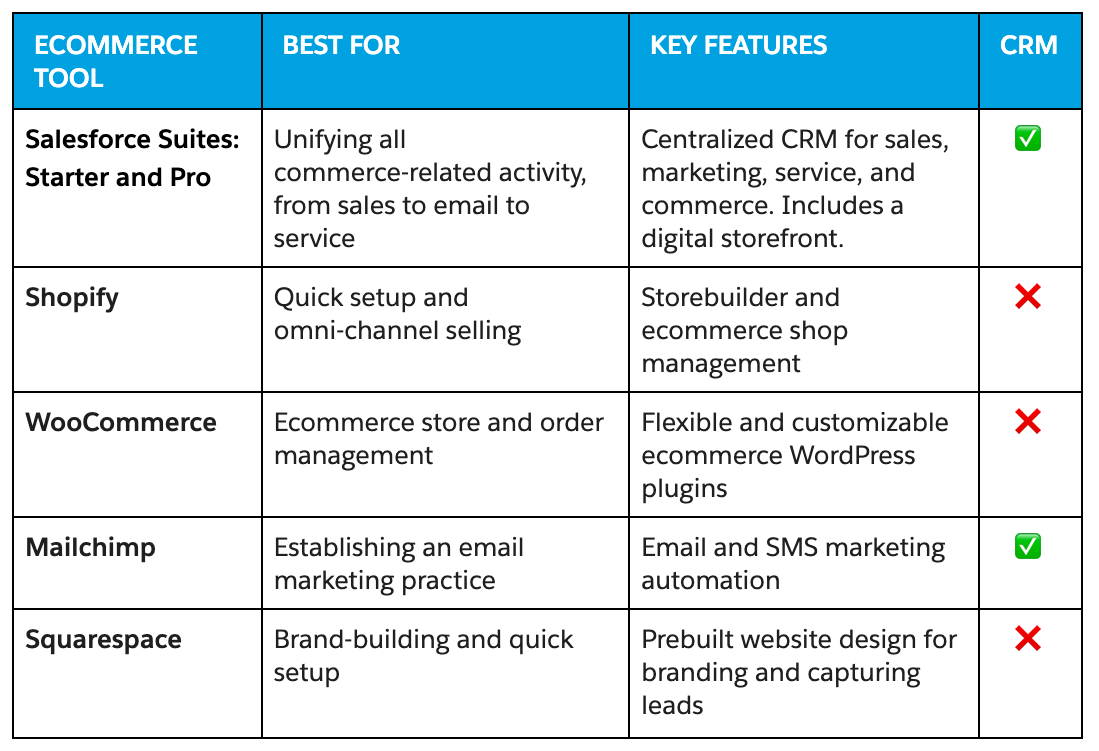
What is it? A unified CRM tool and commerce platform for growing businesses. If you’re ready to move out of spreadsheets and unify your commerce data while keeping everything in one place, Starter and Pro Suite are for you.
Who it’s for: Growing small businesses, startups, or mid-market companies ready to scale and needing unified CRM capabilities across sales, marketing, service, and commerce.
Benefits for SMBs:
- These suites provide a unified, scalable platform with automation and comprehensive business growth beyond the essential needs.
- Advanced sales, service, and marketing automation, strong reporting and analytics, commerce capabilities (as an add-on), and team collaboration via Slack integration.
Cost: Free for 30 days, then $25 per month, offering tiered monthly subscription plans.
How it scales business: (1-10): 10
Start selling online with Starter Suite
Set up your digital storefront, engage customers, and sell more using a commerce-ready platform with integrated tools for every sale.
2. Shopify
What is it? Store builder and ecommerce platform for growing businesses
Who it’s for: Beginners, direct-to-consumer (DTC) brands, and businesses focused on ease of use and quick setup.
Benefits for SMBs:
- Shopify offers a low barrier to entry, an extensive app store for added functionality, and integrated payment processing (Shopify Payments) to simplify sales.
- Its features include an online store builder (Themes), a mobile app for management, abandoned cart recovery, a point-of-sale (POS) system, and built-in SEO tools.
Cost: Starting at $25 per month, they offer tiered monthly subscription plans.
3. WooCommerce
What is it? Open-source ecommerce plugin that lets you turn any WordPress site into a commerce website
Who it’s for: Businesses already using or preferring WordPress, or those who need maximum customization control and data ownership.
Benefits for SMBs:
- This free open-source platform (requires hosting) is highly flexible and supported by a massive community and extension ecosystem.
- Features include deep WordPress integration, unlimited products, a customizable checkout process, geolocation support, and hundreds of extensions and plugins.
Cost: The platform is free, but it requires paid hosting, a domain, and potential paid extensions and developers.
How it scales business: (1-10): 5
4. Mailchimp
What is it? Marketing automation
Who it’s for: Small businesses needing comprehensive email campaign tools and marketing automation to nurture leads and convert customers.
Benefits for SMBs:
- Mailchimp provides a user-friendly interface, strong segmentation tools to target messages, and a generous free tier for very small lists.
- Core features are a drag-and-drop email builder, audience segmentation, abandoned cart automations, a landing page builder, and A/B testing for a variety of components, including subject lines.
Cost: $19 per month tiered paid plans based on contact list size.
How it scales business: (1-10): 7
5. Squarespace
What is it? Design-focused ecommerce platform and website builder
Who it’s for: Beginners, creatives, and design-focused brands where visual presentation is paramount.
Benefits for SMBs:
- Squarespace focuses on user-friendliness, offering drag-and-drop website builders paired with aesthetic, modern templates and built-in marketing tools, making it ideal for a strong visual brand.
- Features include award-winning website design templates, built-in SEO and analytics, email campaigns and social tools, portfolio and blog integration, and integrated POS and scheduling.
Cost: $27 per month (billed annually), with higher tiers for advanced features.
How it scales business: (1-10): 7
Seeing is believing. Try Salesforce for free with a 30 day trial.
See how small businesses are using Salesforce CRM to scale fast. No credit card required, no software to install. It all starts with Starter Suite.
Enter a valid e-mail address
Enter a valid e-mail address
Enter a valid e-mail address
Enter a valid e-mail address
Enter a valid e-mail address
Enter a valid e-mail address
Employees
1-20 employees
21-200 employees
201-10,000 employees
10,001+ employees
Select the number of employees
Industry
Automotive
Communications
Financial Services
Healthcare
Tech
Education
Life Sciences
Manufacturing
Media
Nonprofit
Public Sector
Retail & Consumer Goods
Energy & Utilities
Other
Select your industry.
Country/Region
United States
Afghanistan
Albania
Algeria
American Samoa
Andorra
Anguilla
Antarctica
Antigua And Barbuda
Argentina
Armenia
Aruba
Australia
Austria
Azerbaijan
Bahamas, The
Bahrain
Bangladesh
Barbados
Belarus
Belize
Belgium
Benin
Bermuda
Bhutan
Bolivia
Bouvet Is
Bosnia and Herzegovina
Botswana
Brazil
British Indian Ocean Territory
Brunei
Bulgaria
Burkina Faso
Burundi
Cambodia
Cameroon
Canada
Cape Verde
Cayman Is
Central African Republic
Chad
Chile
China
Hong Kong
Macau
Christmas Is
Cocos (Keeling) Is
Colombia
Comoros
Cook Islands
Costa Rica
Cote D’Ivoire (Ivory Coast)
Croatia (Hrvatska)
Cyprus
Czech Republic
Democratic Republic of the Congo
Denmark
Dominica
Dominican Republic
Djibouti
Ecuador
Egypt
El Salvador
Equatorial Guinea
Eritrea
Estonia
Ethiopia
Falkland Is (Is Malvinas)
Faroe Islands
Fiji Islands
Finland
France
French Guiana
French Polynesia
French Southern Territories
F.Y.R.O. Macedonia
Gabon
Gambia, The
Georgia
Germany
Ghana
Gibraltar
Greece
Greenland
Grenada
Guadeloupe
Guam
Guatemala
Guinea
Guinea-Bissau
Guyana
Haiti
Heard and McDonald Is
Honduras
Hungary
Iceland
India
Indonesia
Ireland
Israel
Italy
Jamaica
Japan
Jordan
Kazakhstan
Kenya
Kiribati
Korea, South
Kuwait
Kyrgyzstan
Laos
Latvia
Lebanon
Lesotho
Liberia
Liechtenstein
Lithuania
Luxembourg
Madagascar
Malawi
Malaysia
Maldives
Mali
Malta
Marshall Is
Mauritania
Mauritius
Martinique
Mayotte
Mexico
Micronesia
Moldova
Monaco
Mongolia
Montserrat
Morocco
Mozambique
Myanmar
Namibia
Nauru
Nepal
Netherlands, The
Netherlands Antilles
New Caledonia
New Zealand
Nicaragua
Niger
Nigeria
Niue
Norway
Norfolk Island
Northern Mariana Is
Oman
Pakistan
Palau
Panama
Papua new Guinea
Paraguay
Peru
Philippines
Pitcairn Island
Poland
Portugal
Puerto Rico
Qatar
Republic of the Congo
Reunion
Romania
Russia
Rwanda
Saint Helena
Saint Kitts And Nevis
Saint Lucia
Saint Pierre and Miquelon
Saint Vincent And The Grenadines
Samoa
San Marino
Sao Tome and Principe
Saudi Arabia
Senegal
Serbia
Seychelles
Sierra Leone
Singapore
Slovakia
Slovenia
Solomon Islands
Somalia
South Africa
South Georgia & The S. Sandwich Is
Spain
Sri Lanka
Suriname
Svalbard And Jan Mayen Is
Swaziland
Sweden
Switzerland
Taiwan
Tajikistan
Tanzania
Thailand
Timor-Leste
Togo
Tokelau
Tonga
Trinidad And Tobago
Tunisia
Turkey
Turks And Caicos Is
Turkmenistan
Tuvalu
Uganda
Ukraine
United Arab Emirates
United Kingdom
United States Minor Outlying Is
Uruguay
Uzbekistan
Vanuatu
Vatican City State (Holy See)
Venezuela
Vietnam
Virgin Islands (British)
Virgin Islands (US)
Wallis And Futuna Islands
Western Sahara
Yemen
Zambia
Zimbabwe
Select your Country
State/province
北海道 – Hokkaido
青森県 – Aomori
岩手県 – Iwate
宮城県 – Miyagi
秋田県 – Akita
山形県 – Yamagata
福島県 – Fukushima
茨城県 – Ibaraki
栃木県 – Tochigi
群馬県 – Gunma
埼玉県 – Saitama
千葉県 – Chiba
東京都 – Tokyo
神奈川県 – Kanagawa
新潟県 – Niigata
富山県 – Toyama
石川県 – Ishikawa
福井県 – Fukui
山梨県 – Yamanashi
長野県 – Nagano
岐阜県 – Gifu
静岡県 – Shizuoka
愛知県 – Aichi
三重県 – Mie
滋賀県 – Shiga
京都府 – Kyoto
大阪府 – Osaka
兵庫県 – Hyogo
奈良県 – Nara
和歌山県 – Wakayama
鳥取県 – Tottori
島根県 – Shimane
岡山県 – Okayama
広島県 – Hiroshima
山口県 – Yamaguchi
徳島県 – Tokushima
香川県 – Kagawa
愛媛県 – Ehime
高知県 – Kochi
福岡県 – Fukuoka
佐賀県 – Saga
長崎県 – Nagasaki
熊本県 – Kumamoto
大分県 – Oita
宮崎県 – Miyazaki
鹿児島県 – Kagoshima
沖縄県 – Okinawa
Select a state/province
State/province
Alberta
British Columbia
Manitoba
New Brunswick
Newfoundland
Northwest Territories
Nova Scotia
Nunavut
Ontario
Prince Edward Island
Quebec
Saskatchewan
Yukon
Select a state/province
State/province
Alabama
Alaska
Arizona
Arkansas
California
Colorado
Connecticut
Delaware
District of Columbia
Florida
Georgia
Hawaii
Idaho
Illinois
Indiana
Iowa
Kansas
Kentucky
Louisiana
Maine
Maryland
Massachusetts
Michigan
Minnesota
Mississippi
Missouri
Montana
Nebraska
Nevada
New Hampshire
New Jersey
New Mexico
New York
North Carolina
North Dakota
Ohio
Oklahoma
Oregon
Pennsylvania
Rhode Island
South Carolina
South Dakota
Tennessee
Texas
Utah
Vermont
Virginia
Washington
West Virginia
Wisconsin
Wyoming
Select a state/province
We value your privacy. To learn more, visit our Privacy Statement.
Thank you!
Choosing the right ecommerce tools for your business
Selecting the right ecommerce tools for small business is less about finding the so-called best, and more about finding the best fit for your business stage and specific needs. Here are the critical considerations when choosing your commerce tool:
Integration: Will the tools you choose talk to each other? For instance, does your ecommerce platform easily connect with your accounting software or your email platform? A lack of seamless integration will force manual data entry, which wastes time and introduces errors. Tools like Salesforce Suites offer data unification by design, providing a unified ecosystem from the start.
Scalability: Do the tools grow with you? A platform like Shopify or a solution like Agentforce Commerce can easily handle your first 10 orders or your first 10,000. Choosing a scalable solution now prevents the painful, expensive process of migrating platforms later.
Budget: Balance cost with capability. Platforms like WooCommerce are free but require a paid host; dedicated platforms like Shopify and Squarespace offer simplicity for a monthly fee. Consider tools with free tiers for non-core functions until you generate enough revenue to justify the upgrade.
Specific business needs: Do you have a physical commerce store? Do you rely heavily on content and a unique brand experience? Are you focused on B2B or high-touch customer relationships? These questions and more will help you decide which CRM is best suited to your business.
Get started with ecommerce today with Salesforce
Ultimately, a strong ecommerce tool is the foundation for future success. By investing in the right platform for your business, your team can compete in the massive global marketplace and stay focused on what matters: delivering a top-notch customer experience.
Start your journey with the Free or Starter Suite today. Looking for more customization? Explore Pro Suite. Already a Salesforce customer? Activate Foundations to try out Agentforce 360 today.
AI supported the writers and editors who created this article.
Frequently Asked Questions (FAQs)
A small business needs three types of ecommerce tools: an ecommerce platform (to build the store), marketing automation (for customer engagement like email), and financial and admin tools (for accounting and shipping).
The core budget for essential ecommerce tools (platform, payments, basic marketing) can range from $30 to $300+ per month, not including transaction fees or ad spend. Startups should prioritize platforms with free tiers or low-cost subscriptions, like the basic plans.
The best way to manage customer data is by using a unified, scalable CRM platform. Platforms like Salesforce Suites are designed to break down data silos, providing a single, comprehensive view of the customer across every touchpoint. This integration is crucial for delivering personalized experiences and achieving efficient, data-driven decision-making as the small business scales.
A hosted platform is an all-in-one, subscription-based service where the provider manages the server, security, and maintenance, offering ease of use. An open-source platform is free software that you install and manage yourself on your own web host.
A small business should consider transitioning when its current platform can no longer support its complexity or volume of business. Key indicators include: difficulty unifying customer data (leading to fragmented service), limits on sales volume or customization, or a lack of advanced features for sales, marketing, and service automation.