
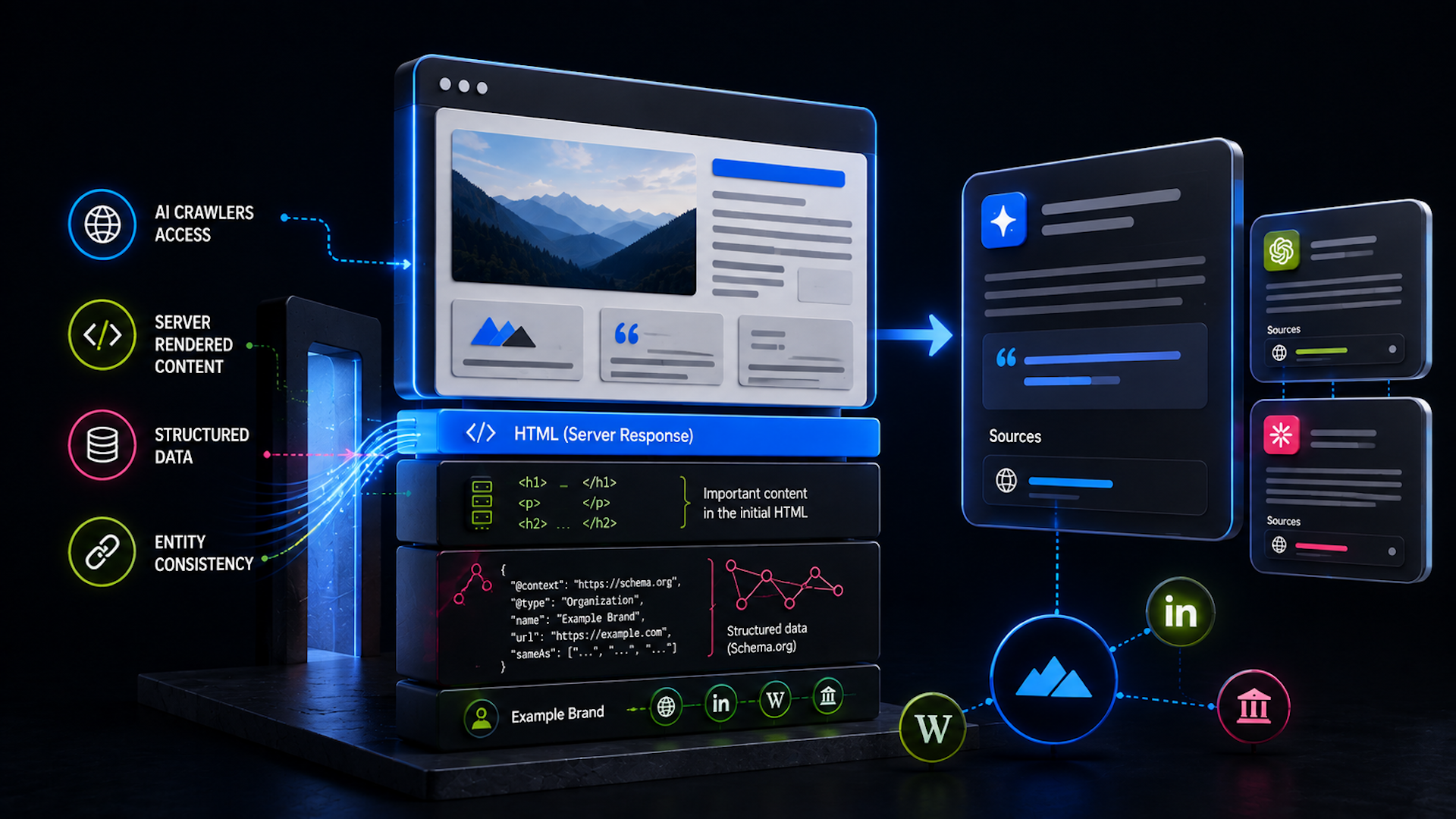
Despite what your LinkedIn feed may tell you, AI retrieval isn’t a new discipline. It’s a stress test of technical SEO fundamentals that are already best practices.
Websites struggling with AI visibility are usually affected by the same technical issues that have long reduced search rankings. There are some additional checkboxes to review, but there is no great secret to making sure your website is technically sound for AI visibility.
Below are four technical elements to review to ensure AI systems can crawl, understand, and cite your website.
1. Crawlability and bot access
The rise of AI assistants has expanded the crawler ecosystem beyond Googlebot and Bingbot. OpenAI, Anthropic, and Perplexity now operate multiple bots — some for model training, some for retrieval, and some for user-initiated queries — each with different behaviors and implications for website owners.
Yet many sites still rely on robots.txt files last updated years ago, inadvertently blocking the bots through which they now want to gain visibility.
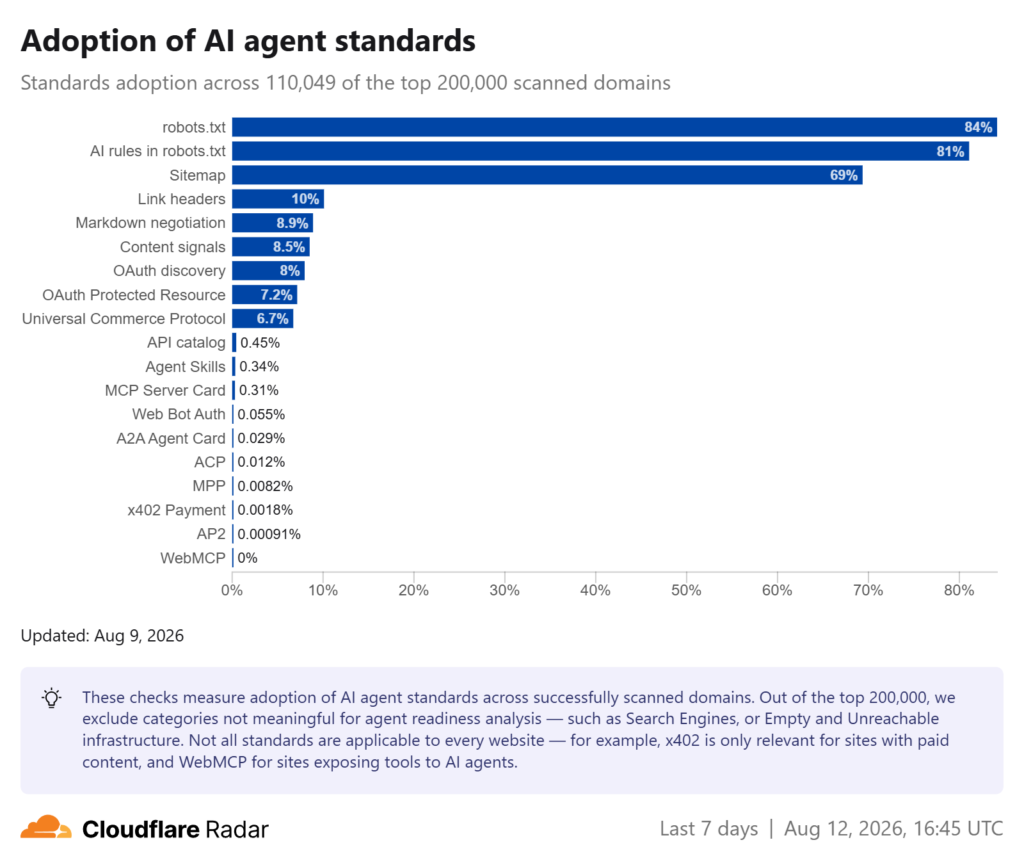
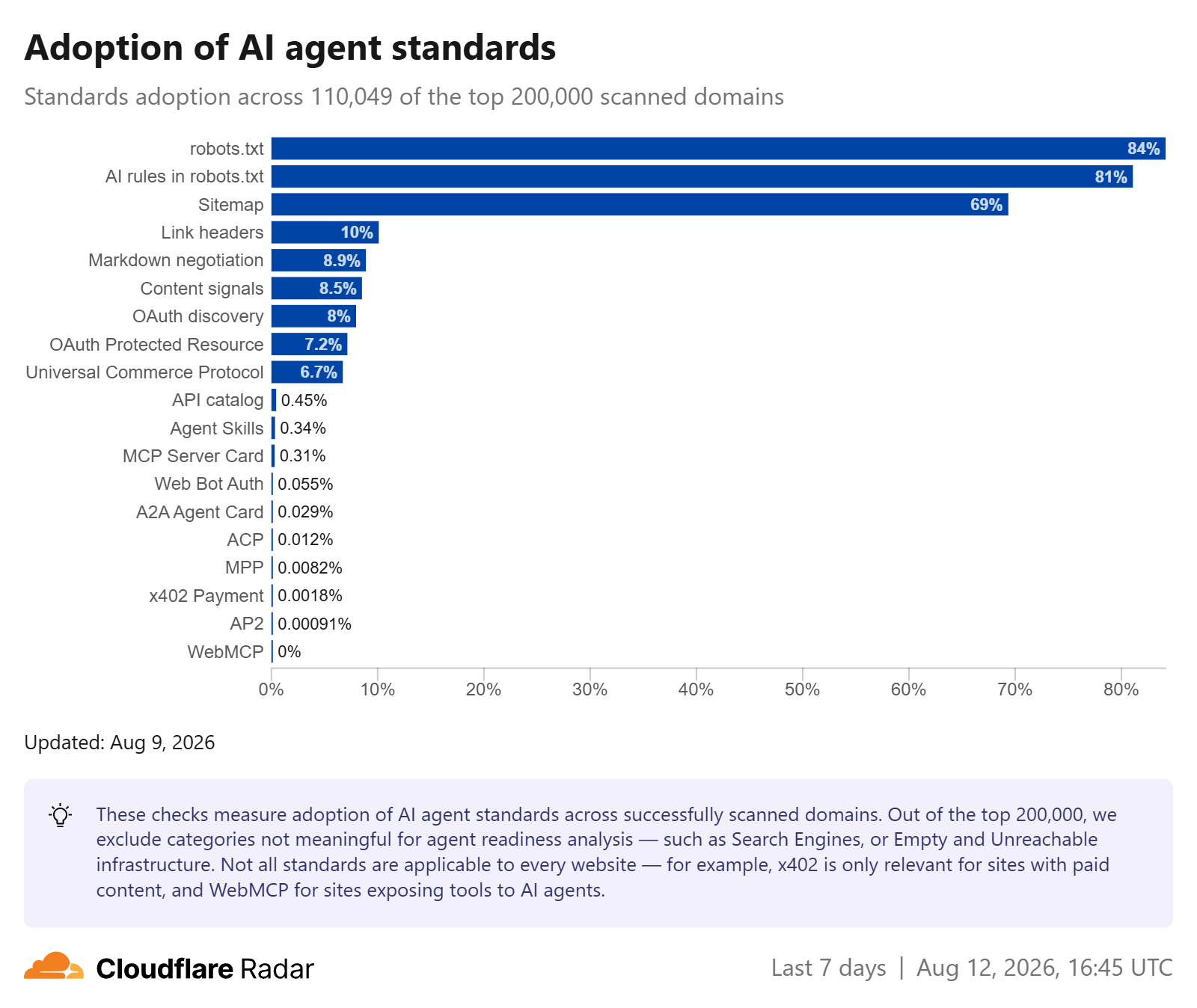
The robots.txt file is the gatekeeper when it comes to AI crawlability, according to Cloudflare Radar.
Dig deeper: Crawling for AI search: Balancing access, control, and visibility
The modern AI crawler landscape
AI systems don’t rely on a single bot. They use families of crawlers with distinct purposes. For example, Anthropic has ClaudeBot, Claude-SearchBot, and Claude-User. ClaudeBot is used for training, whereas Claude-SearchBot and Claude-User handle retrieval and browsing.
Some AI retrieval bots behave more like on-demand browsers than traditional search crawlers. Retrieval bots fetch pages in real time when a user asks a question. Training bots crawl broadly to build model knowledge. Therefore, each needs to be treated appropriately.

What access you allow each bot comes down to a business decision. For industries such as news and publishers, content is their lifeline, and they often choose to block AI.
Their concern is that AI systems may use their content without sending visitors back to the original source. Organizations in regulated sectors, including legal services, may also block AI crawlers because of compliance concerns.
A third group blocks AI crawlers unintentionally. Because many sites run robots.txt files written years ago, it’s not uncommon to find rules that unintentionally block retrieval bots while attempting to block training crawlers, or vice versa.
The result is invisible: AI systems can’t fetch your pages during user queries, and you won’t see a traditional search-engine-style ranking drop — you’ll simply be absent from AI-driven answers.
- Fix: Ensure your intent is reflected in your robots.txt configuration. If you want to be discoverable by AI retrieval agents, treat them as first-class crawlers in your robots.txt. If you want to block training crawlers, do so explicitly and verify you’re not catching retrieval agents in the same rule.
Allowing a crawler through robots.txt is only the first step. It must also be able to access the page’s critical content.
See where your brand appears, where it doesn’t, and exactly how to win more visibility across search, AI, local, social, and every channel that matters.
2. JavaScript rendering: The silent killer
JavaScript rendering is the single most overlooked technical risk for AI visibility. None of the main AI crawlers render JavaScript. That means any content injected in the browser — schema, text, product details, or critical metadata — can be invisible to AI systems even when Google and other search engines index the page perfectly.
Why is this?
Modern single-page applications (SPAs) often render core content client-side. If the server response contains only a shell and the JavaScript populates content later, an AI crawler that doesn’t run JS will see only the shell. Additionally, some crawlers intentionally avoid executing JS to reduce cost, latency, and complexity.
Even when a crawler can execute JavaScript, rate limits, timeouts, and headless-browser differences can produce incomplete renders. Client-side rendering is therefore not a dependable delivery method for critical content.
Let’s take an example. Consider a React SPA that performs well in Google because its content and schema are injected client-side, but remains invisible to AI retrieval systems. AI crawlers see a near-blank page due to the technology being used.

- Fix: Use server-side rendering (SSR), static site generation (SSG), or hybrid rendering for critical content. Ensure the HTML response contains the canonical text, headings, and structured data. Your safest bet is to stay with tried-and-true HTML for critical content.
Once the content is accessible, the next challenge is making its meaning explicit.
Dig deeper: 5 JavaScript SEO lessons from top ecommerce sites
3. Structured data and clarity
As AI retrieval systems grow, they rely heavily on structured signals embedded within the HTML. Because many AI crawlers don’t execute JavaScript, schema markup delivered server-side is the reliable way to ensure an AI system can understand your page’s content. In other words, structured data adds explicit meaning to the information contained in the raw HTML.
Structured data gives AI systems explicit meaning
Structured data tells AI systems exactly what an entity is, how it relates to other entities, and what matters. When GPTBot, ClaudeBot, or PerplexityBot fetch a page, they may only see the raw HTML.
If your schema is injected client-side — via React, Vue, or any SPA framework — the crawler never sees it, meaning no entity recognition, factual extraction, or inclusion in AI-generated answers.
Structured data can improve factual accuracy
AI systems rely on clear, machine-readable signals to avoid misinterpretation. Schema.org markup provides canonical names, prices, dates, authors, product attributes, and relationships. This reduces ambiguity and helps AI systems quote or summarize your content correctly.
Include structured data in the initial HTML response
SSR and SSG can ensure that schema is present in the initial HTML response, making it accessible to crawlers that don’t execute JavaScript. The rule is simple: Never rely on JavaScript to deliver the information you want AI systems to understand.
Structured data can strengthen AI search visibility
As AI assistants increasingly become the first touchpoint for information retrieval, sites that provide clear, server-rendered structured data will be better positioned for inclusion in AI-generated answers. Those that rely on client-side injection will fade from AI visibility even if they perform well in traditional search.
- Fix: Audit your website to confirm that schema markup code is rendered server-side and visible in the initial HTML response. Ensure critical structured data is accessible without JavaScript execution. Validate your code by fetching the pages as an AI crawler user agent to confirm.
Page-level clarity is only part of the equation. AI systems must also connect those facts to a consistent brand entity.

4. Entity consistency matters
When a brand is consistently represented as a single entity, AI systems have a clearer foundation for identifying and accurately describing it. This isn’t limited to just Google’s Knowledge Graph. Anthropic, OpenAI, and Microsoft all maintain internal entity layers that rely on stable, unambiguous brand identities.
One part of the challenge mirrors the old NAP consistency problem from local SEO, but at brand scale. You should minimize unnecessary name variations and make unavoidable relationships explicit.
Inconsistent brand names across your website, schema, directories, social profiles, and external listings can create entity fragmentation. When variations such as “Acme,” “Acme Co.,” and “Acme Inc.” are unavoidable, connect them through consistent structured data and authoritative external profiles.
A unified entity footprint strengthens citation frequency, improves answer accuracy, and ensures your brand is recognized as a single, authoritative source across modern AI ecosystems.

- Fix: Audit brand references and standardize spelling, punctuation, capitalization, and legal-name usage wherever possible. In addition, reinforce that identity with sameAs links to canonical external nodes such as Wikidata, LinkedIn, and Crunchbase. These act as grounding anchors, helping AI systems collapse variations into one authoritative entity.
None of these fixes should be considered complete until the final output has been tested.
Verify, test, repeat
Technical fixes are only valuable if crawlers can access and interpret the final result. Inspect important pages to confirm that critical copy, headings, internal links, and structured data are present before JavaScript runs.
Test access across robots.txt, meta robots directives, status codes, redirects, and firewall rules. Server logs can help confirm whether AI crawlers are reaching your pages and receiving successful responses. Validate structured data with the Schema Markup Validator and Google’s Rich Results Test.
Finally, track AI visibility separately from traditional rankings. Use a consistent set of prompts to monitor brand mentions, citations, source pages, and factual accuracy across relevant AI platforms. Individual responses will vary, so focus on patterns over time rather than isolated spot checks.
Technical SEO is the foundation of AI visibility
AI visibility may feel like a new discipline, but the technical requirements are familiar. Search engines and AI retrieval systems both need accessible pages, clear information, consistent entities, and machine-readable signals. The difference is that many AI crawlers operate with fewer rendering capabilities and less tolerance for ambiguity.
The goal isn’t to optimize for every crawler individually or chase each new AI platform. It’s to build a technically resilient website that exposes its most important information clearly. Sites that do this make it easier for search engines and AI systems to crawl, understand, verify, and cite their content.
Key takeaways
- Ensure your robots.txt, firewall, and access controls reflect your actual policy for training and retrieval crawlers.
- Don’t depend on JavaScript to deliver critical content or structured data.
- Use relevant schema markup and include it in the initial server response.
- Maintain a consistent brand entity across your website, structured data, profiles, and authoritative external sources.
- Verify implementation through raw HTML inspection, crawler testing, schema validation, and repeatable AI citation tracking.
AI search has raised the stakes, but it hasn’t rewritten the technical playbook. Websites that get the fundamentals right will be better positioned for traditional search performance and the growing number of AI-driven discovery experiences.