You’ve got a cause you believe in to build something meaningful. Starting a nonprofit is one of the most powerful ways to create lasting change — and build something that works as hard as you do. But getting it off the ground? That part takes a plan.
Navigating the nonprofit space faces some challenges that you have to manage all at once. Don’t get scared, it’s easily assisted with the right tool set. We love our non-profits at Salesforce and take our partnerships to heart. That’s why we recommend these systems and strategies — so you can build a nonprofit that’s ready to serve, from the heart.
What is a nonprofit for small business?
A nonprofit organization is a business structure that operates for a public or social benefit rather than to generate profit for its owners. Any surplus revenue goes back into the mission — not into shareholders’ pockets. For small business owners and startup founders, forming a nonprofit means you can pursue a cause-driven mission while accessing tax exemptions, grant funding, and donor contributions that a traditional business can’t.
Understanding which category fits your mission is the first step in your nonprofit journey. This guide to types of businesses can help you compare structures side by side before you commit.
Common types of small business nonprofits include:
- 501(c)(3) public charities: The most common structure — think food banks, community education programs, and animal shelters.
- 501(c)(6) business leagues: Trade associations and chambers of commerce that serve a specific industry or profession.
- 501(c)(4) social welfare organizations: Civic groups and community advocacy organizations that focus on public benefit.
How to start a nonprofit: The core steps
Starting a nonprofit isn’t complicated — but it does require doing things in the right order. Here’s how to run a nonprofit from the ground up.
Step 1: Define your mission
Your mission statement is the north star of your organization. It should answer three things: What do you do? For whom? And to what end? Keep it specific and action-oriented. “We provide free coding education to underserved youth in Chicago” is far stronger than “we support education.”
Step 2: Build your founding board
Nonprofits are legally required to have a board of directors. Your board provides governance, fiduciary oversight, and strategic direction. Aim for three to seven members at launch, with diverse skills across legal, financial, and programmatic areas.
Step 3: Incorporate in your state
File articles of incorporation with your state’s secretary of state office. This gives your nonprofit legal standing and is a prerequisite for federal tax-exempt status. Most states charge a small filing fee — typically between $25 and $100.
Step 4: Apply for federal tax-exempt status
This is the step most people think of when they hear “nonprofit.” File Form 1023 (or the streamlined Form 1023-EZ for smaller organizations) with the Internal Revenue Service (IRS) to apply for 501(c)(3) status. Once approved, your organization is exempt from federal income tax — and donors can deduct their contributions.
Step 5: Register for state taxes and charitable solicitation
Most states require nonprofits to register separately before they can legally solicit donations. Requirements vary by state, so check with your state attorney general’s office or nonprofit association for specifics.
Step 6: Open a bank account and set up financial systems
Separate finances are non-negotiable. Open a dedicated organizational account, establish a budget, and set up an accounting system — many nonprofits use QuickBooks for Nonprofits or similar tools early on.
The benefits of running a nonprofit
Choosing the nonprofit path comes with real, tangible advantages — especially for small business owners and entrepreneurs who want their work to carry more weight.
- Tax exemption: 501(c)(3) organizations are exempt from federal income tax, and often state and local taxes too.
- Grant eligibility: Foundations, government agencies, and corporations offer grants exclusively to nonprofits — a major funding source unavailable to for-profits.
- Donor trust: The nonprofit designation signals accountability and transparency, which builds donor confidence faster than almost anything else.
- Community credibility: Operating as a nonprofit can open doors with local government, media, and corporate partners who want to align with mission-driven organizations.
- Volunteer and in-kind support: Nonprofits routinely attract pro bono legal help, donated services, and volunteer labor that can stretch a lean budget further.
Managing donors, volunteers, and relationships
Here’s where a lot of small business nonprofits struggle: They’re so focused on the mission that they lose track of the relationships that keep the lights on. Leads don’t get followed up on. Donors go quiet. Volunteers fall through the cracks.
That’s where a customer relationship management (CRM) system becomes your most important hire. A CRM built for nonprofits gives you a complete view of every donor, volunteer, and program participant — so your whole team is always working from the same data, not a patchwork of spreadsheets and email threads. According to the latest Nonprofit Trends Report, organizations that unify their data see faster collaboration across teams and stronger donor relationships.
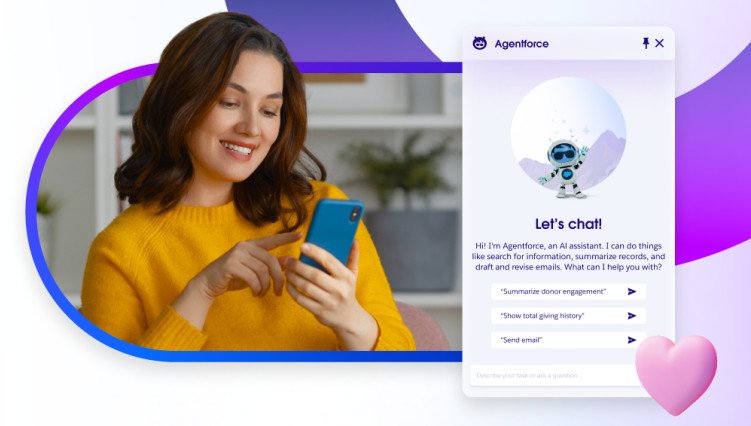
Agentforce Nonprofit brings together fundraising, program management, marketing, and volunteer coordination into one platform — purpose-built for organizations exactly like yours. Whether you’re tracking a first-time donor or managing a multi-year grant relationship, everything lives in one place.
Try the Nonprofit Success Pack Administration Basics trail on Trailhead, Salesforce’s free online learning platform, to build a solid foundation for managing your nonprofit’s CRM from day one.
Try Agentforce Nonprofit
Bring fundraising, programs, volunteer management, and outcomes together.
How AI is changing nonprofit operations
Artificial intelligence (AI) has moved from a nice-to-have to a real operational advantage for lean nonprofit teams. In fact, 88% of SMBs are already engaging with AI — and 74% say their AI investment generated strong ROI. For a small business nonprofit with a two-person development team and a hundred-person volunteer roster, that kind of efficiency isn’t optional — it’s survival.
AI can help your nonprofit:
- Score and prioritize donors: AI tools can analyze giving history and engagement signals to surface your most promising major gift prospects — before you waste time on cold outreach.
- Automate follow-up communications: Set up AI agents to send personalized acknowledgment emails, volunteer reminders, and event invitations without lifting a finger.
- Predict program outcomes: With the right data, AI can help you identify which program participants are most at risk and where to direct resources first.
The key is making sure your AI is working from a complete, trustworthy picture of your organization — not siloed data that leads to generic interactions. That’s exactly what Salesforce is built to deliver.
Accelerate your startup success with Salesforce Launchpad


Tools and technology every small business nonprofit needs
You don’t need an enterprise tech stack to run a nonprofit for small business. But you do need the right foundation — and the earlier you build it, the easier everything gets.
Here’s what a lean, effective nonprofit tech stack looks like:
- A CRM: The single most important system you’ll invest in. It manages donors, volunteers, communications, and program data in one place. What is a nonprofit CRM? is a solid primer if you’re just getting started.
- Email marketing: A platform like Marketing Cloud or Mailchimp lets you segment your audience and send the right message to the right people at the right time.
- Donor management: A donor management system tracks gift history, pledge commitments, and donor preferences so no relationship falls through the cracks.
- Accounting software: QuickBooks for Nonprofits or similar tools help you stay IRS-compliant and grant-ready.
- Project management: Trello, Asana, or Slack keep lean teams aligned without endless meetings.
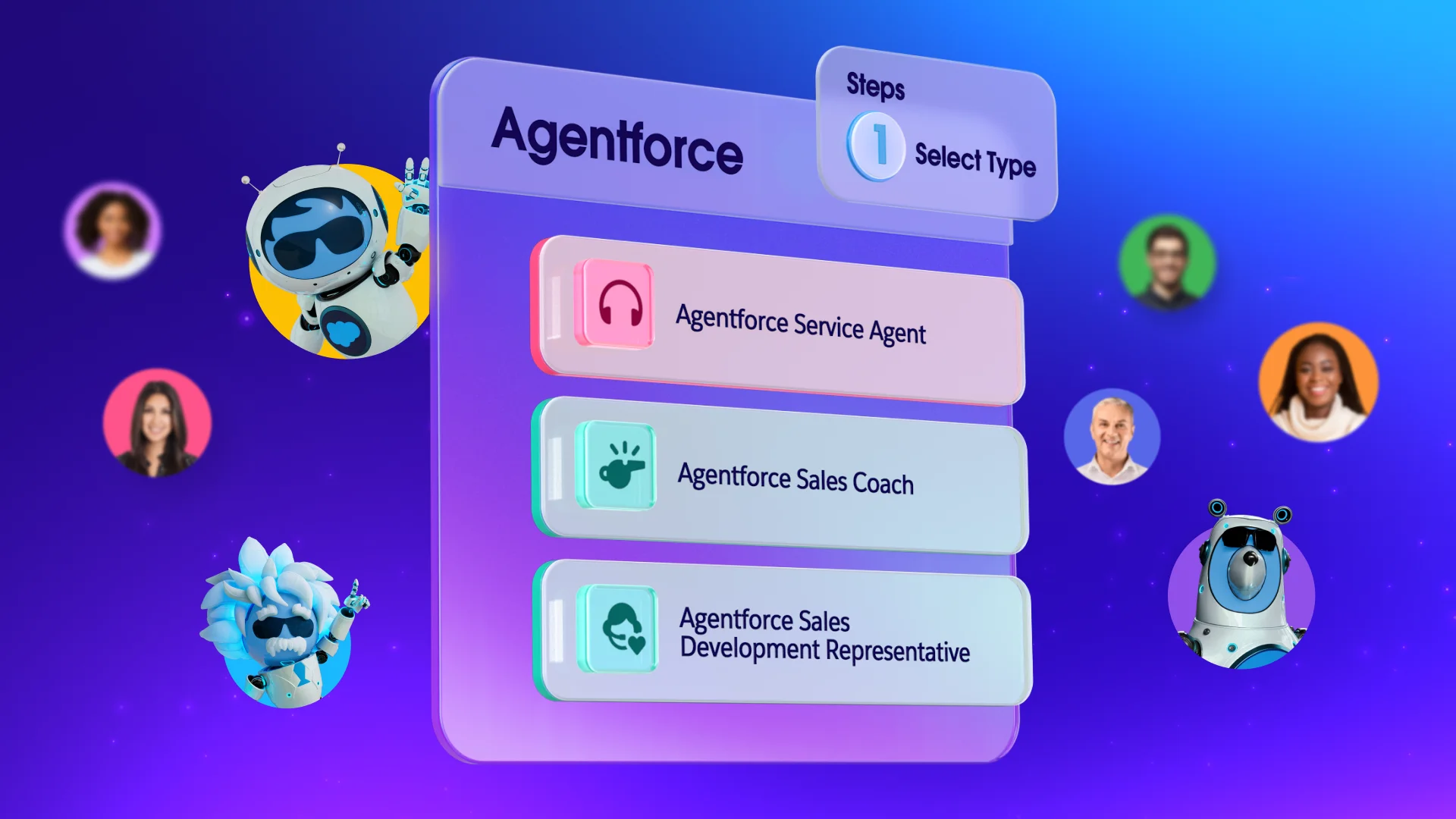
Agentforce ties many of these capabilities together — giving your team AI-powered agents that can handle donor follow-up, program intake, and volunteer coordination, so your humans can focus on the work that actually requires them.
Start running your nonprofit for small business today
Getting your nonprofit off the ground is one of the most rewarding things you’ll do as a founder or small business owner. The steps are clear, the benefits are real, and the tools available to lean, ambitious teams have never been better. You don’t need to wait until you’re bigger, better funded, or more experienced — you just need to start.
Get started with Salesforce Suites for free or activate Foundations to try out Agentforce today.
AI supported the writers and editors who created this article.
What is the difference between a nonprofit and a small business?
A small business is structured to generate profit for its owners or shareholders, while a nonprofit reinvests any surplus revenue back into its mission. Nonprofits can also apply for tax-exempt status and accept tax-deductible donations — benefits not available to for-profit businesses.
How much does it cost to start a nonprofit?
Startup costs vary, but you can expect to spend between $275 and $600 on IRS filing fees alone (Form 1023 costs $600; Form 1023-EZ costs $275). Add state incorporation fees, legal support, and initial operating costs, and most small nonprofits launch with between $2,000 and $10,000.
Can a nonprofit pay its founders or employees?
Yes — nonprofit employees, including founders, can receive reasonable compensation for their work. What nonprofits can’t do is distribute profits to individuals. Compensation must be tied to services rendered and considered reasonable by IRS standards.
What is a 501(c)(3) and do I need one?
A 501(c)(3) is the IRS designation for a tax-exempt public charity or private foundation. It’s the most common nonprofit structure and the one most donors and grantmakers expect. If you plan to solicit donations or apply for foundation grants, you’ll almost certainly want to pursue 501(c)(3) status.
How do I manage donors and volunteers as a small nonprofit?
Start with a CRM designed for nonprofits — it’s the fastest way to get organized without adding headcount. Agentforce Nonprofit unifies donor records, volunteer tracking, fundraising campaigns, and program management in one place, so every team member has the full picture when they need it.