
In the world of social marketing, we’re starting to experience a significant shift in focus. Some of the most successful brands across socials are pivoting away from broadcasting for mass appeal, and towards participating in highly-engaged niche communities.
As Paula Perez, Founder of Feeling Seen Studio and former Social Content Specialist for Oatly, told Sprout during a recent webinar, “I think especially right now, it’s all about the niche.”
Perez has mastered the art of appealing to niche communities, building brands alongside a community of committed followers. We spoke further with Perez to explain how you can prioritize micro-cultures and transition your social strategy towards targeting your most engaged audiences.
What is a niche audience? And why your brand needs one
Niche audiences are smaller subcommunities usually formed around specific hobbies, interests or behaviors. As Perez puts it; “a niche community is simply a group of people bound together by a shared interest.”
These communities can be extremely varied. During her time at Oatly, Perez found niche audiences that included “cycling enthusiasts, foodies and baristas.” Whereas nowadays she’s working with authors and communities surrounding BookTok.
There’s no one rule that defines a niche audience or community. But Perez says that defining them often involves narrowing down what makes that audience distinct— “it helps to get as niche and specific as possible when it comes to building a social listening strategy.” Done effectively, this form of micro-targeting can offer brands major benefits amidst the noise of today’s social networks.
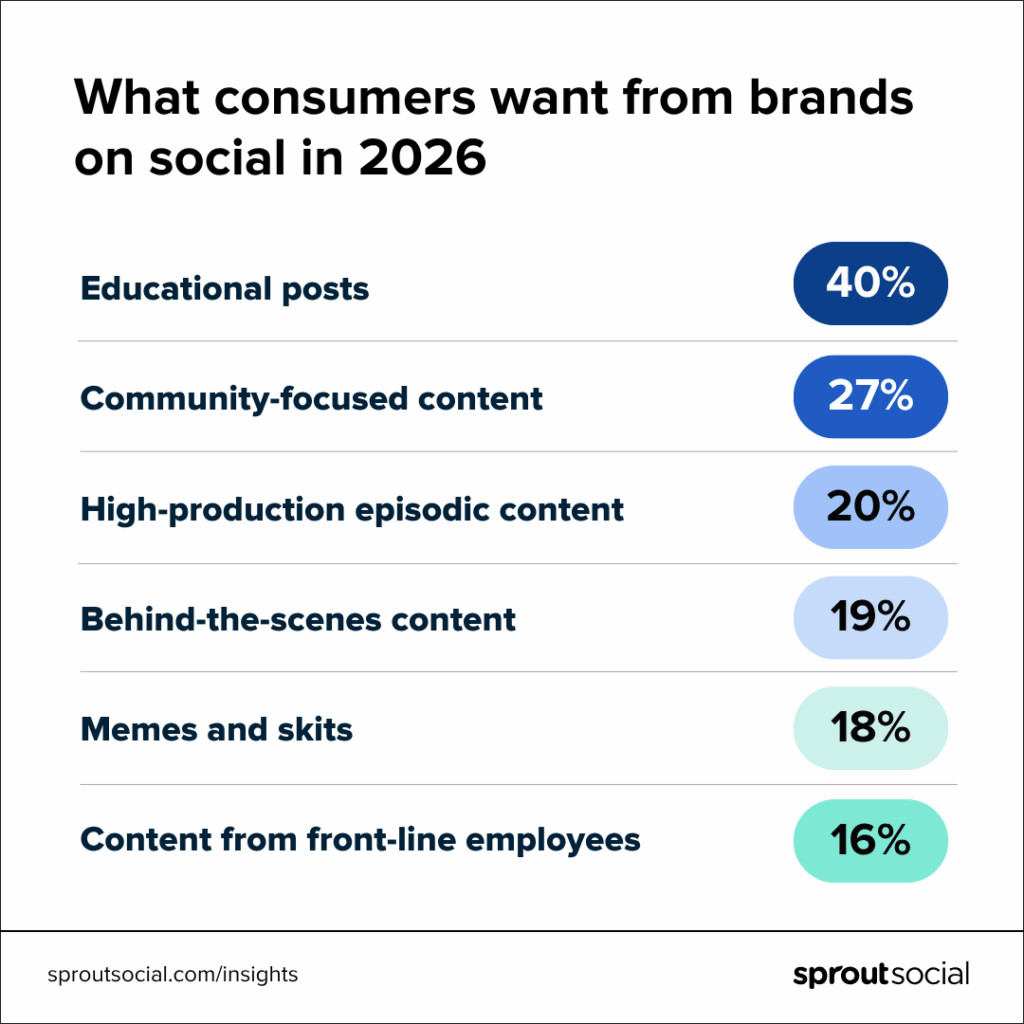
Niche marketing can help you build deeper connections with high-intent buyers and give you a competitive edge. According to Sprout’s Q1 2026 Pulse Survey, community-focused content is the second most popular content type consumers want to see from brands on socials. By speaking to niche communities your brand can remain on trend and build more engaged communities, with clearer opportunities to cater to their needs.
Which niche deserves your brand’s energy?
This three-step framework explains how you can determine which niche audiences are most important for your brand. By focusing on brand alignment, audience growth potential and the blank space where communities aren’t being engaged already, you can uncover several niche audiences that are worth your brand’s focus.
1. Brand alignment
First ask yourself whether a niche audience cares about your core values. This might relate to your sustainability commitments, your mission statement or your brand’s ethos, depending on each audience’s insights.
As a dairy product alternative, one of Oatly’s core values is serving as a vegan alternative. By creating content catered primarily towards vegans, they’re able to promote Oatly to a niche market where the audience is strongly aligned with what they’re offering.

2. Growth potential
The second step is growth potential. Are conversation volumes increasing within this niche? Are more people participating in or following this community?
One of Oatly’s 2025 campaigns targeting niche audiences was a collaboration with the UK grime artist Giggs. This campaign spoke directly to UK customers, and supported a product launch for Oatly custard, a popular product in the region. By collaborating with Giggs, Oatly was also able to speak to Londoners via an IRL brand activation event.

This was an opportunity for Oatly to target a high-growth market—their UK audience, and the niche community of grime fans in the UK—with a trusted, established voice in the community. Giggs was able to lend his credibility to Oatly through their collaboration, while also creating unique content for the brand.
3. Blank space
The final part of the niche targeting framework concerns white or blank space. Ask yourself whether any of your competitors are already speaking to this niche community.
In another recent Oatly campaign, an Oatly Barista Market Developer in Chicago takes his abuelo (grandpa) across the city to taste specialty coffee. More than just an episodic content series, this campaign allows Oatly to showcase how its product can be enjoyed by an older demographic, potentially introducing the brand to an entirely new niche audience who aren’t currently spoken to by their competition.

How to find and target niche audiences on social networks
Now that you understand the core framework around identifying niche audiences, you need to figure out how to uncover these niche audiences for yourself. Finding your brand’s niche is an evolving process, but all the strategies below revolve around meeting your audience where they’re at and understanding what your brand can offer them.
Use topical insights from social listening
Gathering audience insights through social listening uncovers adjacent conversations with your existing customers that can reveal niche communities within your follower base.
This is the most important first step when searching for niche audiences, and it’s particularly important if you’re managing a brand account. According to Perez, “Brands have to stop assuming audiences will automatically care just because the content comes from a brand account. If anything, that’s a turn-off in 2026! People know you’re there to sell, and they want to know what’s in it for them.”
Successful niche targeting demands considerable research and a detailed understanding of your audience; it’s really difficult to speak to a community if you haven’t put the work in to better understand them.
Perez recommends taking suggestions directly from comments on social content, relating to product suggestions, creators to work with and content styles. Brand account managers can then use these insights to offer more for their niche audiences. As Perez explains, “Brands who want to successfully tap into niche communities have to overdeliver in return—in the form of entertainment, access to exclusive opportunities or tools to help them accomplish their goals.”
Social listening offers an important first step in understanding what a community wants. You’re learning directly from them and understanding how they react to your brand already. Once you’ve started listening, there are several ways you can take action on your data. With an AI-powered social listening tool, like Sprout, you can filter your social listening data based on certain sentiments and interests, exclude noise and narrow down on the communities and conversations most likely to benefit your brand.
Lean into community insights
When searching for niche communities, you’re rarely starting your search from scratch. Lean into the community insights you already have from your followers, and use these conversations to figure out patterns that show up across different segments of your audience.
A great example of this is Oatly’s approach to one of their audiences, the Black vegan and vegetarian community. Perez explains: “We started to notice that even as interest in veganism overall declined, conversations in the Black vegan community were rising. We also looked at broader studies, like a Pew Research Center survey that reported 8% of Black Americans are vegan or vegetarian, compared to just 3% of the total population.”
After identifying this audience, they started uncovering insights surrounding the community. This included paying attention to individual creators within the space. “Once we felt knowledgeable about the space, we prioritized building relationships through gifting and supporting community events. Our social team even spearheaded a creator collaboration that highlighted the long history of lactose intolerance within Black communities.” These campaigns were only possible because Oatly took the time to listen to the community, and reacted to those conversations.
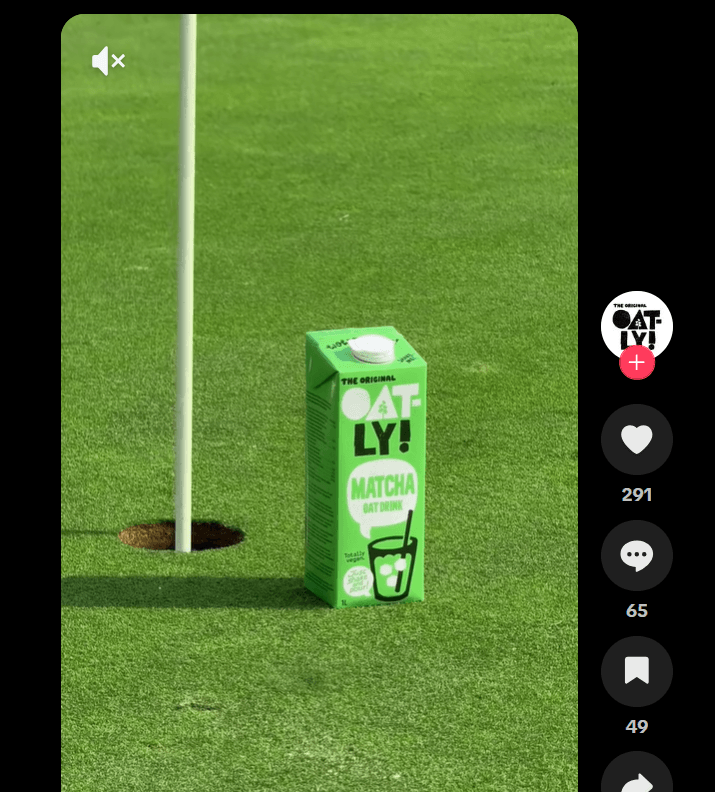
Another example of Oatly listening to their audience is the launch of their new matcha drink. They realized there was a demand for the product through listening to their audience. Since launching the product, Oatly regularly creates unique content to promote it on TikTok, Instagram and other socials. It’s another example of how your existing community can reveal its niche interests (and product interests) organically, as long as you’re taking the time to listen and act on their suggestions.
Interact in the spaces where niche audiences already live
Once you’ve identified who your niche audience is, you need to communicate with them where they’re at. Determine which social network this particular niche is using and the type of content they enjoy. Influencers are a way to break into new niches, as they’ve already curated a following within niche communities of their own that may crossover with your brand’s.
As part of their recent work with EF Pro Bikers, Oatly posted collaborative posts with the cycling team on Instagram that aligned with the influencer’s style and approach to social content.
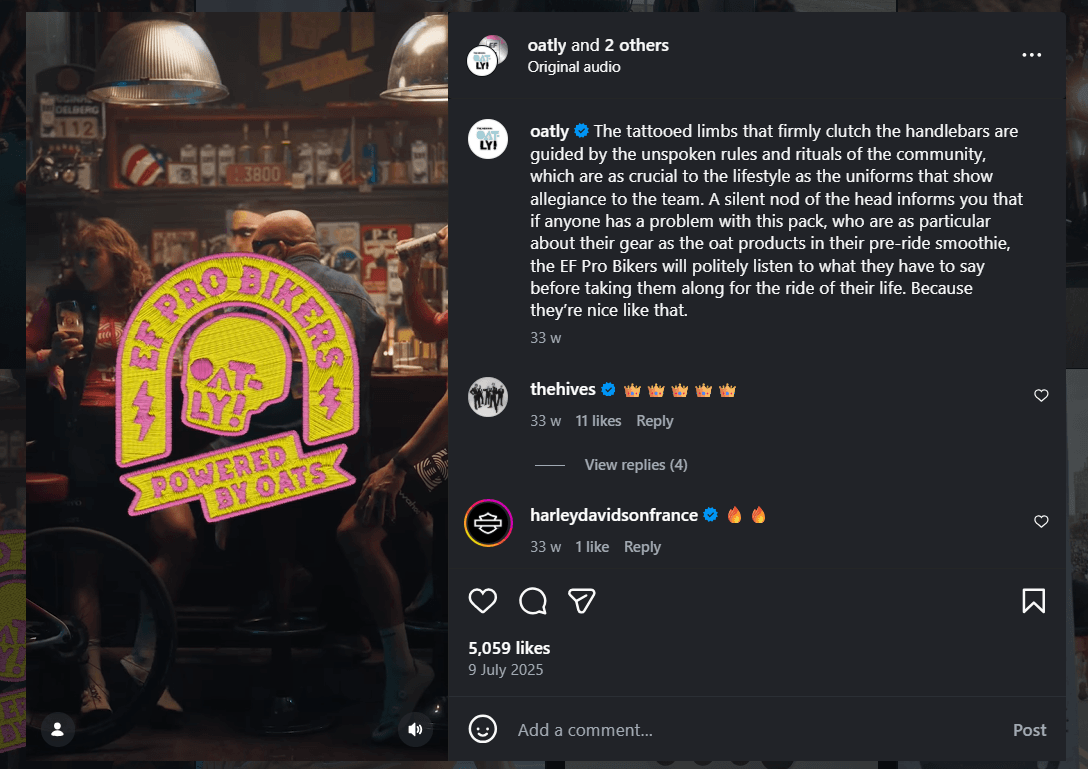
Perez shared that this campaign led to Oatly discovering even more niche communities, including athletes attracted to the nutritional angle of Oatly’s products, university students who haven’t tried plant-based products before and crafting influencers who make their own lattes at home. “So we have all of these different groups that we’ve tapped into in their own unique formats and their own language, and they might not all interact with each other, but they’ve found different angles of the brand to grab onto.”
This is a reminder that niche community targeting can be a positive, organic way of building your brand and expanding your audience, provided you understand who these communities are and what makes them unique.
How to maintain a clear brand voice when speaking to niche audiences
One challenge when niching down is understanding how to maintain a cohesive brand voice.
To keep your niche content cohesive, design a global brand voice guide. This strategic document should explain the tone and approach for all of your content. The more specific this guidance is, the better. For example, when working at Oatly, Perez “had a list of words the Oatly handle would absolutely never say. We knew people would see right through it. Knowing what’s off limits for you forces clarity and helps you stand out from the crowd.”
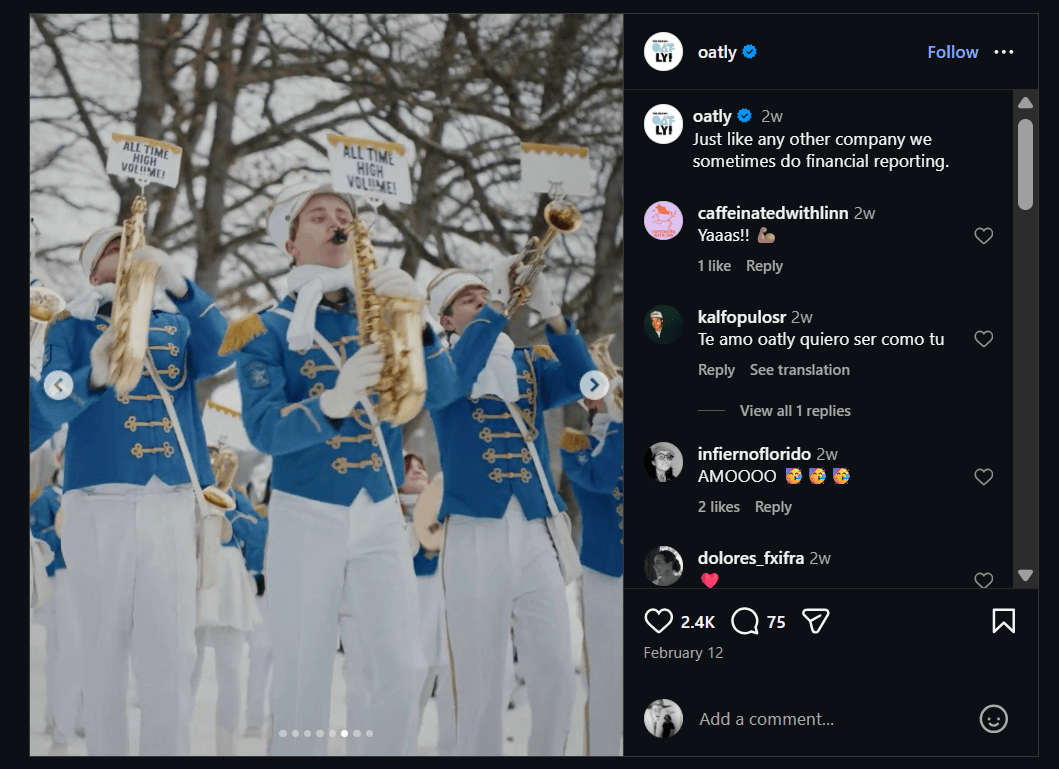
Your comment section is also the perfect place to continue to define your brand voice, and to try out new approaches. According to Perez; “The comments section is where you have the most room to experiment and stretch the voice a bit more. If you try something new and people seem confused or even totally hate it, just take note and move on.” By using your comments section as a soundboard, you can test ideas while simultaneously engaging with your existing community.
Measuring success: How to understand if you’re resonating with niche audiences
Once you’ve identified and begun creating content for niche audiences, you need to continue tracking, measuring and adapting to improve your results. Measuring success involves a few key methods, including analyzing sentiments, tracking your audience growth and continuing to monitor how engaged your community is.
Sentiment analysis
By tapping back into your social listening data through a dedicated listening tool, you can analyze audience sentiments across your social content. Look at whether reactions are trending positively or negatively overall, and then dig deeper.
Using filters and agentic AI like Sprout’s Trellis, look at how sentiments change over time. This will reveal how well certain types of content are received by your niche communities, and can inform your future content creation.
Audience growth and engagement
Look at the growth performance of your accounts, and determine whether niche audiences have impacted follower growth, engagement rates and other key social metrics. Use a social management tool like Sprout to collect this data in a single interface, so it’s easier to track across platforms.
With Sprout Tagging, you can also tag your content based on the niche you’re targeting to track how your niche content is performing alongside other niches and your overall strategy.
If you’re seeing an uptick in your data, it’s likely your niche content is working. Remember to use filters to determine which audiences are working best for your brand, particularly if you’re trying to target multiple at once.
Community engagement
Perhaps the most important metric when you’re targeting niche audiences is engagement. Prioritize tracking your engagement metrics from a quantitative and qualitative angle. Collect this data from all of your socials. Perez advises, “Look at the comments section. Look at Reddit threads. See what people are saying in your DMs. These are all free focus group insights.”
Quantitative data should evidence how much you’re growing, but it’s the qualitative data like message sentiments that reveal how well you’re catering to a niche community. Determine how engaged your new audience is already, and factor engagement strategies like giveaways and comment prompts into your content to build it up further. Gather this data from other creators too. Perez says, “Organic mentions from creators are a huge win. You can spin some of these mentions into social content, which gives you even more insights.” The more you refine and combine your content creation and analytics process, the more you’ll be able to learn from the insights you gather.
Find the niche audiences ready to connect with your brand
By adopting this strategy for your brand, you can start to build more than a following, but a loyal, highly-engaged community.
Perez offers even more insight into community content creation, targeting strategies and more in our webinar, Predictive Power: How Oatly Turns Social Community Into Business Strategy. Watch the full recording.
The post How to use social listening to find and connect with niche audiences on social media appeared first on Sprout Social.