
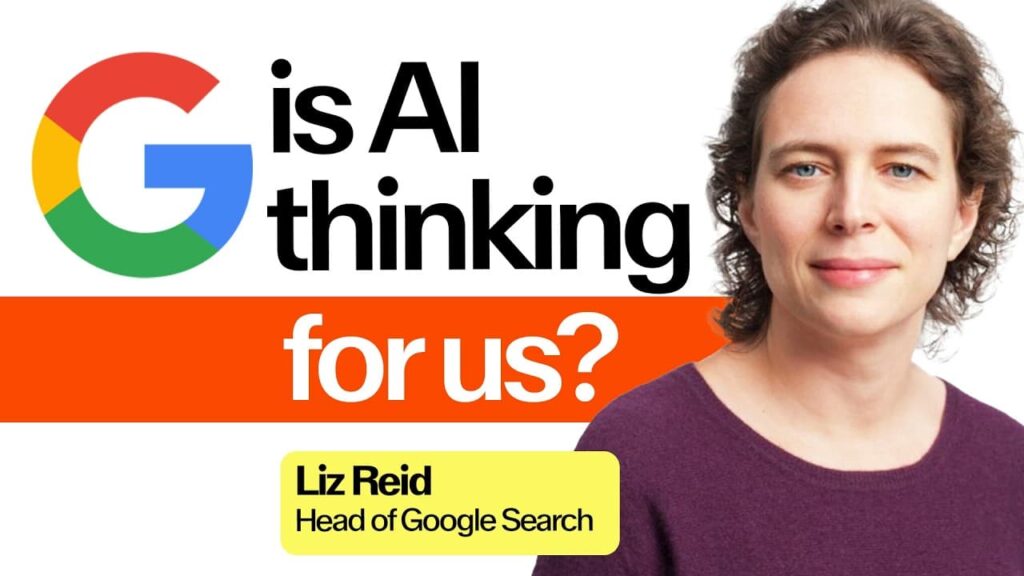

Google’s Liz Reid, VP and head of Search, drew a clearer line between Google Search and Gemini but said it’s still unclear whether the products will converge, diverge further, or be superseded.
The big picture. Reid said Search is an information product focused on helping people connect with the web, while Gemini is centered more on assisting with productivity and creation. She added that the boundaries are fluid, especially as AI products evolve quickly and agentic experiences reshape how people use the internet.
What she’s saying. In short, Reid said Search and Gemini share technology but have different product “north stars.” They could overlap more over time, but the eventual long-term direction is still open. Here’s what she said in an interview on Access Podcast:
- “I don’t know the answer is the short answer.”
- “I think what we see is some areas they’re converging more and some areas they’re diverging more, right? And like and so what are they going to net out? Like do the areas that diverged eventually all come or do the areas that diverge become even bigger over time? I think we’ll see.”
- “So I don’t know in in all honesty, but I think we are right now at a point where depending on what angle you look at, you’d think they’re getting closer or they’re getting further apart.”
- “Who knows, maybe agents will mean like the right product is neither of the two of them is a third product altogether that they merge into. I don’t know yet.”
Gemini vs. Search. Here’s the distinction Reid made:
- On Gemini: “Gemini’s focus is on sort of being this assistant and so it tends to lean in more heavily on things like productivity or creation, right?”
- On Search: “Search is more information based and it believes that often in those information use cases you also want to connect and hear from other people. And so how do you bring out the web?”
Agents and the web’s future. Reid also said Google expects a future with more agent-to-agent internet activity, not just humans browsing directly.
- “I certainly think the there will be a world in which sort of agents are doing a lot of interaction on the internet, not just people.”
- “I do think probably means there’s a world in which a lot of agents are talking with each other, and not just with humans going forward as we evolve.”
Google vs. ChatGPT. Reid pushed back on the idea that AI is a simple winner-take-all battle between Google and ChatGPT.
- “I don’t know, by the way, that we’re going to end up in a world where there’s only one product, right?”
- “I think what we’re seeing is like simultaneously people are adopting more tools and search is growing, right? because the the possibility of the tech is just allowing many more questions.”
Trusted sources. Reid also said Google wants to do more to surface sources users trust or pay for.
- “I think one thing Google is trying to do a lot more of and we’ve taken small steps so far but want to do more. How do you help when there is that relationship?”
She pointed to Google’s Preferred Sources feature and broader subscription-aware experiences:
- “If you love this source and you do have a relationship with it then that content should surface more easily for you on Google.”
- “We should surface the the one that they’re paying for and not the six that they can’t get access to more.”
Why we care. Reid’s comments suggest Google hasn’t settled on Search’s long-term role in an AI-first ecosystem. So keep watching closely as AI assistants, agents, and search results evolve.
The interview. What happens to Google when AI answers everything? with Liz Reid