

Google is overhauling its tagging tools, bringing Google tag and Google Tag Manager closer together while introducing no-code event tracking, faster data transmission and a simplified Tag Manager interface.
The Aug. 20 update is designed to make measurement setup less technically demanding while giving advertisers a more unified way to manage data flowing into products including Google Ads and Google Analytics.
What’s changing. Google tags will be upgraded into fully capable Google Tag Manager containers, meaning websites currently using only Google tag will gain access to Tag Manager features such as interface-driven tagging, debugging and version control.

Google says the upgrade won’t change how existing Google tags behave on webpages. Each Google destination will also retain its own tag, preserving existing setups and automation event triggers.
Why we care. Conversion tracking is often one of the most technically challenging parts of campaign measurement, particularly for smaller advertisers without dedicated analytics or development teams. Google’s visual tagging and unified setup could lower that barrier considerably.
At the same time, advertisers with sophisticated Tag Manager implementations should review Google’s proposed optimization changes carefully before publishing them rather than assuming a simpler configuration will behave identically to their existing setup.
The interface gets simpler. Google is redesigning Tag Manager’s Overview page and reorganizing some of its existing functionality.
A new Settings section will provide a centralized place for container-wide settings, while more technical features — including triggers, variables, templates and folders — will sit within a collapsible Advanced section.
No existing functionality is being removed as part of the redesign.
No-code event tracking. One of the more significant additions is visual tagging, which will allow advertisers to create events and set up conversions without manually writing code.

Advertisers will be able to navigate through their website and select elements directly to define events. Google will then handle technical components such as selectors and triggers behind the scenes.
Google Ads Liaison Ginny Marvin described the experience as allowing advertisers to navigate through an action such as a purchase in the same way a customer would while Google handles the technical setup.
Tag performance could improve. Google is also changing how optimized Tag Manager containers transmit measurement data.
Previously, Google Tag Manager could load additional gtag.js JavaScript when sending data to a Google destination. Optimized containers will instead be able to send data directly to Google destinations, which Google says can reduce measurement latency and potentially improve website performance.
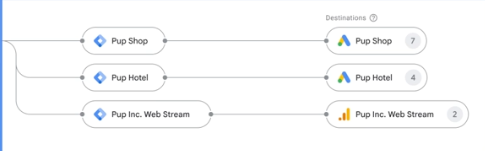
A clearer view of data flows. The unified tagging platform will also provide a visual map showing which Google destinations — such as Google Ads or Google Analytics — are receiving measurement data.
The aim is to make it easier for advertisers to understand their measurement setup and identify potential configuration problems.
Container optimization is optional. Existing Tag Manager users will be prompted to optimize their containers through a new in-account optimization banner, but Google won’t make the changes automatically.
Users with edit, approve or publish permissions will be able to initiate the process and preview all proposed changes before publishing them to their workspace.
Optimization will also bring existing Google tag settings into the new Settings tab while leaving event tags unchanged.
Deployment changes. Google says all new deployment snippets will eventually use the same format and will no longer contain the gtag config command.
Instead, Google recommends configuring initialization behavior using the gtm init trigger. Advertisers that need to preserve a legacy setup can configure the trigger to wait for the config command.
Account management gets more connected. Optimized containers can also be linked directly with their Google destination accounts, making the container visible and manageable from other Google product interfaces.
Those links will be established automatically during optimization with Read access by default, although permissions can subsequently be changed through Tag Manager.
More partner integrations. Google is also expanding its tagging ecosystem with integrations involving Akamai, Cloudflare, Duda, Fastly and Webflow, which Marvin said are intended to help businesses maintain accurate and secure measurement data.
Bottom line. Google is turning its separate tagging products into a more unified measurement system, combining Tag Manager’s advanced capabilities with Google tag while making event and conversion tracking increasingly accessible without code.
Dig deeper. Marvin announces new Google Tag/Tag Manager update.