
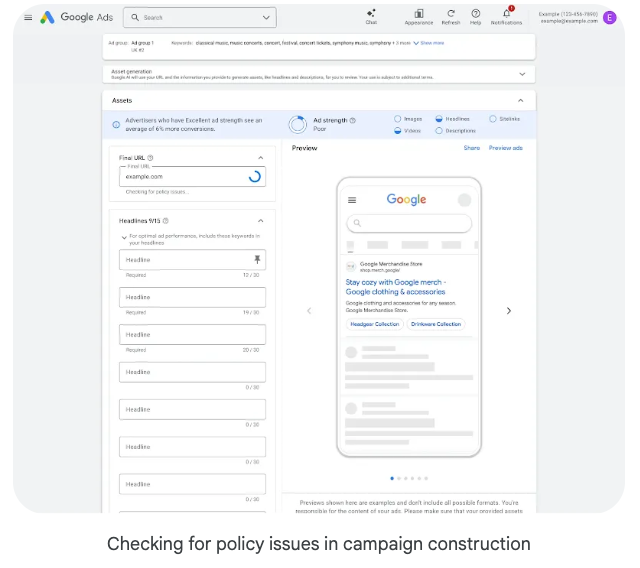

Google is rolling out Real-Time Policy Reviews, a new system designed to dramatically speed up ad approvals by bringing policy checks directly into the ad creation process.
What’s happening. The feature is currently available for Responsive Search Ads and will expand to additional campaign types later this year.
Instead of waiting for ads to enter a separate review queue after submission, advertisers now receive instant policy feedback while building ads inside Google Ads.
The system checks for issues in two stages.
During ad creation, advertisers receive real-time editorial checks for issues such as typos, capitalization problems or destination errors before saving the ad.

Once the ad is saved, Google immediately provides a policy decision. Ads without issues can begin serving almost instantly, while ads with more complex violations are directed to a new post-save policy review page explaining the issue and available next steps.

Why we care. The update could significantly reduce campaign launch delays for advertisers, especially during time-sensitive promotions, product launches and live marketing moments.
Between the lines. Google is separating policy issues into two categories.
Editable issues include straightforward problems advertisers can quickly fix within the workflow itself, such as formatting or destination errors.
Complex issues include violations requiring certifications, appeals or additional policy reviews.
The bigger picture. The update reflects Google’s broader push to make campaign management faster, more automated and more integrated directly into advertiser workflows.
For advertisers running reactive or short-window campaigns, reducing review delays could improve speed-to-market and reduce missed traffic opportunities.
What to watch. As Google expands Real-Time Policy Reviews across more campaign types, advertisers may see fewer delays between campaign creation and delivery — but automated policy enforcement could also increase the importance of catching compliance issues earlier in the creative process.