

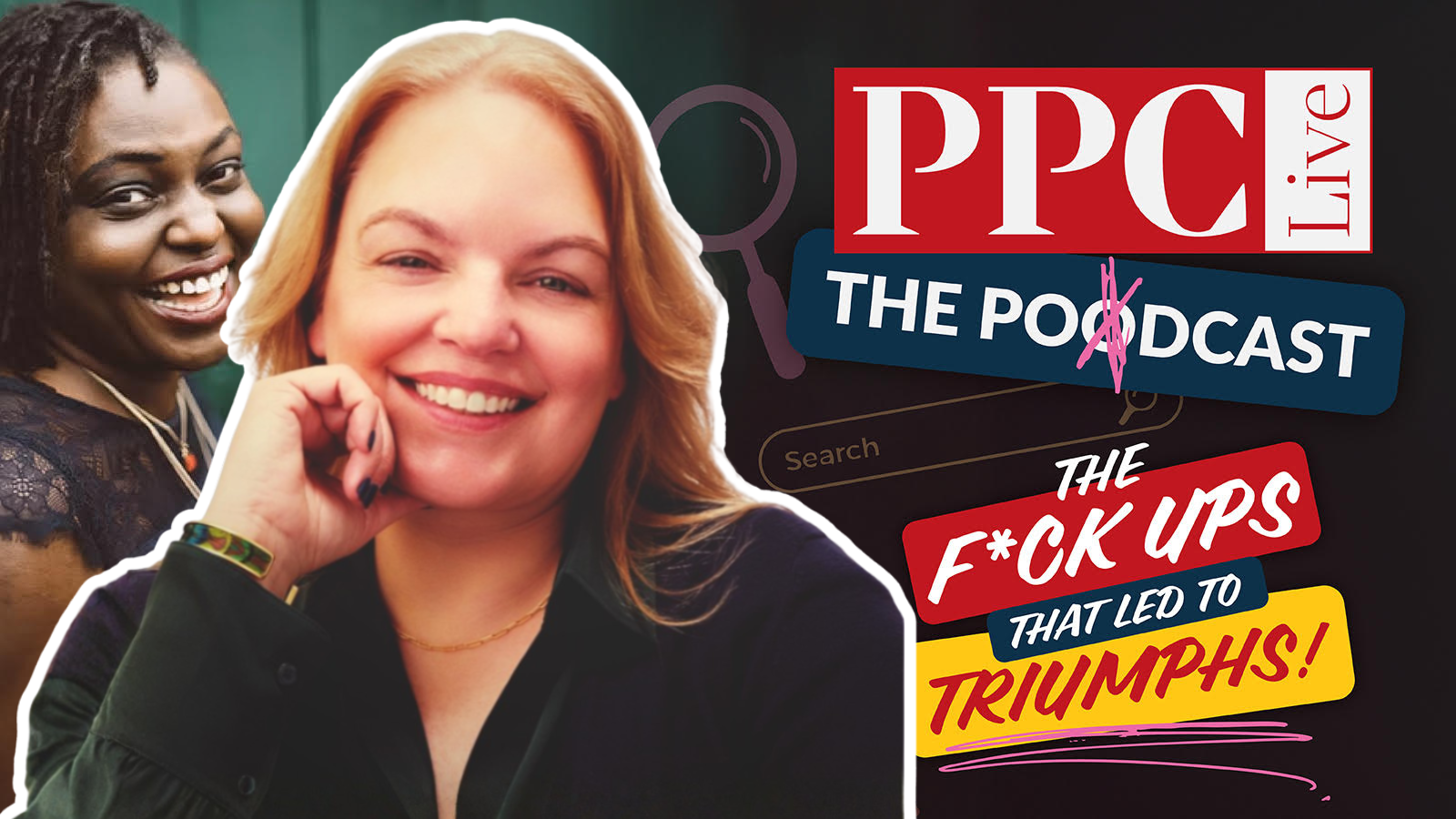
Google Ads Liaison Ginny Marvin, joined me this week on PPC Live The Podcast for a very interesting episode of her sharing mistakes, lessons she’s learnt and lessons the PPC community should be learning. According to Marvin, advertisers navigating the accelerating pace of automation and AI should resist knee-jerk reactions to platform changes and focus instead on understanding how updates affect their actual business goals.
Marvin discussed everything from costly campaign mistakes earlier in her career to Google’s August Smart Bidding changes, AI-powered tools and what advertisers should expect next.
Understand an update before reacting to it
Marvin said one mistake advertisers can make is immediately deciding that a Google Ads change is bad without first understanding exactly what is changing.
Her advice is to go back to the fundamentals: determine which campaigns are affected, understand the existing implementation and assess what the change means for the strategy and targets already in place.
That distinction is particularly important as Google introduces increasingly automated products and bidding systems.
Marvin addresses the August 17 Smart Bidding change
One of the biggest topics was Google’s August 17 Smart Bidding update.
Marvin stressed that the change only affects campaigns that are both limited by budget and overachieving against their target. Campaigns that aren’t budget constrained already operate in this way, she said.
For advertisers with fixed budgets, alternatives remain available. Marvin pointed to Maximize Conversions and Maximize Conversion Value without a target as options for advertisers who need to operate within a defined budget.
Targets become an even more important lever
Advertisers running budget-constrained campaigns with targets should pay particularly close attention to current performance.
Marvin recommended reviewing average target performance and accounting for the full conversion cycle. Advertisers that want to maintain their current average performance may need to adjust their targets accordingly.
Those that keep their existing target could find themselves entering different auctions, potentially changing bids and CPCs.
The bigger point is that advertisers should think about a campaign’s target as an efficiency lever tied directly to business objectives, rather than simply another Google Ads setting.
Business goals should be the North Star
That business-first approach was a recurring theme throughout the conversation.
Marvin said bidding strategies should account for factors beyond what’s immediately visible inside Google Ads, including promotions, inventory availability and product margins.
She later made a similar point about testing new products and features. If the objective is to increase conversion value, for example, CPCs may not be the right metric for judging whether a test succeeded.
Instead, advertisers should identify the metrics that reflect the actual outcomes the business is trying to achieve.
Don’t ignore Google’s Help Center
One surprisingly simple recommendation from Marvin: read the Help Center documentation.
While acknowledging that documentation isn’t always updated as quickly as advertisers might want, Marvin said Google’s help pages can contain valuable details about how products and bidding systems actually work.
She recalled discovering information in a Help Center article during her time at Search Engine Land despite believing she was already familiar with the subject.
For advertisers unsure whether they fully understand how a feature works, revisiting the documentation can provide a useful refresher before making major account changes.
Don’t expect AI tools to be perfect
The conversation also turned to newer AI-powered Google Ads tools such as Ask Advisor.
Marvin cautioned against expecting newer AI products to be 100% accurate, particularly as the underlying models continue to develop. Feedback from advertisers is important in helping those systems improve, she said.
That means marketers still need to bring their own expertise and judgment to recommendations produced by AI rather than treating them as unquestionable instructions.
Tried an automated feature before? It may be worth testing again
The speed at which Google’s underlying systems are improving could also change how advertisers approach features they’ve previously tested unsuccessfully.
Marvin argued that the old advice to try something again after it failed is increasingly relevant because many improvements now happen behind the scenes.
A feature or campaign approach that underperformed in an earlier test may behave differently after months of changes to Google’s models and infrastructure.
That doesn’t mean blindly retesting everything. Advertisers still need a clear hypothesis, appropriate success metrics and a defined testing strategy.
Build a testing culture around Google Ads
Marvin recommended establishing a dedicated testing budget where possible and developing a testing mindset across teams.
That also requires setting expectations with clients and stakeholders. As Google Ads continues changing rapidly, advertisers that have room to experiment may be better positioned to understand new capabilities before those capabilities become more central to the platform.
More AI and automation are coming
Asked what advertisers should expect over the next six to 12 months, Marvin pointed to features announced at Google Marketing Live that are still rolling out.
More broadly, she referenced comments from Google’s head of Ads and Commerce, Vidya Srinivasan, as a signal that Google remains committed to its current direction.
For advertisers, Marvin’s message was to start planning rather than waiting for the direction of travel to reverse. Teams that aren’t already testing newer capabilities should consider how they can begin doing so and prepare clients for what’s ahead.
Mistakes happen — how you respond matters
Marvin also shared a mistake from earlier in her PPC career involving an international client whose campaign budgets were accidentally set too high by a junior team member.
Her team responded by acknowledging the error without becoming defensive, explaining what happened without over-explaining it and quickly shifting the conversation toward what they could do next. They also increased communication and introduced stronger internal processes.
The relationship survived, and the client remained with the company for years.
Don’t throw junior team members under the bus
For managers dealing with a serious account mistake, Marvin was particularly clear about one thing: don’t blame the junior employee in front of the client.
Leadership should take responsibility for the team’s work, even when an individual made the error. Marvin argued that blaming an employee doesn’t reflect well on the manager from the client’s perspective.
Internally, mistakes should still be reviewed, but the goal of that conversation should be learning and growth rather than blame. Marvin recommended first resolving the immediate client problem, then giving people enough space before reviewing what happened and improving the processes that allowed it to occur.
The takeaway for PPC marketers
Despite the increasing role of AI, automation and Smart Bidding, Marvin’s message throughout the conversation was surprisingly consistent: the fundamentals haven’t gone away.
Understand what you’re trying to achieve, connect campaign decisions to business outcomes, choose metrics that reflect those outcomes, test deliberately and understand how the systems you’re using actually work.
Google Ads may be changing faster than ever, but advertisers still need to decide whether those changes make sense for the businesses they’re responsible for.