
Google is leaning harder on Gemini to police its ad ecosystem, saying the AI upgrade sharply improved scam detection while reducing false suspensions for legitimate advertisers. The numbers also show how fast ad safety is becoming an AI arms race.
Driving the news. In its 2025 Ads Safety Report, Google said it blocked or removed 8.3 billion ads globally and suspended 24.9 million advertiser accounts last year. More than 99% of policy-violating ads were stopped before they were ever shown, according to the company.
Google also said Gemini helped:
- cut incorrect advertiser suspensions by 80%,
- process 4x more user reports than the prior year,
- and catch scams faster through better understanding of ad intent.

By the numbers:
- 602 million scam-related ads removed
- 4 million scam-linked accounts suspended
- 4.8 billion ads restricted
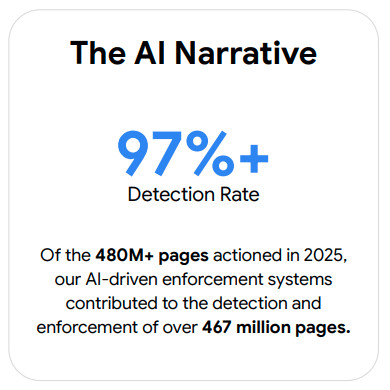
- 480 million web pages blocked or restricted
- 245,000+ publisher sites actioned
- 35 policy updates made in 2025

In the U.S.: Google said it removed 1.7 billion ads and suspended 3.3 million advertiser accounts in the United States in 2025. The top policy violations included:
- Abusing the ad network
- Misrepresentation
- Sexual content
- Personalization violations
- Dating and companionship ads

Why we care. Stronger AI-driven enforcement can now directly affect whether your ads run smoothly or get flagged. Google says Gemini is improving accuracy and reducing false suspensions, which could mean fewer unexpected disruptions for legitimate brands. At the same time, tighter automated reviews mean advertisers need to stay on top of policy compliance, since enforcement is becoming faster and more proactive.
However, this may mean more work for advertisers as several advertisers in the UK and US reported getting bulk ad disapproval alerts with no actual issues discovered.
How Gemini is changing enforcement. Google says Gemini can analyze hundreds of billions of signals — including account age, behavior patterns, and campaign activity — to identify malicious intent earlier than older keyword-based systems.
The company said that by the end of 2025, the majority of Responsive Search Ads were being reviewed instantly at submission, with harmful ads blocked before launch. Google plans to expand that capability to more formats this year.
Yes, but. More aggressive automated enforcement can be a double-edged sword for advertisers, especially if false positives interrupt campaigns. Google says Gemini’s better understanding of nuance helped reduce mistaken suspensions — a key issue for brands that depend on ad uptime.
The bottom line. Google is making Gemini central to ad safety — both to stop increasingly sophisticated scams and to reassure advertisers that tighter enforcement won’t come at the expense of legitimate campaigns.