When it comes to business, are you going with the cash flow? Do you have money coming in and money coming out in a perfect process?
That flow — between the money you’ve earned and the money that’s in your account — is the real challenge. That’s mastering the art of the cash flow. In this article, we’ll cover what business cash flow management looks like in practice, the tools that help you stay on top of it, and some helpful tips that could get you in the flow.
Why cash flow management is important (besides making money)
Cash flow management is what it sounds like, managing the cash coming in and out of your business, typically with the assistance of connected tools. Most small business cash flow problems aren’t caused by a lack of revenue. It could be timing, customers who pay late, subscriptions that renew unevenly, big seasonal expenses that land all at once. Or it could be lack of help. Either way, it’s a core part of growth and having the right flow support can help you find the right balance.
Small and medium businesses (SMBs) often face an extra challenge: Disconnected customer data that lives in one tool, invoices in another, and sales pipeline in a third, the full picture is almost impossible to see in real time. Salesforce research found that 50%+ of SMB leaders say their data is inconsistent across tools — which means by the time the picture is clear, the moment is gone.
The first-order problem
Before you think about scaling, there are a few core things that have to work. Leads need to get followed up on. Customer service can’t put your most important relationships at risk. And your team needs everything at their fingertips — so they can serve customers, close deals, and flag issues before they become problems. Cash flow is no different: It starts with getting the basics running reliably.
Build a cash management strategy that holds with these tips
A solid cash flow strategy simply requires a trusted system (with the right tools) — one that connects your customer activity to your finances.
Tip #1: Know your cash flow cycle
Your cash flow cycle is the time it takes from spending money (on inventory, people, tools) to collecting it from customers. The shorter this cycle, the less pressure you feel. Map it out explicitly:
- Inflows: When do customers typically pay? Are you on net-30 or net-60 terms? Do you offer subscriptions or retainers that give you predictable revenue?
- Outflows: What are your fixed vs. variable costs? Which expenses cluster at the same time each month or quarter?
- Gap: How long between outflow and inflow — and what’s your buffer if a big customer pays late?
Once you can see the gap, you can start closing it. Tactics like requiring deposits, shortening payment terms, or offering early-pay discounts are simple levers that many small businesses overlook.
Tip #2: Forecasting with fresh data
Tracking what’s already happened tells you where you’ve been. Forecasting — even a rolling 13-week cash flow model — tells you where you’re headed. You don’t need a finance background to do this. You need clean data: Open opportunities in your pipeline, expected close dates, average deal size, and recurring revenue.
A CRM that connects your sales activity to your financial picture makes this dramatically easier. When your team closes a deal in Salesforce, that data flows directly into your revenue forecast — no manual reconciliation required.
How do you organize your customer data?
Level up your business by transforming scattered data into actionable insights.


How the right tools support cash flow management
The right tools do more than just simplify your work — they’re the backbone of effective cash flow management. It’s not about having a higher volume of tools — just integrated tools that speak your language.
Tip #3: Try a smart money manager (like CRM)
Salesforce is a great example of a smart money manager (all CRM’s really). It’s dedicated to connecting sales, marketing, service, and well, cash, into one platform — so your team can see the full “flow” without jumping between systems. That means:
- Faster invoice cycles: Send invoices directly from the CRM as soon as a deal closes, reducing the gap between earning and collecting.
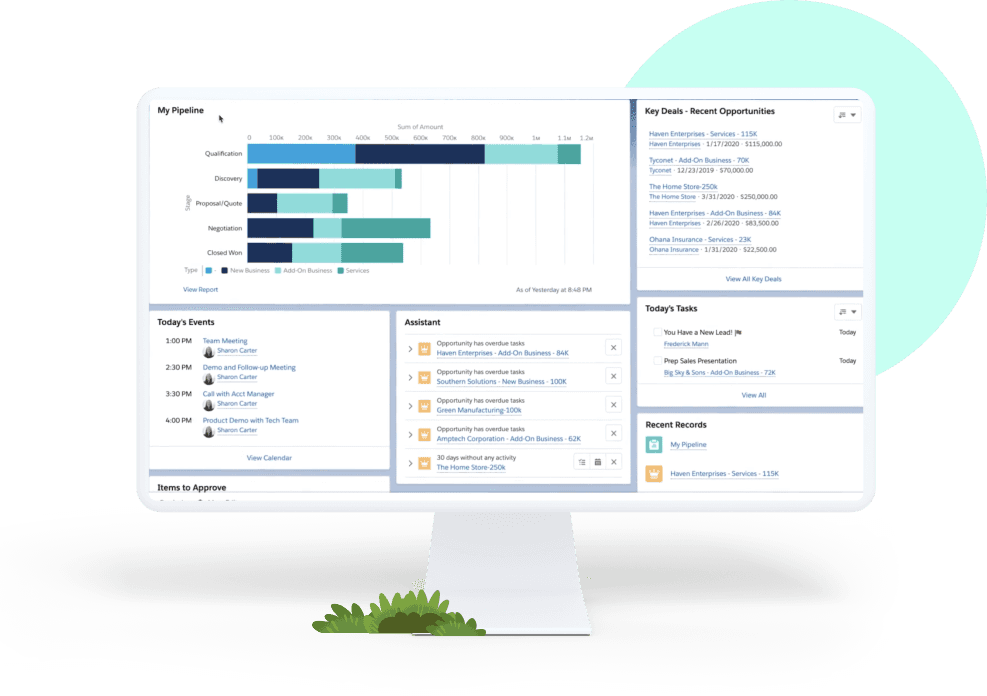
- Real-time pipeline vis: Know which deals are in flight and what revenue is expected — so your cash flow forecast is always grounded in real data, not guesswork.
- Automated follow-ups: Set up automated payment reminder sequences that go out before an invoice is overdue, not after.
- One customer view: 76% of SMB customers say their teams now operate off the same view of the customer — meaning no more reconciling conflicting data when a client asks about their account or payment history.
A modern CRM brings billing and invoicing features together — send invoices, track payments, and manage customer billing from the same place you manage your pipeline — which is a genuine time-saver for lean teams wearing every hat.
Grow your ambitions with the #1 AI CRM.
See what’s possible with the AI-powered CRM suite for growing teams.
Where AI fits into your cash flow strategy
Artificial intelligence (AI) is already changing how SMBs manage their finances — not as a replacement for good judgment, but to surface the right information faster. Salesforce research shows 88% of SMBs are engaging with AI in some part of their business, and 74% say the investment generated strong ROI. So, here are some ways AI fits into the flow of things:
Tip #4: Cut the cash tasks in half with AI
For cash flow management, AI agents are taking on the tasks that eat up your time without requiring your attention: Drafting payment reminder emails, flagging accounts that are trending toward late payment, surfacing which open opportunities are most likely to close this month. It’s the kind of work that usually falls through the cracks on a lean team — the follow-up that happens too late, the invoice that sat in a draft folder. Explore how to automate your small business operations with AI tools so you can focus your energy where it counts.
Get the Guide to AI for Small Business
Save time, automate tasks, and set your team up for success with this free guide to all things AI and business.


Smart cash management starts with one system
Manage your cash with trusted tools, and see how you can save time and money with AI. It all comes together for a better cash management cycle for you and your business. And we certainly hope you make a lot of cash.
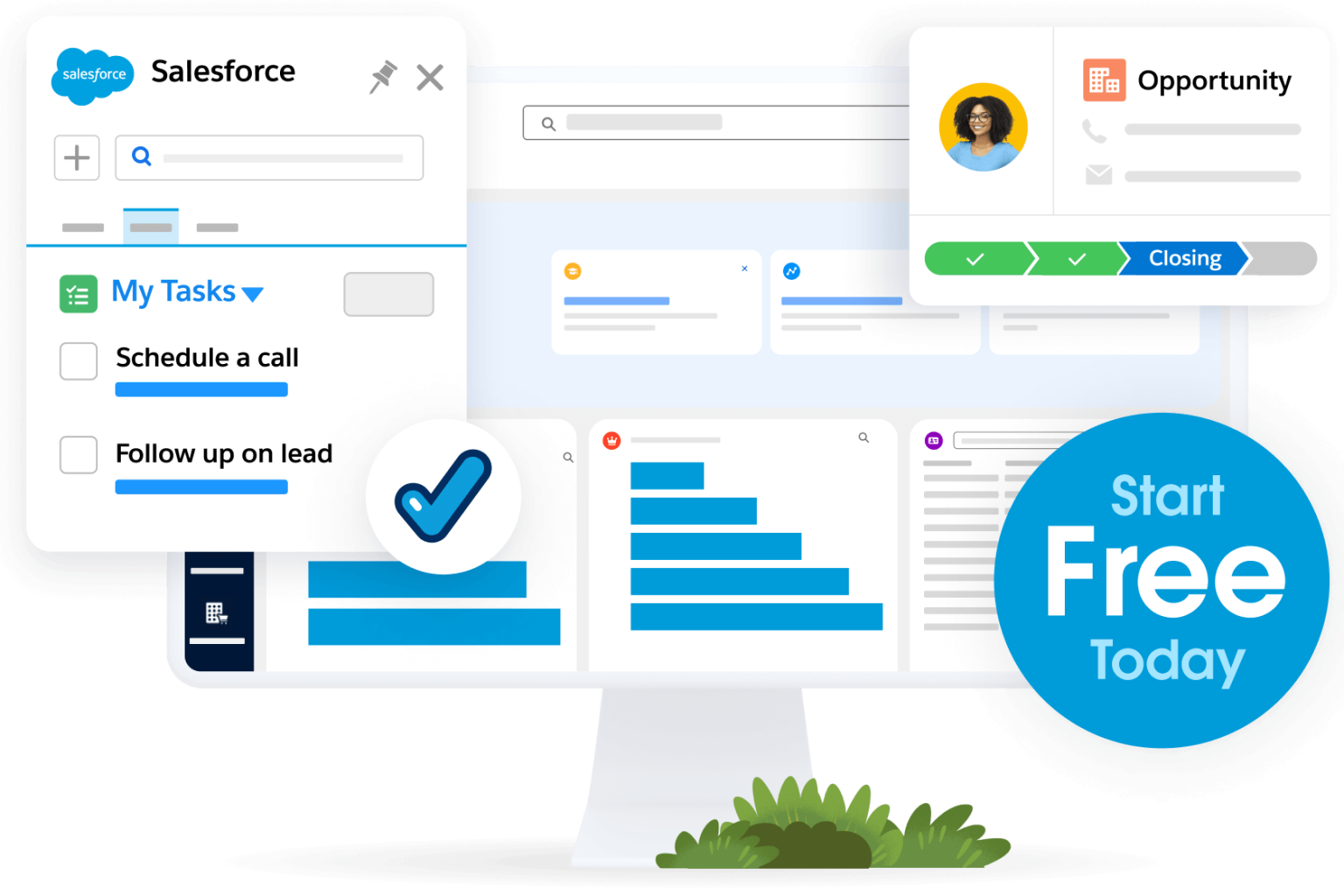
Get started with Salesforce for free or activate Foundations to try out Agentforce today.
AI supported the writers and editors who created this article.
What is cash flow management and why does it matter for small businesses?
Cash flow management is the process of tracking, forecasting, and optimizing the timing of money moving in and out of your business. For small businesses operating without a finance team, staying on top of cash flow is what keeps the lights on — even when revenue is growing.
What’s the difference between cash flow and profit?
Profit is what’s left after you subtract expenses from revenue. Cash flow is about timing — whether the money you’ve earned is actually in your account when you need it. A business can be profitable on paper and still face a cash crunch if customers pay late or expenses cluster at the wrong time.
How often should I review my business cash flow?
Most small business owners benefit from a weekly review at minimum, with a rolling 13-week forecast updated monthly. If your business is seasonal or you’re in a high-growth phase, more frequent reviews help you spot gaps before they become crises.
Can a CRM really help with cash flow management?
Yes — especially when it connects your sales pipeline to your billing and invoicing workflow. When deals close in your CRM and invoices go out automatically, you shorten the time between earning and collecting. You also get a real-time view of expected revenue that makes forecasting much more accurate. Learn more about Salesforce for small business to see how it works in practice.
What are the most common cash flow mistakes small business owners make?
The biggest ones are: relying on revenue figures instead of cash-on-hand, not following up on late invoices consistently, underestimating seasonal gaps, and failing to build a buffer for unexpected expenses. The common thread? Most of these are information problems — and a connected CRM platform helps solve them by keeping all your customer and financial data in one place.