Picture your top ten dream customers. You know their names, probably their coffee orders, definitely their pain points. Now picture your marketing treating all ten like they’re just another row in a 5,000-person email blast. That’s the gap account-based marketing (ABM) closes, and it’s simpler than the name suggests.
Here’s the catch for lean teams: You can’t be in every pitch, follow up on every lead, and write every email by hand. Something slips, and it’s usually the follow-up that would have landed your biggest deal. This guide walks through what ABM is, why it fits small and medium business (SMB) teams, the tools to get going, and tips you can try this week.
What account-based marketing is (and isn’t)
Account-based marketing (ABM) flips the usual funnel. Instead of casting a wide net and hoping the right company swims in, you pick the accounts you most want to win and build campaigns around them. Salesforce’s own ABM guide describes it as focusing on your highest-value accounts and notes that it complements traditional lead generation rather than replacing it.
Think of it as the difference between a flyer on every windshield and a handwritten note to the three people you actually want to work with. Your sales and marketing efforts point at the same targets, which means no more guessing about who’s worth a call.
Why ABM works for lean teams
Small teams have a built-in advantage here: You already know your best customers. ABM just gives that instinct a structure.
- Sharper focus: Fewer accounts means every email, ad, and call gets real thought instead of a template.
- Better alignment: Sales and marketing chase the same list, so nobody waits on a handoff that never comes.
- Stronger returns: Salesforce research cites that more than 79% of marketers report higher ROI from ABM than any other marketing effort.
It also protects the thing you’ve worked hardest to build — personal trust. When 64% of customers think companies are reckless with data, a message that clearly knows who they are and what they need stands out for the right reasons.
Learn account-based
marketing for free.


Account-based marketing strategies to start with
You don’t need a 40-slide plan. Start with these account-based marketing strategies and add more as you learn what lands.
Build a short target list
Aim for 10 to 25 accounts. Look at your best existing customers and find what they share: industry, size, the problem they came to you to solve. Then find more companies that look like them.
Map who decides what
Most B2B purchases involve more than one person. Note the owner who signs, the manager who uses the product, and the person who’ll raise a concern. Your messaging should speak to each.
Choose your most popular channels
Email, LinkedIn, a webinar, a direct note from the founder. Check where your target accounts already engage, then show up there. For a refresher on pairing lead generation with nurturing, try Trailhead, Salesforce’s free online learning platform. The Plan Marketing Content and Strategy Trail is a solid, free place to build your plan.




Tools that make ABM manageable
Spreadsheets get you through the first month. After that, you’ll want your account list, your emails, and your sales activity living in one place so nothing falls through the cracks.
That’s where your customer relationship management (CRM) system earns its keep. Salesforce brings marketing and sales into one view, so you can see which target accounts opened your email, visited your pricing page, or are ready for a conversation with your team. Marketing Cloud adds campaign tools like email journeys and segmentation, so each account gets a message built around what they’ve actually done. About 76% of SMB customers say their teams operate off the same CRM view, and for ABM that shared view is the whole game.
Artificial intelligence (AI) can handle the busywork too. With 88% of SMBs already engaging with AI, it’s well within reach for a small team. Use it to draft first-pass emails, summarize account activity, and flag which accounts are heating up, then add your own voice before anything goes out. If you want to see how AI fits into ABM specifically, the Enhance Your Account-Based Marketing Strategy Trail covers it step by step.
The marketing CRM for small business is here.
Automate your marketing campaigns with a connected tool built for growing businesses.

Account-based marketing tips you can use this week
Ready to try it? These account-based marketing tips keep things small and doable.
- Start with five accounts: Prove the approach on a handful before you scale it.
- Personalize one thing per touch: Mention their industry, a recent announcement, or a problem you know they’re facing.
- Agree on a handoff: Decide exactly when marketing passes an account to sales, and write it down.
- Track accounts, not just clicks: Measure how many target accounts are engaging and moving forward, not just how many emails got opened.
- Review monthly: Swap out accounts that go quiet and double down on the ones that respond.
Keep your expectations realistic, too. ABM takes a few cycles to show results, especially if your sales cycle runs long. The U.S. Small Business Administration has a handy walkthrough on researching your market and customers that pairs well with building your first target list.
What ABM looks like in practice
Say you run a 12-person company that sells scheduling software to dental practices. Instead of advertising to every dentist in the country, you pick 20 multi-location practices. Marketing sends each office manager a short guide on cutting no-shows, the founder follows up personally with the practice owner, and your CRM flags the moment someone from a target practice visits your demo page. Sales calls that day, while interest is warm.
Nothing in that plan needs a big budget. It needs a clear list, a consistent message, and a system that tells you when to act. Salesforce works best as the best hire you’ll make for a lean team: It handles the tracking and follow-up reminders so you can spend your time on the conversations that close deals.
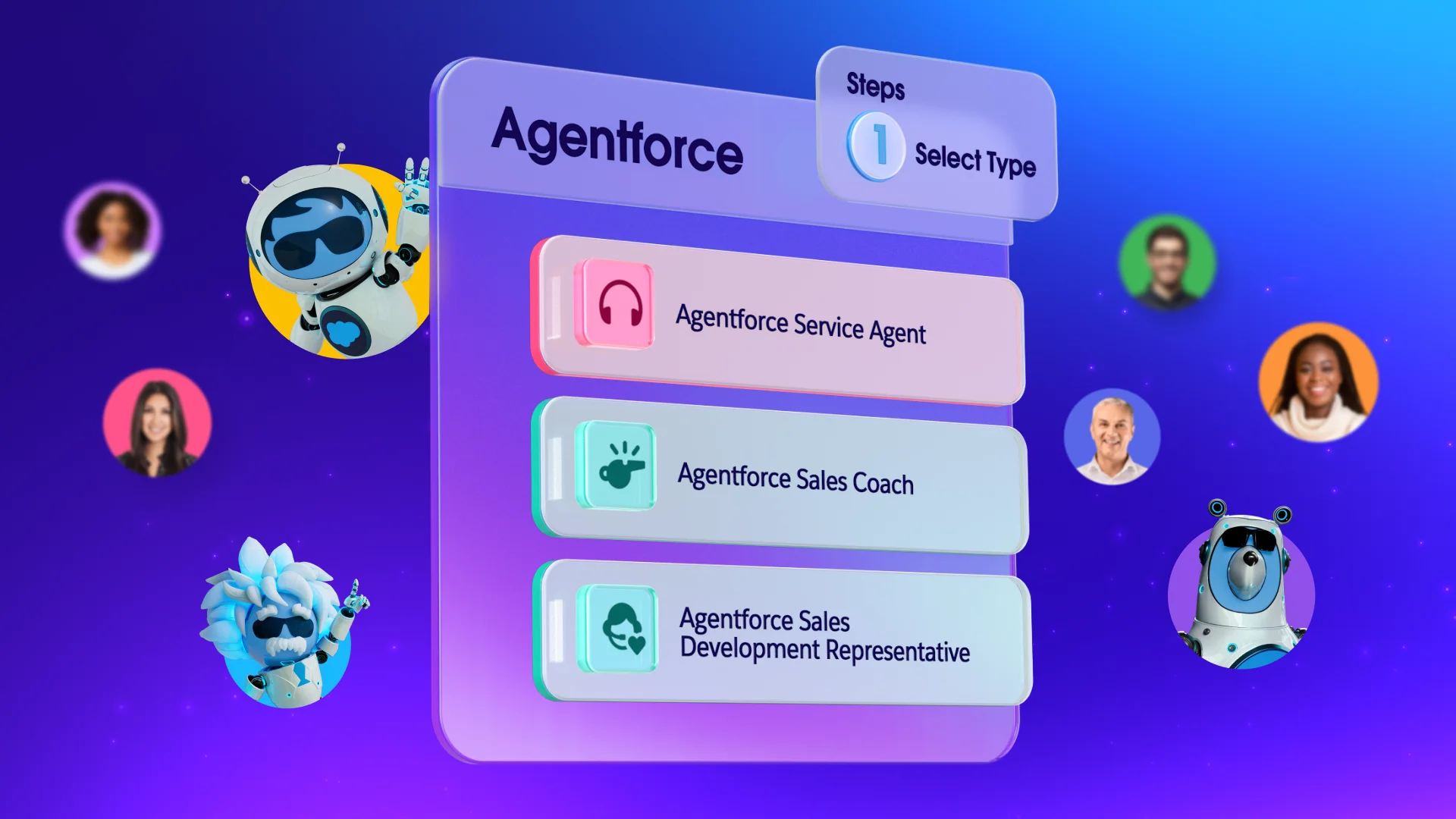
Salesforce also now offers Agentforce, which lets you set up AI agents to help with tasks like following up on leads and answering common questions, so your target accounts get a quick response even when your team is heads-down on a pitch.
Your first account-based marketing plan
Account-based marketing for small business doesn’t ask you to be bigger. It asks you to be more deliberate about who you’re talking to. Pick your list, pick your message, and let your tools handle the reminders.
Get started with Starter Suite for free or activate Foundations to try out Agentforce today.
AI supported the writers and editors who created this article.
What is account-based marketing in simple terms?
It’s a strategy where you focus your marketing and sales efforts on a specific list of high-value companies instead of a broad audience. Each account gets messaging built around its needs.
Is account-based marketing a good fit for a small business?
Yes, especially if you sell to other businesses and have a long sales cycle or a high-value product. A small team can focus on 10 to 25 accounts and still see strong results.
How many accounts should I start with?
Start with five to ten, then grow the list once you know what’s working. A short list lets you personalize without burning out your team.
What’s the difference between ABM and lead generation?
Lead generation casts a wide net to collect as many contacts as possible, while ABM targets chosen accounts. The two work well together, and you can learn how to pair them in the Trailhead module Get Started with Account-Based Marketing.
How do I measure whether ABM is working?
Track account-level progress: how many target accounts are engaging, how many meetings you book, and how many move into pipeline. Open rates alone won’t tell you much.