Every time you pick the corner coffee shop over a Starbucks, you’re helping a small business owner’s dream stay alive. It’s even right to say you’re supporting local jobs and adding flavor (literally) to your community. Those everyday choices you make have ripple effects that keep neighborhoods thriving and give bold business ideas the chance to grow.
Showing support doesn’t always mean spending more money or going out of your way. Often, it’s the simple gestures that matter most, from leaving a review to sharing a post online. In this blog, we’ll walk you through simple, meaningful actions you can take to support small and medium businesses (SMBs) and startups. By the end, you’ll see how easy it is to turn everyday support into long-term growth for the businesses you believe in.
What you’ll learn:
- 1. Make shopping local your first choice
- 2. Join small business loyalty programs
- 3. Offer your skills and mentorship to SMB owners
- 4. Follow and share small businesses on social media
- 5. Leave positive online reviews
- 6. Recommend small businesses through word of mouth
- 7. Partner with startups on projects
- 8. Get involved in community initiatives that promote small business
- How Salesforce supports small businesses and startups
- Thinking of starting your business journey?
1. Make shopping local your first choice
Big chains are everywhere, and yes, they’re convenient. But when you choose to shop at a local store, you’re putting money back into your community. In fact, about 68 dollars out of every 100 you spend at a local business stays right in your town or neighborhood, shaping jobs, schools, parks, and more. Every purchase is a small vote of confidence that says you believe in what they’re doing.
Local shopping feels different, too. You get to know the owners and hear their stories. You even find items you won’t see in the same old chain aisles. It’s more personal and, honestly, more rewarding. Even switching a few of your regular buys to local spots can make a big impact.
This doesn’t have to stop at home, either. When you travel, skip the usual multinational chain restaurants and stores and seek out local ones instead. You can try the neighborhood restaurant or book a local tour. It’s a simple way to put money directly into the hands of entrepreneurs wherever you go, helping their communities thrive while you get a more authentic experience.
Start with SMB Basics



2. Join small business loyalty programs
Small businesses love loyal customers. When you sign up for their rewards or loyalty programs, you’re showing them you’ll come back. That matters a lot because steady customers help them plan inventory and keep the lights on. Your repeat visits are worth more to them than one-off sales.
And the beauty is, these programs often give you perks that actually make sense. Maybe a free coffee, or maybe a discount on your next order. Sometimes it’s early access to a sale. It’s simple, but it makes you feel like a valued customer. And if you share the program with a friend, that’s another potential new customer walking through their door. Here are a few recommendations for getting started:
- Look for punch cards or points programs at your favorite local businesses.
- Ask if the business has an app or email list for rewards and updates.
- Actually use the rewards, so the business sees it working.
- Share good deals on social with your circle to help spread the word.
3. Offer your skills and mentorship to SMBs
Not every way of supporting an SMB involves spending money. Sometimes, what founders really need is someone who’s been there, done that, and can save them from a few rookie mistakes. If you’ve got experience in marketing, finance, or just how to build a team without burning out, that’s the kind of guidance that saves people months of trial and error. You can even recommend a few online courses, too.
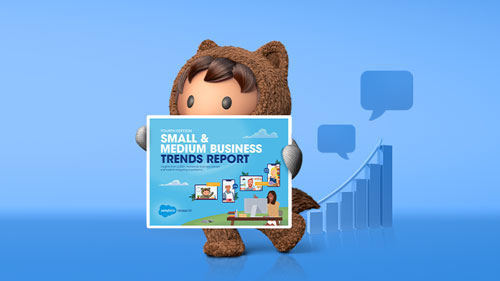
Tech guidance is another big one. According to the Small and Medium Business Trends Report, 76% of SMBs are spending more on technology now than they did last year, and only 5% are cutting back. That tells you founders know they can’t run on scattered spreadsheets and disconnected tools forever. The difficult part is taking the leap. It feels big, so a lot of SMBs just keep patching things together until the gaps start to show.
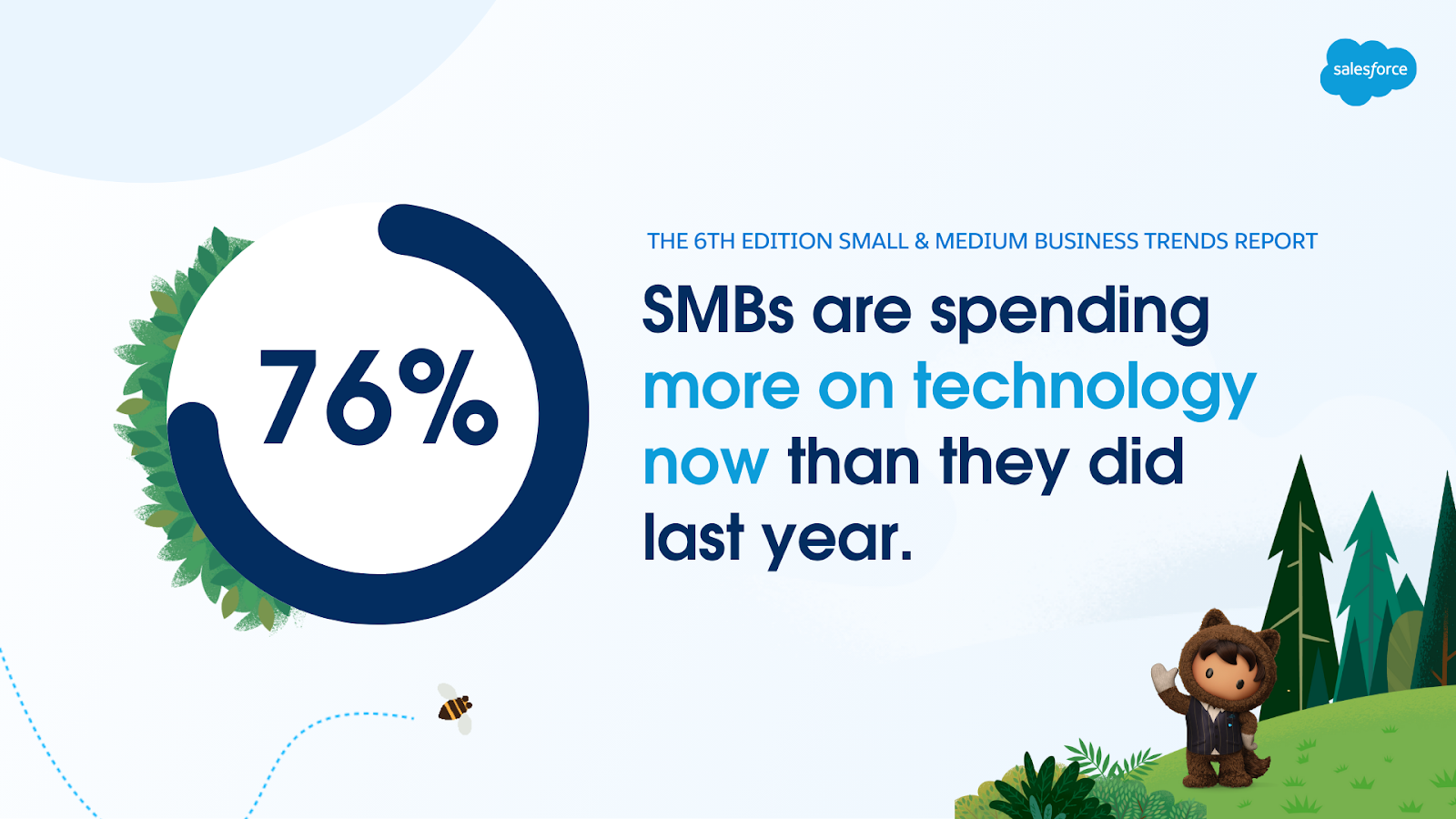
You can step in here and point them toward better options. For example, using customer relationship management (CRM) is a simple upgrade to bring all your customer interactions and data into one place. Or take Slack: it cuts out the email chaos and makes it way easier for a team to actually collaborate and get things done in a productive way.
Little fixes like these sound simple, but they can save business owners hours of stress. And if you want to actually help people set this up or share what’s worked for you, the Trailblazer Community is a great spot to jump in and connect with people who are figuring it out as they go.




4. Follow and share small businesses on social media
If you’re already scrolling Instagram or TikTok (which you probably are), hitting the follow button on a small business takes two seconds. Liking their posts or leaving a quick comment costs you nothing, but it makes a huge difference for them. Every little interaction bumps their posts higher in the algorithm and gets more eyes on their work. That’s free marketing they can’t always afford to buy.
Your network trusts you more than an ad. When you share a product you like, people actually pay attention. You might introduce someone to their new favorite bakery or help a local maker land a new customer. Think of it as being the hype person for small businesses. It’s easy, it’s fun, and it gives SMB owners the kind of visibility they need to grow. Here are some quick social support ideas:
- Leave a comment with a simple emoji (even that helps boost reach).
- Share a product post in your story and tag the business.
- Post a photo of what you bought and mention them.
- Tag a friend who’d actually love what they sell.
- Save their posts so the algorithm knows they’re worth keeping around.
Pro tip: If you’re a small business yourself, use a marketing CRM to track tags, shares, and engagement so you know what’s working and where to double down.
What can you do with a CRM built to reach more prospects?
Automate your marketing campaigns with a CRM built to grow. It all starts with Starter Suite.

5. Leave positive online reviews
Think about the last time you bought something new. Did you check the customer reviews first? Of course you did. A quick scroll through Google or Yelp usually makes or breaks the decision. In fact, according to a survey commissioned by Yelp, nearly nine out of ten shoppers trust reviews as much as personal recommendations. That’s why leaving a review for a small business is like handing them gold. And it only takes you a couple of minutes to write a few honest lines.
Reviews can be data points, too. Customers read it to decide if they should buy. Business owners read it to figure out how to get better. To create reviews, Google calculates review averages, and based on review recency and star rating, turns hundreds of opinions into quick takeaways, like “great food” or “slow service.” Artificial intelligence (AI) tools like ClientZen and LocalFalcon now read through reviews on Google and beyond, pulling out patterns and spotting pain points. So a single review from you can turn into insight that can change how a business runs tomorrow.
6. Recommend small businesses through word of mouth
As a form of advertising, word of mouth is undefeated. You can spend money on advertising ideas or stick posters on every wall in town, but when someone you know mentions a local shop they love, you pay attention. If you had a great experience with a small business, talk about it. Tell your friends, your coworkers, and your neighbors who always ask for recommendations.
You don’t have to wait for someone to ask for a recommendation either. Sites like Google Maps or Yelp let you recommend a place at any time. Even Facebook pages or Reddit posts can work if that’s where the business shows up. Some local directories and community platforms like Nextdoor also make it easy to share a quick shoutout. The point is, if you had a good experience, there’s no shortage of places to spread the word.
7. Partner with startups on projects
Startups are on a different growth trajectory than small businesses, but they need collaborators too. Partnering with one can be as simple as trying their product in your business or even just sharing resources. Unlike bigger companies, startups move fast. They listen and care about your input. In return, you get to try fresh ideas early or maybe even build a partnership that brings new people through your door. Here are a few ways you can partner with startups on projects:
- Co-develop products: Build a feature or service together that addresses a shared customer pain point.
- Joint marketing campaigns: Share audience reach with webinars, newsletters, or bundled offers.
- Pilot programs: Team up to test each other’s tools in real-world use cases and exchange feedback.
- Knowledge swaps: Trade expertise — a fintech helping with payments, a SaaS startup helping with business process automation (BPA).
- Community events: Host local meetups or virtual sessions to boost awareness and credibility.
The cheat sheet for winning at work


8. Get involved in communities that promote small business
You know what small businesses need more than anything? People to show up. And not just buying once and leaving, but actually showing up at the farmer’s market or the neighborhood fair. That’s where small businesses get seen and meet new customers. And honestly, it’s fun: You get free samples and quirky local finds. That kind of energy is something you’ll never get scrolling Amazon at midnight. Why wouldn’t you want to be part of that?
Luckily, you don’t have to look far to find these events. Local chambers of commerce, business associations, and even Facebook or Meetup groups are always posting about pop-ups, fairs, and school fundraisers. Showing up matters. You can help small businesses build brand awareness and create word-of-mouth buzz. And it makes your town feel alive instead of just being another place filled with the same old chain stores.
How Salesforce supports small businesses and startups
Small businesses and startups thrive when they have the right support system around them. Customers, communities, and partner ecosystems all play a part. Salesforce does too. Beyond offering tools for customer management, Salesforce has built programs and initiatives that give founders access to technology, funding, and opportunities to grow.
Here are a few ways Salesforce is helping new businesses build momentum and scale with confidence:
Salesforce Launchpad
Getting started is often the hardest part for startups. Salesforce Launchpad was created to make that journey easier and help startups grow faster. Eligible early-stage companies can access Starter Suite, an all-in-one CRM that brings sales, service, marketing, commerce, and productivity together, free for the first 12 months, as well as other exclusive offers on Salesforce solutions that scale with them as they grow.
In addition to Salesforce solutions tailored for startups of all stages of growth, Launchpad members get access to a startup community and exclusive events, hands-on AI and go-to-market guidance, and new distribution channels and partnership opportunities in the Salesforce ecosystem through AgentExchange.
Grow your startup faster with Salesforce Launchpad
Get tailored resources to build your GTM strategy and help your startup scale faster.



Salesforce Ventures
Startups need capital, networks, and guidance to take their business to the next stage. Salesforce Ventures provides all three. With more than $6 billion invested across 630 companies, it supports founders from seed through growth. The team backs companies for the long term, opening doors to mentorship and enterprise networks. Plus, it’s big on AI right now — doubling a $250 million fund into $500 million and beyond to fuel the next generation of intelligent startups.
Salesforce Partner Program
When startups are ready to build for the Salesforce ecosystem, the Partner Program gives them a powerful platform to do it. Joining as an independent software vendor (ISV) partner means getting access to AppExchange, a marketplace trusted by more than 150,000 customers. Startups also gain training, resources, and a community that helps them design and launch their solutions faster. It is an opportunity to become part of an ecosystem that accelerates growth.
Seeing is believing. Try Salesforce for free with a 30 day trial.
See how small businesses are using Salesforce CRM to scale fast. No credit card required, no software to install. It all starts with Starter Suite.
Enter a valid e-mail address
Enter a valid e-mail address
Enter a valid e-mail address
Enter a valid e-mail address
Enter a valid e-mail address
Enter a valid e-mail address
Employees
1-20 employees
21-200 employees
201-10,000 employees
10,001+ employees
Select the number of employees
Industry
Automotive
Communications
Financial Services
Healthcare
Tech
Education
Life Sciences
Manufacturing
Media
Nonprofit
Public Sector
Retail & Consumer Goods
Energy & Utilities
Other
Select your industry.
Country/Region
United States
Afghanistan
Albania
Algeria
American Samoa
Andorra
Anguilla
Antarctica
Antigua And Barbuda
Argentina
Armenia
Aruba
Australia
Austria
Azerbaijan
Bahamas, The
Bahrain
Bangladesh
Barbados
Belarus
Belize
Belgium
Benin
Bermuda
Bhutan
Bolivia
Bouvet Is
Bosnia and Herzegovina
Botswana
Brazil
British Indian Ocean Territory
Brunei
Bulgaria
Burkina Faso
Burundi
Cambodia
Cameroon
Canada
Cape Verde
Cayman Is
Central African Republic
Chad
Chile
China
Hong Kong
Macau
Christmas Is
Cocos (Keeling) Is
Colombia
Comoros
Cook Islands
Costa Rica
Cote D’Ivoire (Ivory Coast)
Croatia (Hrvatska)
Cyprus
Czech Republic
Democratic Republic of the Congo
Denmark
Dominica
Dominican Republic
Djibouti
Ecuador
Egypt
El Salvador
Equatorial Guinea
Eritrea
Estonia
Ethiopia
Falkland Is (Is Malvinas)
Faroe Islands
Fiji Islands
Finland
France
French Guiana
French Polynesia
French Southern Territories
F.Y.R.O. Macedonia
Gabon
Gambia, The
Georgia
Germany
Ghana
Gibraltar
Greece
Greenland
Grenada
Guadeloupe
Guam
Guatemala
Guinea
Guinea-Bissau
Guyana
Haiti
Heard and McDonald Is
Honduras
Hungary
Iceland
India
Indonesia
Ireland
Israel
Italy
Jamaica
Japan
Jordan
Kazakhstan
Kenya
Kiribati
Korea, South
Kuwait
Kyrgyzstan
Laos
Latvia
Lebanon
Lesotho
Liberia
Liechtenstein
Lithuania
Luxembourg
Madagascar
Malawi
Malaysia
Maldives
Mali
Malta
Marshall Is
Mauritania
Mauritius
Martinique
Mayotte
Mexico
Micronesia
Moldova
Monaco
Mongolia
Montserrat
Morocco
Mozambique
Myanmar
Namibia
Nauru
Nepal
Netherlands, The
Netherlands Antilles
New Caledonia
New Zealand
Nicaragua
Niger
Nigeria
Niue
Norway
Norfolk Island
Northern Mariana Is
Oman
Pakistan
Palau
Panama
Papua new Guinea
Paraguay
Peru
Philippines
Pitcairn Island
Poland
Portugal
Puerto Rico
Qatar
Republic of the Congo
Reunion
Romania
Russia
Rwanda
Saint Helena
Saint Kitts And Nevis
Saint Lucia
Saint Pierre and Miquelon
Saint Vincent And The Grenadines
Samoa
San Marino
Sao Tome and Principe
Saudi Arabia
Senegal
Serbia
Seychelles
Sierra Leone
Singapore
Slovakia
Slovenia
Solomon Islands
Somalia
South Africa
South Georgia & The S. Sandwich Is
Spain
Sri Lanka
Suriname
Svalbard And Jan Mayen Is
Swaziland
Sweden
Switzerland
Taiwan
Tajikistan
Tanzania
Thailand
Timor-Leste
Togo
Tokelau
Tonga
Trinidad And Tobago
Tunisia
Turkey
Turks And Caicos Is
Turkmenistan
Tuvalu
Uganda
Ukraine
United Arab Emirates
United Kingdom
United States Minor Outlying Is
Uruguay
Uzbekistan
Vanuatu
Vatican City State (Holy See)
Venezuela
Vietnam
Virgin Islands (British)
Virgin Islands (US)
Wallis And Futuna Islands
Western Sahara
Yemen
Zambia
Zimbabwe
Select your Country
State/province
北海道 – Hokkaido
青森県 – Aomori
岩手県 – Iwate
宮城県 – Miyagi
秋田県 – Akita
山形県 – Yamagata
福島県 – Fukushima
茨城県 – Ibaraki
栃木県 – Tochigi
群馬県 – Gunma
埼玉県 – Saitama
千葉県 – Chiba
東京都 – Tokyo
神奈川県 – Kanagawa
新潟県 – Niigata
富山県 – Toyama
石川県 – Ishikawa
福井県 – Fukui
山梨県 – Yamanashi
長野県 – Nagano
岐阜県 – Gifu
静岡県 – Shizuoka
愛知県 – Aichi
三重県 – Mie
滋賀県 – Shiga
京都府 – Kyoto
大阪府 – Osaka
兵庫県 – Hyogo
奈良県 – Nara
和歌山県 – Wakayama
鳥取県 – Tottori
島根県 – Shimane
岡山県 – Okayama
広島県 – Hiroshima
山口県 – Yamaguchi
徳島県 – Tokushima
香川県 – Kagawa
愛媛県 – Ehime
高知県 – Kochi
福岡県 – Fukuoka
佐賀県 – Saga
長崎県 – Nagasaki
熊本県 – Kumamoto
大分県 – Oita
宮崎県 – Miyazaki
鹿児島県 – Kagoshima
沖縄県 – Okinawa
Select a state/province
State/province
Alberta
British Columbia
Manitoba
New Brunswick
Newfoundland
Northwest Territories
Nova Scotia
Nunavut
Ontario
Prince Edward Island
Quebec
Saskatchewan
Yukon
Select a state/province
State/province
Alabama
Alaska
Arizona
Arkansas
California
Colorado
Connecticut
Delaware
District of Columbia
Florida
Georgia
Hawaii
Idaho
Illinois
Indiana
Iowa
Kansas
Kentucky
Louisiana
Maine
Maryland
Massachusetts
Michigan
Minnesota
Mississippi
Missouri
Montana
Nebraska
Nevada
New Hampshire
New Jersey
New Mexico
New York
North Carolina
North Dakota
Ohio
Oklahoma
Oregon
Pennsylvania
Rhode Island
South Carolina
South Dakota
Tennessee
Texas
Utah
Vermont
Virginia
Washington
West Virginia
Wisconsin
Wyoming
Select a state/province
We value your privacy. To learn more, visit our Privacy Statement.
Thank you!
Start your business journey with the right support
When you support a small business or startup, it keeps jobs flowing and communities buzzing. Sometimes it even means taking the leap yourself. If you’ve ever thought about starting a business, now’s the time. And yes, Salesforce makes that jump way less scary. You get tools to organize customers, support from communities, and programs like Launchpad to start with confidence.
So why not start strong? Begin your journey with the Starter Suite today. Looking for more customization? Explore Pro Suite. Already a Salesforce customer? Activate Foundations and try out Agentforce 360 today.
AI supported the writers and editors of this article.
Frequently Asked Questions (FAQs)
Supporting small businesses and startups keeps money circulating in local communities, creates jobs, and helps entrepreneurs bring new ideas to life. It also leads to more diverse products, services, and experiences compared to large corporations.
You can leave positive online reviews, follow and share their social media posts, recommend them to friends, or join loyalty programs. Even small gestures can go a long way in helping a business grow.
Yes. Many startups are moving away from spreadsheets and investing in tools like CRM for startups to stay organized and manage customers effectively. The right technology helps founders automate tasks to save time and reduce errors.
Online reviews build credibility and influence buying decisions. Positive reviews on platforms like Google, Yelp, or social media can boost visibility and attract new customers who trust feedback from other people.
You can shop local, attend community events, join initiatives that spotlight small businesses, or volunteer your professional skills. Every action helps small businesses thrive and strengthens the community as a whole.