
If you’re creating good content but it’s not getting the love it deserves, you may have a distribution problem.
Luckily, you’re in the right place. We’ll break down how to build a content distribution strategy, choose the right channels, and get more mileage out of every asset.
Key takeaways
- A content distribution strategy gives your content somewhere to go. It maps out where your content shows up and how it looks.
- Owned, earned, and paid channels all play different roles. Most brands use all three, but the balance looks different for everyone.
- Great content doesn’t distribute itself. A good repurposing workflow can turn one strong asset into weeks of content.
- Perch by Hootsuite keeps distribution from getting messy. Plan, schedule, and manage content across multiple channels from one place.
What is a content distribution strategy?
A content distribution strategy is a plan for getting your content in front of the right audience, using a mix of owned, earned, and paid channels.
A social-first approach takes it a step further by repurposing content for different social channels — like a 30-second clip for TikTok or a thread for X. Same content, but packaged in a way that feels native to each platform.
Do it better with Hootsuite, the all-in-one social media tool. Stay on top of things, grow, and beat the competition.
Owned vs. earned vs. paid distribution
Content distribution generally falls into three buckets: owned, earned, and paid. What separates them is who controls the channel and whether you’re paying for the placement.
| Distribution | What it means | Examples | Best for |
| Owned | Content is distributed through channels your brand controls | Website, blog, email newsletters, organic social content | Maintaining brand visibility and nurturing your audience |
| Earned | Content distributed or amplified by people and organizations outside your brand | Social shares and mentions, press coverage, guest posts, backlinks, user-generated content | Building credibility |
| Paid | Content is distributed through paid placements | Social ads, search ads, display ads, sponsored content, creator partnerships | Reaching specific audiences, scaling content quickly, and giving campaigns a boost |
Most brands benefit from a combo of all three, but that doesn’t mean you should invest in them equally.
Owned channels give you a foundation you actually control. Earned distribution lends you credibility. And paid distribution is how you put your best content in front of a specific audience, at whatever scale you can afford.
Why do you need a content distribution strategy?
A content distribution strategy helps your best work travel further. It gives you a plan to reach more people, extend the life of high-value assets, and shape each piece for the channels where it has the best chance to land.
Great content doesn’t automatically get reach
You can pour your heart into creating a great piece of content, but that doesn’t guarantee people will see it.
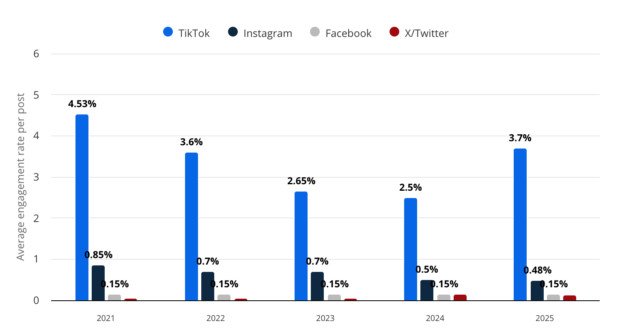
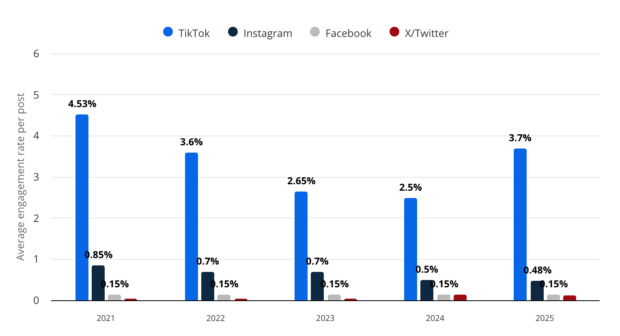
Facebook, for example, has an average engagement rate of only 0.15%. Over on Instagram, it isn’t much better at 0.48%. So if your last post underperformed, that’s not bad luck. It’s just the reality of organic reach in 2026.
Source: Statista
A distribution strategy is what actually changes those odds. It gives you a plan to reshare and repackage your content for other channels, giving it more than one shot at finding an audience.
It extends the lifespan of high-value assets
A solid distribution strategy puts your best content to work for longer. It turns one webinar into a handful of short clips. A blog post into a carousel. A research report into weeks of LinkedIn posts from your CEO.
That also takes some pressure off your content calendar. Instead of creating new content for every platform, you’re finding fresh angles in work you’ve already done.
It meets your audience where they are
Your audience isn’t hanging out in one place, and they’re definitely not consuming content in the same way.
A distribution strategy helps you bring your ideas to the channels your target audience already uses. Someone may never sit through a 45-minute webinar, but will happily watch a 30-second clip, or skim the highlights in an Instagram carousel.
You’re not asking anyone to come find your content. You’re just showing up where they already spend their time.
It makes content feel native to each platform
Every platform has its own style and mood. What works on LinkedIn will probably sound out of place on TikTok.
A good distribution strategy accounts for that. Instead of dropping the same asset everywhere, you intentionally reshape it for each channel. The result is content that actually feels like it belongs.
It keeps your brand top-of-mind
The more often people see your brand in the feeds, the easier it is to stay top of mind.
A distribution strategy is what keeps that content in circulation, across different channels and content types, without your team having to invent something new every day.
How do you build a content distribution strategy?
You build a content distribution strategy by getting clear on your goals, choosing the right channels, and creating a repeatable plan for how content gets repurposed.
Here’s the process, step by step:
- Start with a goal
- Know your audience and where they are
- Give every channel a job
- Perform a content audit
- Build a repurposing workflow
- Plan your distribution in waves
- Measure and iterate
1. Start with a goal
A strong content distribution strategy starts with a clear business goal.
For example:
- Drive traffic to your website
- Build authority in your industry
- Support a product launch or campaign
Pick a goal or two, then choose a small group of metrics that match them. For example, if you’re building authority, track backlinks and brand mentions. If you want website traffic, look at clicks and referrals.
And resist measuring every channel against the same benchmark. A LinkedIn post does a different job than a YouTube video, so success will look different for each.
2. Know your audience and where they are
Before you choose your channels, get clear on where your audience actually spends time.
“Ultimately, your content distribution channels need to make sense for your audience,” says Beth Owens, Head of Content at Superfiliate. “If you’ve tried distributing content on X and it isn’t getting traction, it could be because it’s not a channel your audience actually spends much time on.”
Your social analytics can show you where your audience is strongest. But don’t stop there: Your website analytics and social listening data can help too.
3. Give each channel a job
Once you know where you’re showing up, decide what each channel is for:
- A discovery channel helps new people find you. TikTok, for example, is a top product discovery platform for Gen Z.
- A consideration channel helps people get to know you better. Think YouTube videos, blog posts, or podcasts — basically anywhere there’s room to go deeper.
- A retention channel gives existing customers a reason to stick around and reengage (think: a Facebook group or Slack community).
Sometimes, one channel will do a bit of everything. The point is to know what you want each platform to accomplish, so your distribution gets a lot less random.
4. Perform a content audit
Before you make more content, take inventory of your existing inventory. There’s usually more than people expect, plus a diamond or two buried in the rough.
As you go, flag any assets that still feel relevant or performed well the first time. Score each one for repurposing potential — it can be as simple as low, medium, or high.
5. Build a repurposing workflow
Next, decide how to mold these assets for other channels.
“Different content formats will lend themselves naturally to different channels,” says Owens. She gives the example of a webinar, which can be cut into clips for YouTube and LinkedIn, while its main takeaways can be repurposed for an email.
Where things get tricky is doing this consistently.
“The most important thing is building a repeatable process. AI is an excellent partner here!” Owens shares.
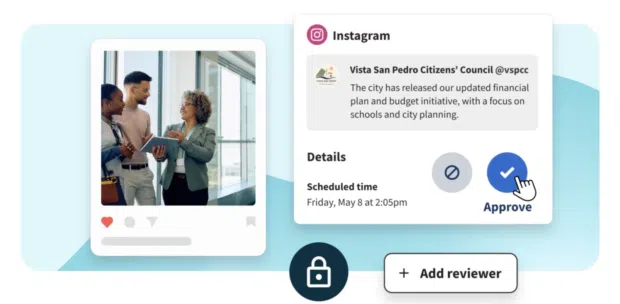
For example, a simple process might look like: upload a webinar transcript > ask AI to pull five main takeaways > create assets > review and publish. As you scale, add more structure around it, like clear owners and approval stages.
6. Plan your distribution in waves
Most marketers put a lot of effort into one big content launch. But a better approach is to think of distribution in waves.
Map out how the same piece can keep circulating over time. Maybe the report launches on Monday, a LinkedIn post follows the next day, and short video clips roll out a week later.
For teams building a distribution strategy for the first time, Owens recommends literally mapping it out:
“Using a pen and paper to sketch out which channels that content will feed into is really helpful to visualize the flow and understand what systems you need to put in place to make this happen,” she shares.
7. Measure and iterate
Once your content is out in the wild, pay attention to what actually happens to it.
Go back to the goals and metrics you set in step one. Which marketing channels are driving the most reach? Which formats get people to click or engage?
Use these learnings to adjust your distribution plan. If short-form video consistently outperforms static posts, make more of it. If LinkedIn drives traffic (but Instagram builds awareness), let each channel keep doing what it does best.
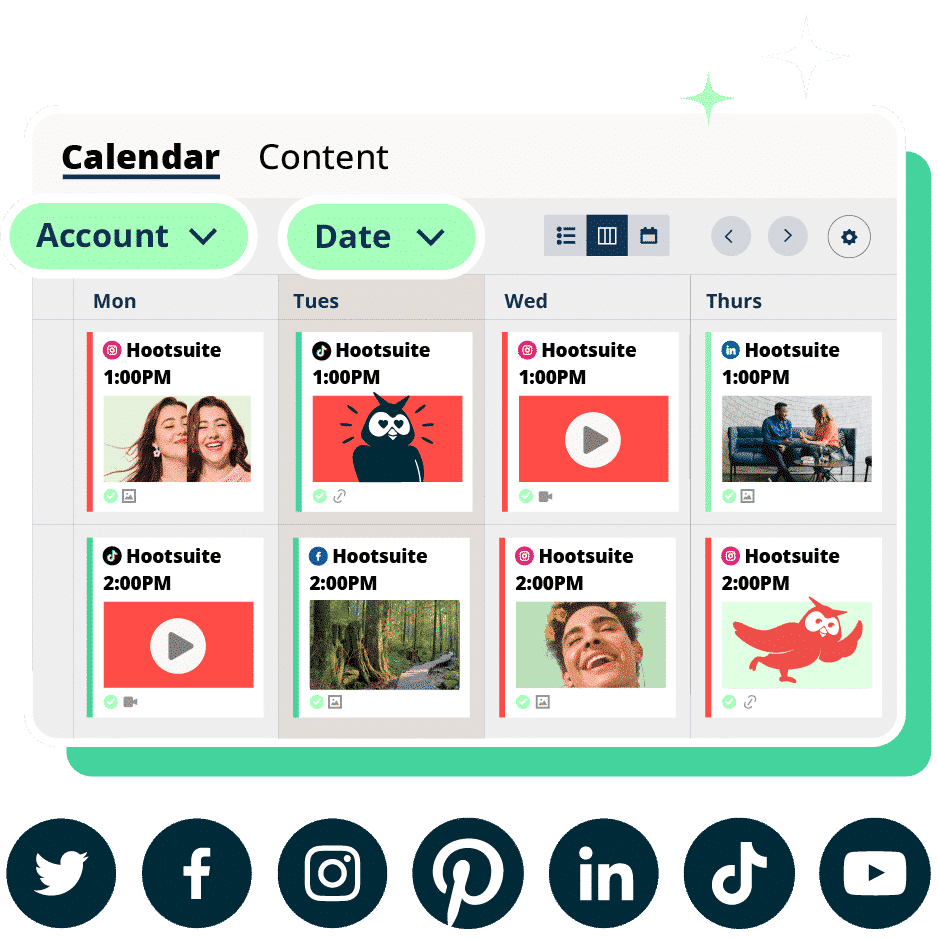
What are the best channels for content distribution?
The best content distribution channels are social media, search, influencers and creators, and email. Let’s take a closer look at where each channel shines.
Social media
Social media is a discovery engine, with 61% of consumers saying they found a new brand or product there in the past year.
It’s also one of the most flexible channels on this list. You can use organic posts to build engagement over time, or use social media ads when you need to reach a specific audience faster.
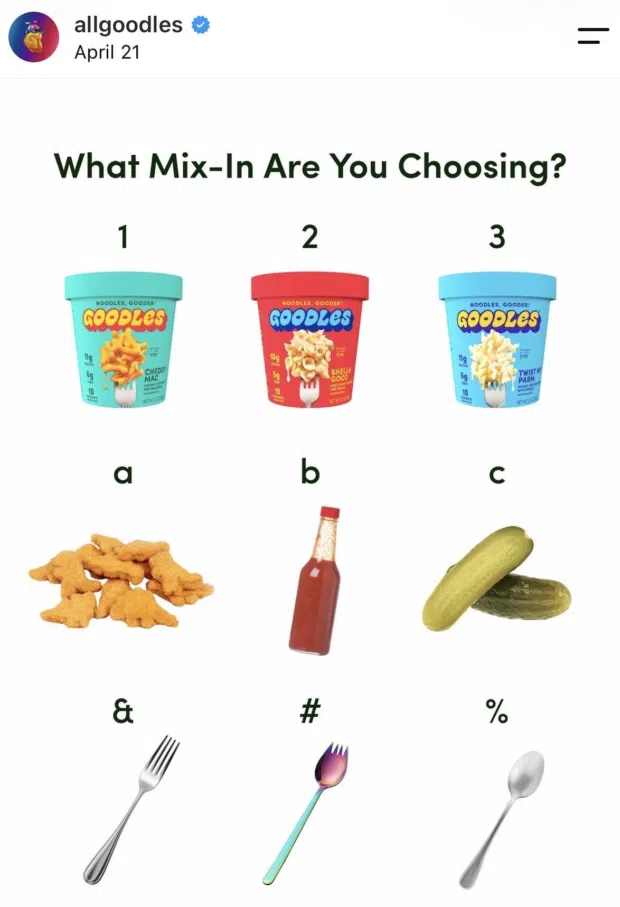
Source: Goodles
Pros:
- Supports earned, paid, and owned content distribution
- Reaches audiences across generations
- Gives you quick feedback on what’s resonating
Cons:
- You’re dependent on platform algorithms
- Content creation takes time, but AI tools can help
- Maintaining too many platforms can spread your team thin
Search and your website
Search has one big advantage over other distribution channels: intent. You’re catching people when they’re actively hunting for an answer or solution.
And unlike a social post, which gets most of its attention in the first few days, a well-optimized blog or landing page can pull in visitors months (even years) later.
The cherry on top? Marketers ranked it as the top channel for ROI in 2026.
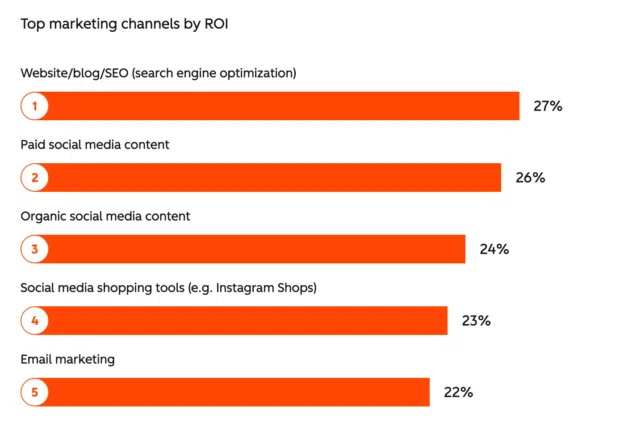
Source: HubSpot
Pros:
- Keeps generating traffic long after publication
- Long-form content becomes source material for social media posts, emails, videos, and more
- Supports the whole funnel, from awareness to conversion
Cons:
- Organic traffic takes time to build
- Algorithm updates can shake up your rankings overnight
- Requires ongoing SEO
Influencers and creators
The average person follows seven brands on social media. For influencers, that number nearly doubles to 13, according to Deloitte.
People also trust creators more than brands: 83% of consumers say they see the creators they follow as genuinely trustworthy sources of information.
Influencer marketing gives you access to an audience that’s already paying attention, through a voice they like.

Source: Glossier
Pros:
- Gets you in front of an audience that’s already engaged
- Adds a trusted third-party voice your brand can’t replicate on its own
- Can make branded content feel more native to the platform
Cons:
- Finding the right creator-brand fit takes time
- Influencer rates vary widely
Email might be the most underrated channel on this list. It’s the one place where the audience raised their hand and said “yes, please send me things.”
That kind of permission is rare, and it’s exactly what makes email so good for putting new content directly in front of people who already care.
Pros:
- Reaches people who already opted in
- You’re not dependent on a feed algorithm
- Easy to segment content for different audiences
Cons:
- You have to build and maintain a healthy email list
- Inbox competition is high
- Sending too often can lead to fatigue or unsubscribes
How does Hootsuite help you distribute and repurpose content?
Hootsuite helps you turn big content ideas into channel-ready posts, organize them in one calendar, schedule them across networks, and see what’s working once they go live.
Plan and schedule across networks with Perch
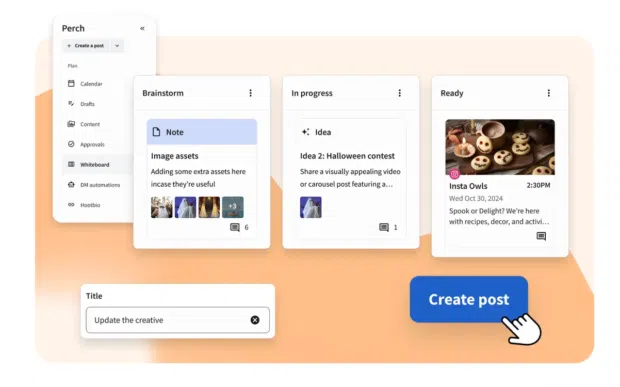
Juggling multiple channels, campaigns, and publish dates gets messy fast. Perch gives you one place to keep track of everything.
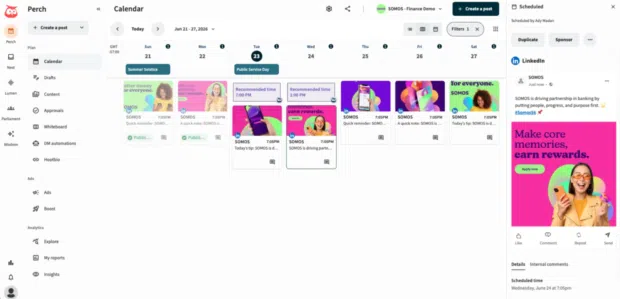
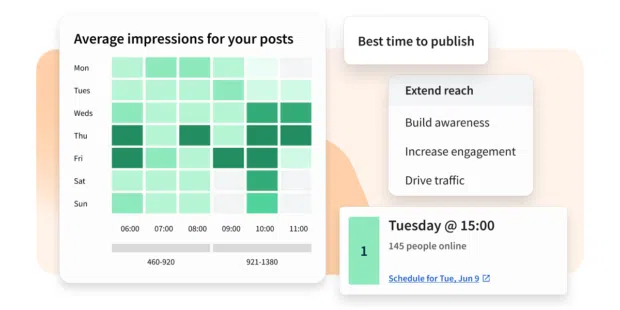
Use the drag-and-drop calendar to map out your distribution plan, customize content for each network, and schedule posts when your audience is paying attention.
Perch also holds up as your content scales. Share ideas on whiteboards, collaborate on drafts, and send posts through approval, so nothing slips through the cracks.
Repurpose content with Wisdom
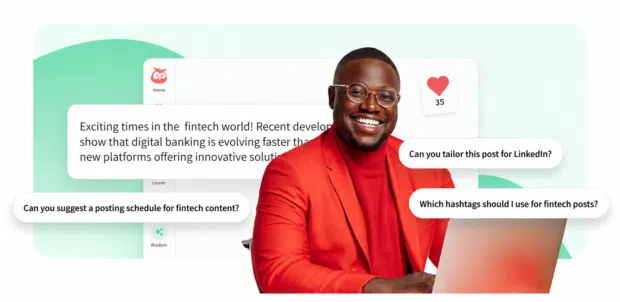
Wisdom, Hootsuite’s social-first AI, helps you turn one asset into a dozen more. Ask it to brainstorm new angles, rewrite a post for a different channel, adjust the tone, or turn whatever your audience can’t stop talking about into your next piece of content.
And because Wisdom works inside Perch, it can drop a draft directly into your content calendar and schedule it for when your audience is actually online.
FAQ: Content distribution strategy
What is the difference between owned media, earned media, and paid media?
When should I use paid content distribution?
How does Hootsuite help you distribute content?
What are the top KPIs to track for content distribution?
What are the most effective channels for content distribution?
Distribute your content with Hootsuite. Use Perch to plan, customize, approve, and schedule posts across networks from one content calendar. Then use Wisdom, Hootsuite’s social-first AI, to repurpose your best ideas into fresh social content and schedule posts when your audience is actually online. Try Hootsuite free today.
The post Content distribution strategy: A social-first framework for 2026 appeared first on Social Media Marketing & Management Dashboard.