
It’s time to stop cloning your winning ad and start planning creative like a media buyer, with one distinct message for every audience you want to reach.
Audience fragmentation has long been a structural problem in Meta advertising: too many ad sets chasing overlapping audiences, splitting conversion data, and driving up costs. Meta addressed much of this by limiting interest targeting and pushing advertisers toward fewer, broader ad sets with Advantage+.
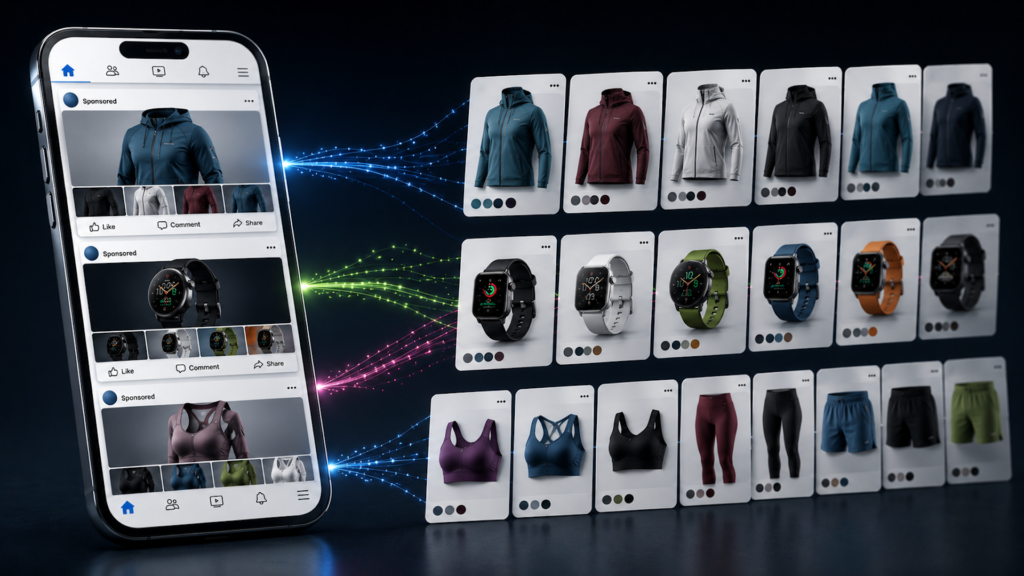
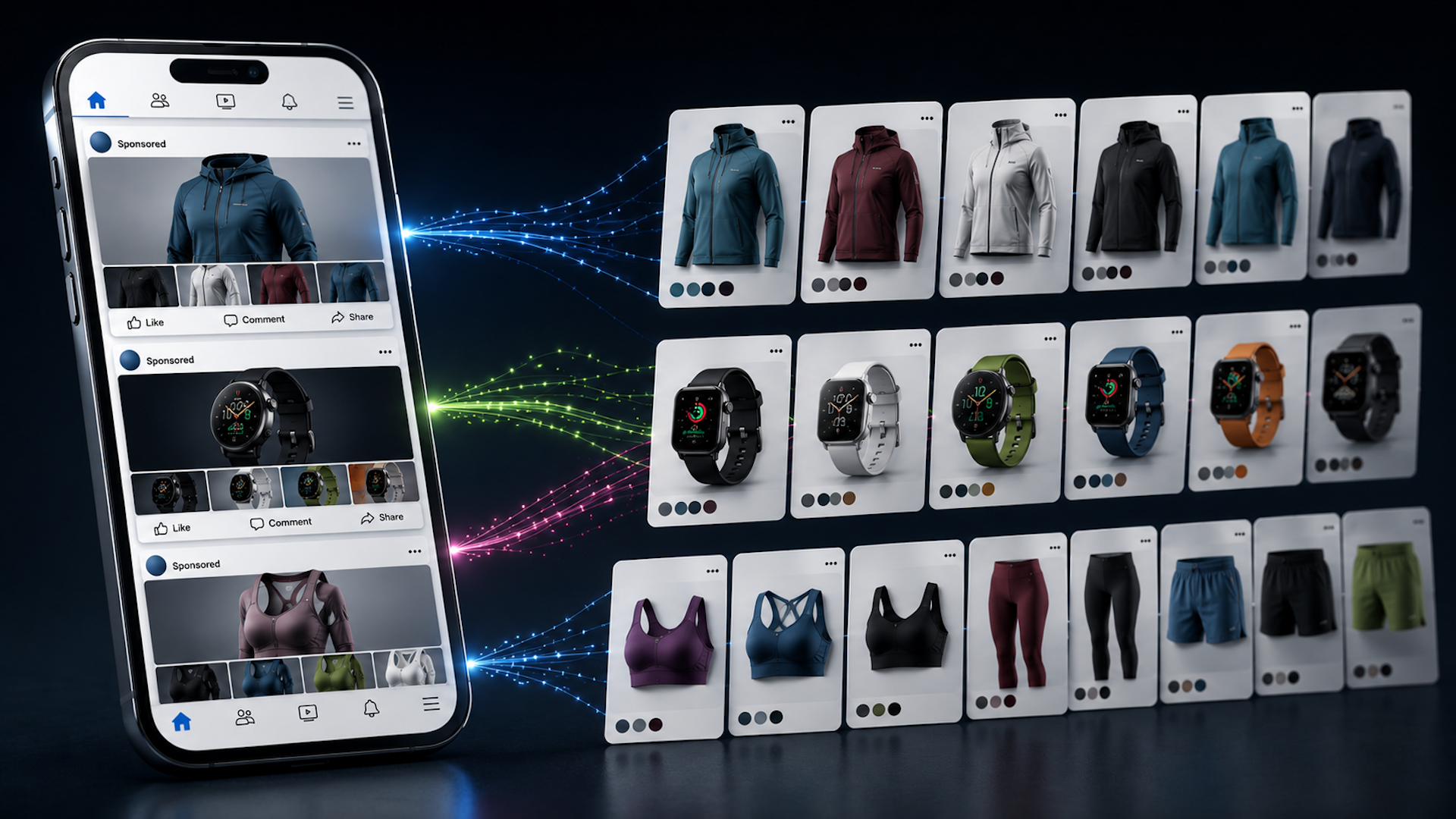
Creative adds another layer of fragmentation. Meta’s AI now reads your creative to decide who sees each ad. Your creative is the targeting now. When multiple ads make the same pitch, they can end up reaching the same audience.
Here’s how to spot creative-led fragmentation in your account and fix it by planning creative the way media buyers used to plan audiences.
Fragmentation in the ad set structure
To understand the new fragmentation trap, it helps to remember why the old one was so expensive. Traditional fragmentation had two costs:
- The overlapping audience trap: When five ad sets targeted overlapping interest audiences, they didn’t reach five different groups. They fought over the same users and inflated their cost per mille (CPMs) in the process.
- The learning phase trap: Every ad set needed enough conversions to exit the learning phase. Splitting your budget five ways meant none of them got there, so the algorithm never had enough clean data to optimize any of them well.
Today’s settings play a smaller role in deciding who sees your ads. Meta’s AI analyzes what each ad actually says and matches it to the users most likely to respond to that specific message.
In practice, this means every ad functions as its own targeting criterion. For example, an ad that opens with a pain point should find problem-aware buyers. An ad built around social proof should find skeptics. An ad leading with a discount should find price-driven shoppers. This is what people mean when they say creative is the new targeting.
The fragmentation problem occurs when you launch 10 ads that all essentially say the same thing. That’s because Meta doesn’t receive 10 targeting instructions. It receives one instruction repeated 10 times. All 10 ads are targeting the same portion of your market. They’re competing against each other in the auction, saturating that segment until it fatigues, and never actually touching your buyers.
You end up paying more to reach fewer people while massive audience segments sit untouched. That’s fragmentation and why Meta suggested fewer ad sets and broader audiences. While that approach helps fix fragmentation at the account level, it doesn’t help clear up redundancies within the creative level.
Dig deeper: Meta Ads: Why creative diversity matters more than volume
Uncover the keywords, ads, landing pages, and strategies driving your competitors’ paid search success—and find your next opportunity to outperform them.
How to spot creative fragmentation
Creative fragmentation doesn’t show up as a warning in Ads Manager. That’s not how you’re going to spot it. Instead, it shows up as a pattern across a few familiar metrics:
- An increase in frequency coupled with stalled reach: If frequency keeps rising but reach doesn’t, it’s likely your ads are circling the same pool of people instead of expanding to new ones.
- An immediate plateau of newly launched ads: If new creative spikes briefly and then settles into the same performance as everything else, it’s likely cannibalizing your existing ads.
- Fatigue happening more quickly with new creative: When every ad hits the same segment, that segment burns out faster, so each new variation has a shorter shelf life than the last.
- A creep in CPCs without a cause: Similar ads bid against each other for the same impressions, and you pay the difference.
The fix: Plan creative like a media buyer
The fix for this kind of fragmentation is something you may think you don’t need anymore: audience planning. Instead of building them in ad set settings, you build them into the creative. How do you do this?
Map your buyer personas
Define each distinct audience. For example, the problem-aware buyer, the skeptic, and the price-driven shopper. Most accounts think that they’re already doing this, when in reality, they’re often using creative that speaks to only one audience.
Assign one distinct messaging angle per persona
Each persona gets its own angle: a different hook, a different core message, and a different offer. If two ads could trade their first lines without anyone noticing, that’s a pretty strong indicator that they’re using the same angle. When each ad carries a genuinely different message, you’re giving Meta’s AI a reason to deliver each one to a different audience.
Give each audience fresh hooks on their own schedule
Audience segments fatigue at different speeds. The persona with the biggest population might sustain for weeks, while a narrow segment may burn out in days. Track the frequency and results for each audience separately. Then, when an ad starts to fatigue, you can write a new hook aimed at the same audience. The goal is to make sure every audience always has an ad talking to them.
Managing creative like a media plan
Once the angle-per-persona structure is in place, forming a few key habits will help keep fragmentation at bay:
- Judge your ads as a group, not one by one: One winning ad isn’t the goal anymore because leaning on a single ad wears out one audience fast while leaving you in a blind spot for other audiences. Instead, look at all ads over your various audiences.
- Run a monthly overlap audit: List every live ad and group them by core messaging, ignoring format. If more than two or three ads are carrying the same message, this is your cue to consolidate them.
- Strengthen your first-party data: The AI matches creative to people using the conversion signal you feed it. Cleaner pixel and CRM data makes every angle’s audience matching sharper, which will also widen the performance gap between a differentiated account and one with repetitive messaging.
Dig deeper: How to read Meta Ads metrics like a system, not a scoreboard
One audience per ad, one ad per audience
Winning advertisers will build creative libraries that function like media plans, with every persona named and addressed and no two ads fighting over the same buyer.
Meta’s AI has decided that your creative is your targeting. You can ask one question of every ad before it launches: Who is this for that my other ads aren’t already reaching? If there’s no good answer, you don’t have a new ad. You have a new way to pay twice for the same audience.