

Two-thirds of consumers have made a purchase decision directly based on an influencer’s recommendation in the last year, with 29% doing so 10 times or more, according to The Next Wave of Influence Report. This is even more true for younger consumers, with 81% making an influencer-inspired purchase in the last year.
Influencer marketing is now a key part of the customer journey, including the decision phase. Although influencer content has become synonymous with industries like fashion, lifestyle products, and food and beverage, its potential extends way beyond that.
For traditional industries—financial services, healthcare, insurance to name a few—this should be a wake-up call. As younger generations’ content consumption and buying preferences converge on social, these are the exact brands that stand to benefit from influencer marketing most. Now is not the time for legacy industries to fall back on traditional marketing tactics if they expect to grow.
Influencer marketing has the power to reroute the customer journey, especially in some of the most traditional spaces. Why stagnate when you can innovate?
Influencers open the door to your next generation of customers
According to our influencer report, 49% of Gen Z say they prefer influencer content over traditional ads, with only 15% preferring the latter. For the most-online generations, influencer marketing is both a discovery engine and a bottom-of-funnel decision driver.
Throughout my time working in influencer marketing, getting incumbent brands to understand the power of influencers has always been a tougher sell. But the “sell” is far from surprising: all businesses need to meet consumers where they are, and increasingly, that’s on social.
To opt out of working with influencers—who have built captive audiences on social—is a total miss.
Marketers identified that the most valuable opportunity with influencer marketing is expanding their reach to new audiences, according to the same report. Given how product discovery habits are shifting, there is an urgent need to get in front of untapped audiences. Consider that 50% of Gen Z car buyers bought their last vehicle through an online channel. Or that 82% of Gen Z and 77% of Millennials use social to research financial advice, per our Q3 2025 Sprout Pulse Survey.
How influencer marketing is changing the customer journey in unexpected industries
We hear so much about how brands collaborate with influencers for their authenticity, but that only reveals a fraction of the business case. Consumers are smart. They recognize an ad or a paid partnership, even when it’s coming from an influencer they follow and trust. But influencers can afford traditional industries something that has been nearly impossible to achieve to date: the ability to bring a product or customer service experience to life in a more genuine way.
Automotive industry
Take the automotive industry. Car manufacturers like Honda are striking a balance between content and experiential quality by tapping influencers to show their vehicles in action. These partnerships can support buyers’ research process long before they step foot in a dealership, in a way that high-production commercials and website slideshows can’t.

The influencer report found that niche creators have an edge when it comes to influencing product decisions. The more an influencer’s content and audience aligns with your automotive brand and target demographic, the more likely the content you create together will resonate.
For Honda, that means partnering with content creators like @mobile_mama_reviews. Her understanding of the industry and partner-focused content aligns well with a specific market Honda is targeting: drivers wanting family-friendly cars.

Financial services
Similarly, financial services brands are leaning on “fin-fluencers:” influencers who share financial content, the perceived experts many consumers turn to for advice.
While developing an influencer strategy might seem risky in such a highly regulated sector, fin-fluencers’ loyal followings make partnering together a strong long-term investment. The key is finding the right influencers who actually use your product or service, and are credentialed and highly knowledgeable.
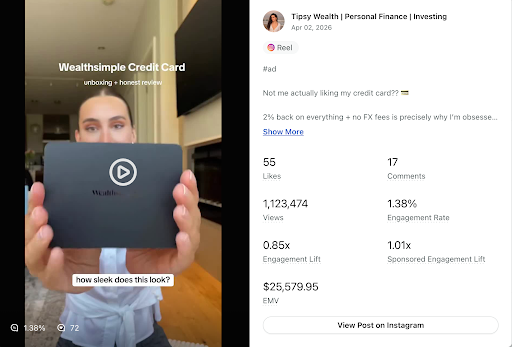
Like when Wealthsimple partnered with @TipsyWealth, a personal finance creator who helps her followers maximize their savings and investments. A single post about the brand’s credit cards received over $25,000 in earned media value and 1.1 million views to date, according to Sprout Social Influencer Marketing.
Healthcare & pharmaceuticals
Many healthcare brands are skeptical of so-called wellness influencers. The online wellness space has a reputation for spreading misinformation. But not showing up the way patients want is a long-term liability that allows false health claims to snowball. According to a Q3 2025 pulse survey, almost 30% of all consumers admit to following wellness advice from social media.
Influencer content helps healthcare brands take control of the narrative by tapping into creators’ loyal audiences. But it’s important to find influencers who don’t expose you to reputational damage and have the education or experience to back up their claims.
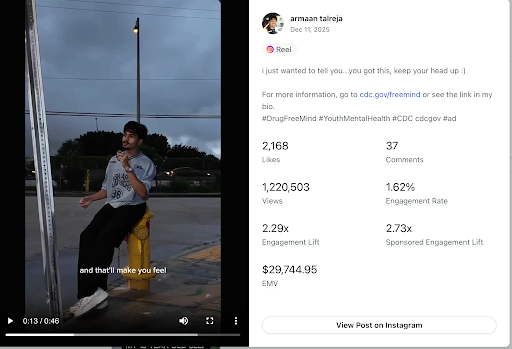
The Center for Disease Control and Prevention partnered with creator @armaant, a creator who speaks openly about mental wellbeing, to promote their guide to drugs and mental health. According to Sprout Influencer Marketing, the post received an earned media value of nearly $30,000 and 1.2 million views to date.
How marketers should approach working with influencers (especially in legacy industries)
Brands in sectors like automotive, financial services and healthcare have been slower to embrace influencer marketing for many reasons: industry regulations, assumptions about their target audience and a preference to retain full creative control over campaigns, to name a few.
The magic of brand and influencer collaborations manifests most when marketers relinquish control. Influencers know their audiences and what will (or won’t) land. But letting go of the creative reins is tough for brands beholden to strict regulatory and compliance mandates.
If you can’t escape being over-prescriptive with your content briefs, it’s worth asking if influencer marketing is the right choice for your brand. (Partnering on a Reel that requires formal credits at the end misses the point.) That’s not to say that influencers should get carte blanche, but you do need to strike the right balance between being firm and being flexible when it comes to influencer management.
Most importantly, brands have to remember that influencer marketing content isn’t simply a studio-produced ad. In the same way mascots like Flo from Progressive have become cultural icons, influencers can create cultural, relatable moments around your brand in the place your audience spends a majority of their time—on social.
This doesn’t have to be hard sell content that details the ins and outs of your coverage plans and deductibles. It should lend a voice and (in some cases) a face to your brand, one that lives rent-free in consumers’ memories until they eventually need your product or service.
For more on building an effective influencer marketing contract, check out our guide and template.
How to measure the ROI of your influencer marketing efforts
For brands used to running campaigns across TV, print or radio (let alone organic social), influencer marketing poses a new measurement challenge, especially for more complex deal cycles common in legacy industries.
The underlying issue is that influencer marketing can’t be compared apples to apples against other channels like paid social or display ads. Influencer partnerships are unique to media, in that the advertiser gets two outcomes: organic impressions and a creative asset that can be repurposed across channels. There are multiple elements of the spend to consider. Marketers need to understand their industry benchmarks for each channel they use before declaring whether or not an initiative was successful.
Measuring performance solely on the organic influencer posts won’t tell the full story, because your influencer efforts shouldn’t exist in a silo. Strategically weaving influencer assets into your broader media mix is what makes influencer marketing so effective. Defining a clear measurement approach upstream that accounts for the entirety of your “influencer media buy” is how you’ll understand the true impact of an influencer campaign.
The way you measure influencer efficacy will depend on the type of campaign you’re running at any given time. Assessing an influencer partnership aimed at growing brand awareness looks a lot different than gauging one intended to drive repeat customer purchases.
Another important (but often overlooked) variable in the influencer ROI equation is cost savings. Yes, influencers offer reach, they offer content creation expertise. But the content they deliver has legs far beyond social—and at a fraction of the price of working with some creative agencies. A six-month influencer partnership can quickly turn into a full asset library that can fuel your paid efforts, website content and even email marketing. It’s hard to put a price on working smarter.
Chart a stronger customer journey with influencer marketing
Influencer marketing has gone from an experimental tactic to a sophisticated go-to-market framework.
Influencer marketing may be less familiar territory for regulated or more traditional industries, but it’s one well worth exploring. Businesses in these sectors have to reach new audiences in order to grow. If you’re not meeting potential customers where they spend the most time, you can’t expect them to invest in you.
The post For legacy industries, influencer marketing is key to evolving the customer journey appeared first on Sprout Social.