Key Takeaways
Did you know that small businesses on LinkedIn currently see organic engagement rates between 4% and 8%, according to our research? In fact, personal profiles generate 5x more engagement than company pages, making individual connections the primary engine for brand awareness. Consequently, 73% of small business leaders now rank professional networking as their biggest growth driver, leading to a network expansion rate that is 17% faster than that of their enterprise-level counterparts.
So, are you ready to get connected? We’ll show you how to use LinkedIn to build a thriving network, generate leads, and position your company as an industry expert, supporting your efforts across sales, marketing, and service. Let’s get started.
Craft an intentional LinkedIn connection strategy for growth
To effectively use LinkedIn for small business, you can’t just send random invitations and hope for the best. A strategic approach is important, and we’ve got some tips:
1. Optimize your business page or profile
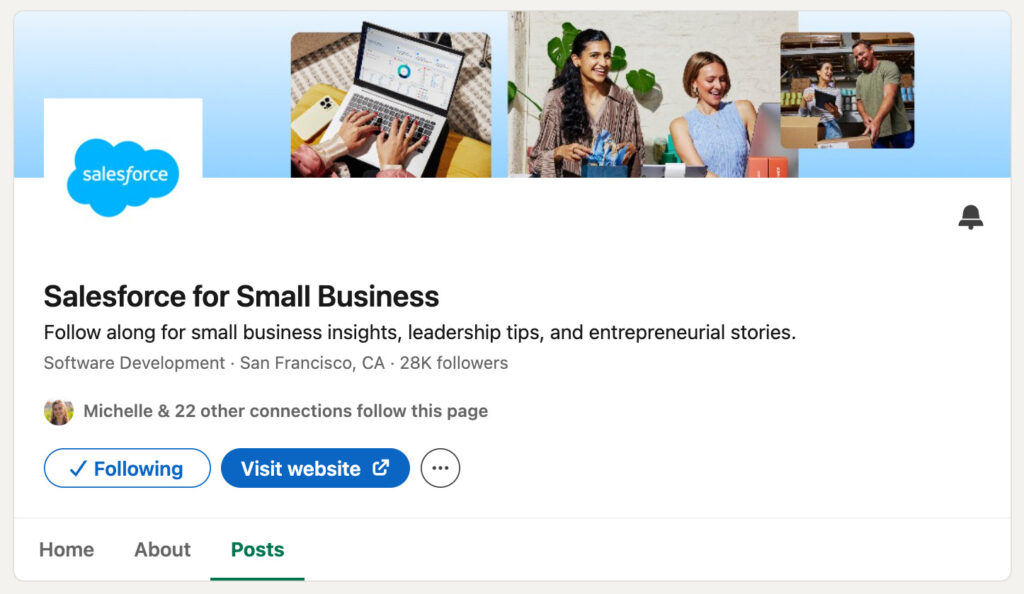
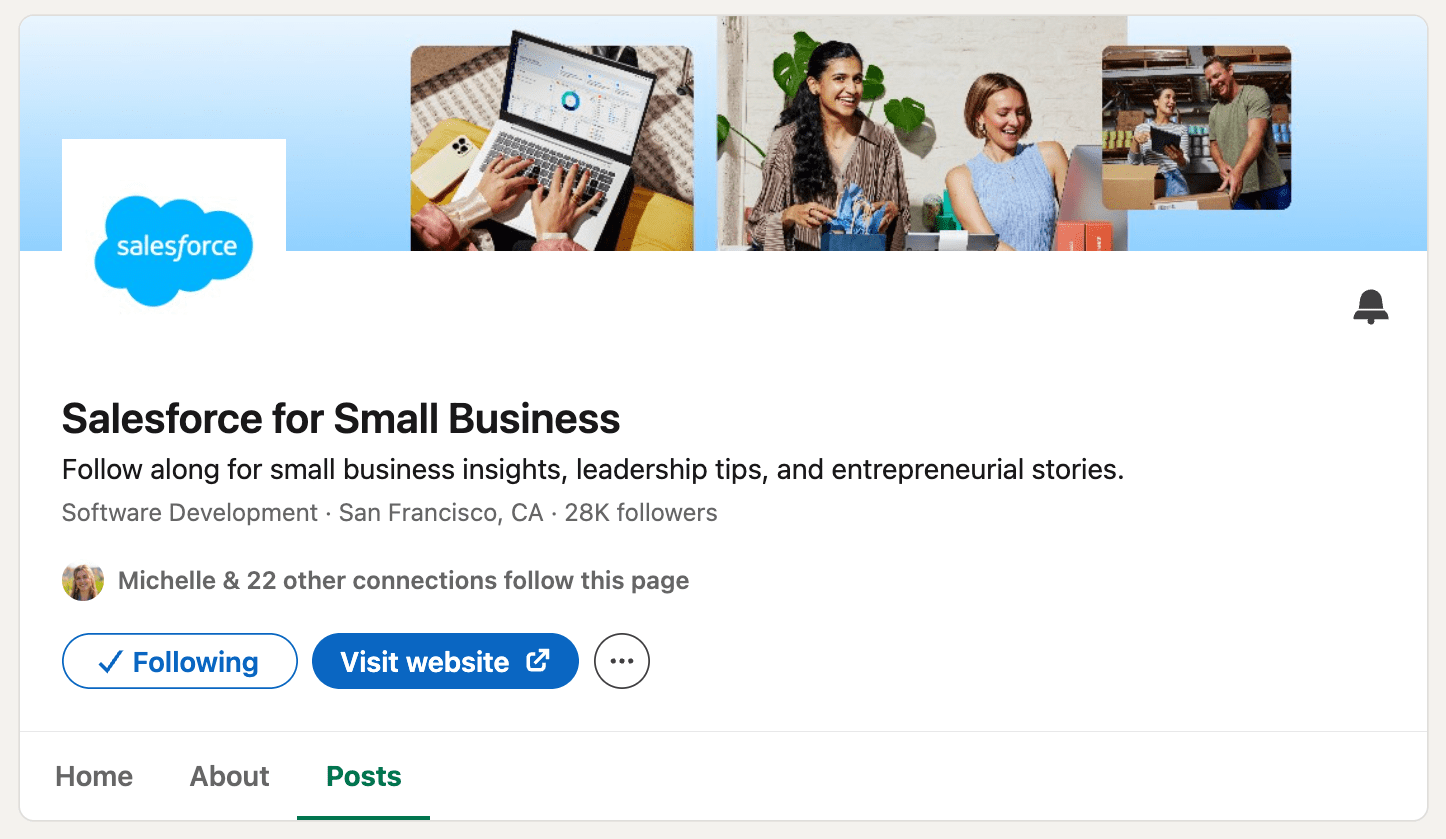
Let’s start with your LinkedIn profile. Your company page serves as the professional face of your small business. Your business page or profile should represent your brand’s expertise and value proposition clearly. This means using a professional photo or your business logo, and writing a summary that speaks directly to the needs of your prospective connections and customers.
Ensure it features compelling visuals, a clear mission statement, and up-to-date information about your offerings. Post regularly, sharing industry insights, company news, and customer success stories. A well-maintained company page provides social proof and makes connections feel confident when accepting your request. It’s a key part of your overall marketing efforts.
2. Identify high-value connections
Next, let’s talk about connections. A powerful LinkedIn strategy for a growing business involves targeting specific individuals who match your ideal customer profile or are influential within your industry. Instead of the default message, try personalizing your connection request. Mention something specific about their work, a shared connection, or a piece of content they created.
Finding the right people doesn’t have to be complicated. Start by searching for job titles, company names, or industry keywords that relate to your product or service. Look for second-degree connections first – those who share a connection with you’re more likely to accept your request. Focus on quality over quantity; connecting with 50 relevant people is far more valuable than connecting with 500 random ones.
Nurture connections and build thought leadership
After successfully connecting, the work of relationship building begins. Simply having a large number of connections won’t help your business unless you actively nurture those relationships. Consistency is key here. Think of your LinkedIn feed as a space for genuine engagement, not just self-promotion. By consistently providing value, you build trust and establish your small business as a credible source in the field.
One of the most effective LinkedIn strategies is to engage with content posted by your new connections. Like, comment thoughtfully, and share posts that you find relevant. This keeps you visible in their feed and shows that you’re interested in their work, not just your own. Meaningful interactions like these pave the way for future business conversations.
- Personalize every invite by mentioning a specific insight from their recent posts or a mutual challenge to increase acceptance rates.
- Engage before connecting by leaving thoughtful comments on a prospect’s content for a week to become a familiar face.
- Target second-degree connections to build mutual trust and make your outreach feel like a warm introduction.
- Participate in niche groups by answering questions and providing free advice to position yourself as a helpful expert.
- Ditch the immediate pitch and instead ask a non-sales question after they accept to start a genuine conversation.
3. Create valuable content
Small businesses can quickly become thought leaders by sharing insights or useful guides. This doesn’t require a large marketing team. Simple, short posts about a challenge you solved for a customer, or a quick tip related to your expertise, can generate significant engagement.
Here are a few examples to start valuable conversations:
- Post a short “whiteboard session” video of how you deliver your product or service to build human trust.
- Identify a common “industry myth” you disagree with and explain your perspective based on real-world data.
- Write a “lessons learned” post about a business mistake and the specific system you created to ensure it never happens again.
- Create a simple “this or that” poll about a current industry trend to spark low-friction engagement and gather market research from your network.
- Spotlight a client’s achievement or a milestone they reached to build community goodwill and social capital.
- Post a “day in the life” time-lapse of your workspace to humanize your brand and keep followers interested in your process.
- Curate a weekly “industry news” summary where you share relevant links and provide your own commentary on why they matter to your audience.
4. Activate AI for engagement
Tools powered by artificial intelligence (AI) can help simplify content creation and engagement. AI can analyze trends in your industry and suggest topics that will resonate with your audience. For instance, AI could flag common questions your target market is asking, allowing you to create a post that directly answers that pain point. While AI assists, always ensure the final content reflects your authentic brand voice.
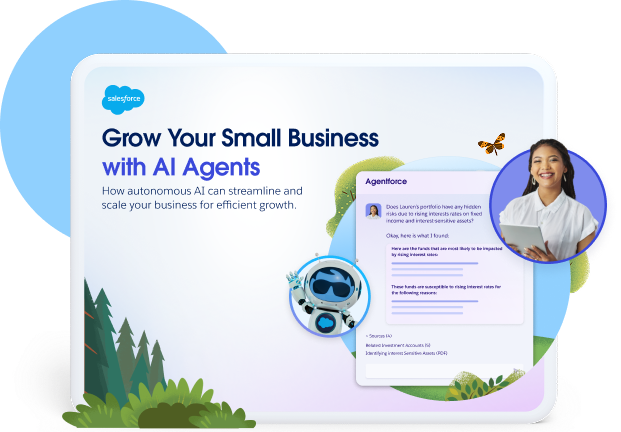
Grow Your Business With AI Agents
Learn how autonomous AI can scale your small business for free in our latest e-book.
Convert network connections into business opportunities
The ultimate goal of using LinkedIn for small business is to translate professional connections into tangible business results, whether that’s new customers, strategic partnerships, or talented hires. This requires moving the relationship from the LinkedIn platform to a more direct form of communication.
Don’t be afraid to take the next logical step after a series of productive interactions. And a great way to do that is with a customer relationship management (CRM) system — your everyday business tool that does just about everything.
5. Create convertible opportunities with a CRM
Once a connection shows sustained interest in your content or has engaged with you multiple times, send a direct message suggesting a virtual coffee or call to discuss a specific mutual interest. Frame the call as a value exchange, not a hard pitch.
For instance, “I saw on your latest post that you’re looking to improve service response times, and I couldn’t help but reach out. I’m happy to share how we’re helping small businesses like yours.”
6. Connect your opportunities to your business processes
The final component of an effective LinkedIn strategy is integration with your existing business processes. Make sure new leads generated on LinkedIn are immediately logged into your CRM platform. This ensures no warm leads fall through the cracks and allows your sales and marketing teams to nurture them consistently.
You could create a segmented list in your CRM called “Linkedin prospects” and every time you receive a response from a direct message, that gets prioritized into a lead. You can then move them through your sales pipeline with CRM automation, and even personalize your interactions with AI.
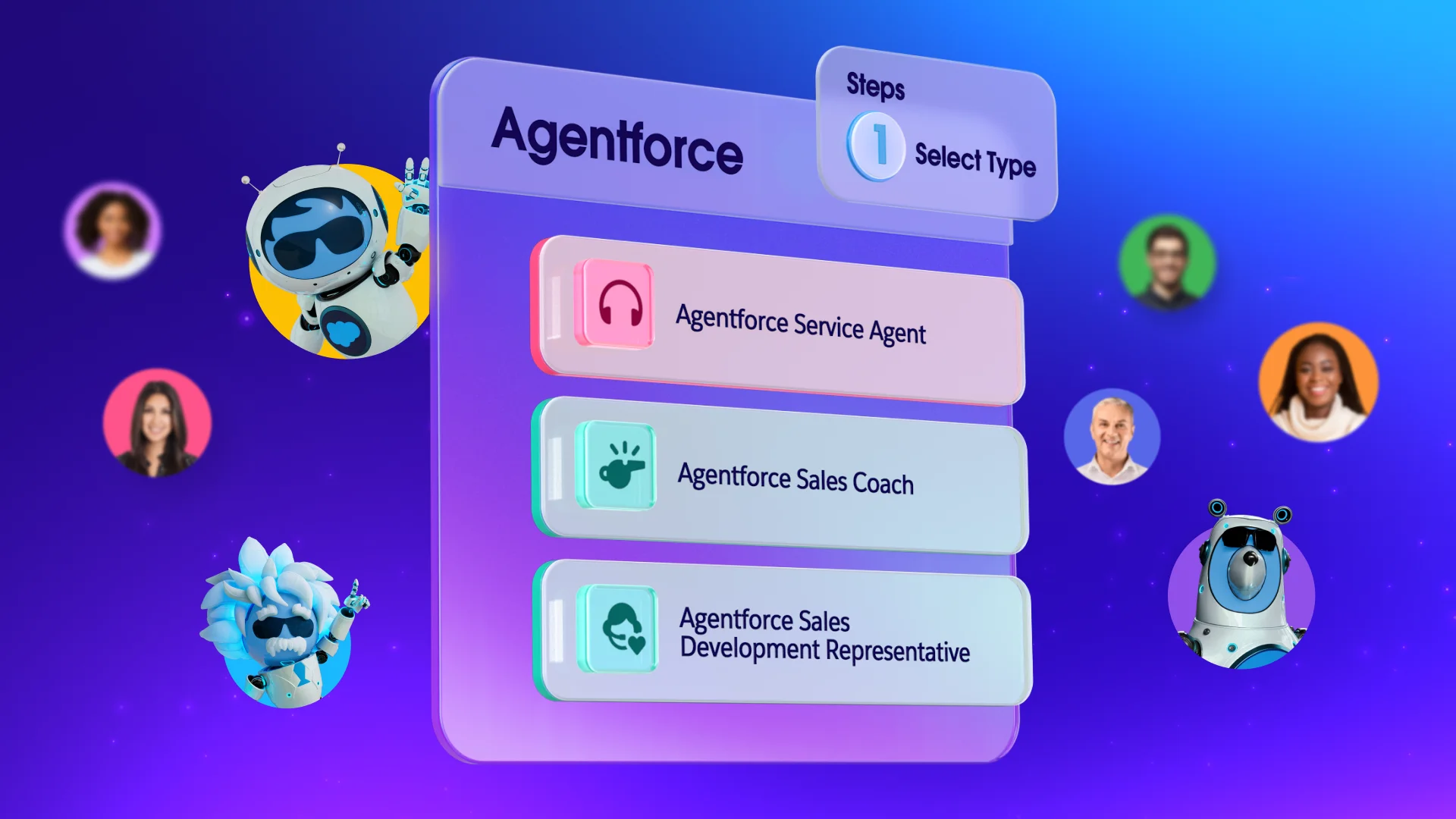
Pro Tip: AI tools like Agentforce 360, autonomous AI agents, can connect your productivity tools with your marketing efforts, providing a 360-degree view of every customer interaction, regardless of where it started.
7. Measure success beyond connections
It’s easy to focus on the number of connections, but true success is measured by engagement, referrals, and leads generated. Regularly review which posts are getting the most attention and which connections are leading to follow-up conversations. This data can inform and refine your content and targeting strategy. Use these metrics to continuously improve your approach and make your time on LinkedIn more productive:
- Engagement rate by reach (ERR): This measures how many people who actually saw your post (not just your total followers) decided to interact. It is the best way to see if your content is effectively “stopping the scroll” for new prospects.
- Follower growth rate: Rather than chasing a flat number, track the percentage increase. For small businesses, a healthy benchmark is 5–10% monthly growth, which confirms your networking and outreach efforts are consistently hitting fresh audiences.
- Profile views: This tracks how many users took the next step of visiting your profile or clicking a link. High engagement is great, but these “intent” metrics tell you if your connections are moving from being casual observers to potential leads.
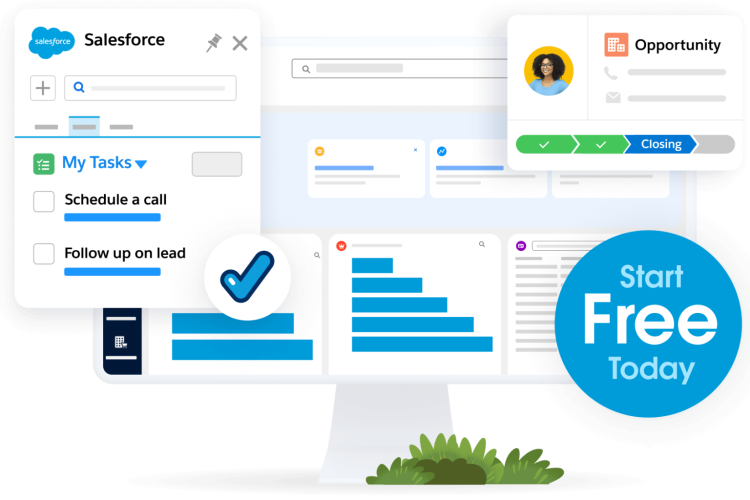
Try Salesforce for free.
See how growing businesses are using Salesforce Suites to scale fast. No credit card required, no software to install.
It all starts with Starter Suite.
Enter a valid e-mail address
Enter a valid e-mail address
Enter a valid e-mail address
Enter a valid e-mail address
Enter a valid e-mail address
Enter a valid e-mail address
Employees
1-20 employees
21-200 employees
201-10,000 employees
10,001+ employees
Select the number of employees
Industry
Automotive
Communications
Financial Services
Healthcare
Tech
Education
Life Sciences
Manufacturing
Media
Nonprofit
Public Sector
Retail & Consumer Goods
Energy & Utilities
Other
Select your industry.
Country/Region
United States
Afghanistan
Albania
Algeria
American Samoa
Andorra
Anguilla
Antarctica
Antigua And Barbuda
Argentina
Armenia
Aruba
Australia
Austria
Azerbaijan
Bahamas, The
Bahrain
Bangladesh
Barbados
Belarus
Belize
Belgium
Benin
Bermuda
Bhutan
Bolivia
Bouvet Is
Bosnia and Herzegovina
Botswana
Brazil
British Indian Ocean Territory
Brunei
Bulgaria
Burkina Faso
Burundi
Cambodia
Cameroon
Canada
Cape Verde
Cayman Is
Central African Republic
Chad
Chile
China
Hong Kong
Macau
Christmas Is
Cocos (Keeling) Is
Colombia
Comoros
Cook Islands
Costa Rica
Cote D’Ivoire (Ivory Coast)
Croatia (Hrvatska)
Cyprus
Czech Republic
Democratic Republic of the Congo
Denmark
Dominica
Dominican Republic
Djibouti
Ecuador
Egypt
El Salvador
Equatorial Guinea
Eritrea
Estonia
Ethiopia
Falkland Is (Is Malvinas)
Faroe Islands
Fiji Islands
Finland
France
French Guiana
French Polynesia
French Southern Territories
F.Y.R.O. Macedonia
Gabon
Gambia, The
Georgia
Germany
Ghana
Gibraltar
Greece
Greenland
Grenada
Guadeloupe
Guam
Guatemala
Guinea
Guinea-Bissau
Guyana
Haiti
Heard and McDonald Is
Honduras
Hungary
Iceland
India
Indonesia
Ireland
Israel
Italy
Jamaica
Japan
Jordan
Kazakhstan
Kenya
Kiribati
Korea, South
Kuwait
Kyrgyzstan
Laos
Latvia
Lebanon
Lesotho
Liberia
Liechtenstein
Lithuania
Luxembourg
Madagascar
Malawi
Malaysia
Maldives
Mali
Malta
Marshall Is
Mauritania
Mauritius
Martinique
Mayotte
Mexico
Micronesia
Moldova
Monaco
Mongolia
Montserrat
Morocco
Mozambique
Myanmar
Namibia
Nauru
Nepal
Netherlands, The
Netherlands Antilles
New Caledonia
New Zealand
Nicaragua
Niger
Nigeria
Niue
Norway
Norfolk Island
Northern Mariana Is
Oman
Pakistan
Palau
Panama
Papua new Guinea
Paraguay
Peru
Philippines
Pitcairn Island
Poland
Portugal
Puerto Rico
Qatar
Republic of the Congo
Reunion
Romania
Russia
Rwanda
Saint Helena
Saint Kitts And Nevis
Saint Lucia
Saint Pierre and Miquelon
Saint Vincent And The Grenadines
Samoa
San Marino
Sao Tome and Principe
Saudi Arabia
Senegal
Serbia
Seychelles
Sierra Leone
Singapore
Slovakia
Slovenia
Solomon Islands
Somalia
South Africa
South Georgia & The S. Sandwich Is
Spain
Sri Lanka
Suriname
Svalbard And Jan Mayen Is
Swaziland
Sweden
Switzerland
Taiwan
Tajikistan
Tanzania
Thailand
Timor-Leste
Togo
Tokelau
Tonga
Trinidad And Tobago
Tunisia
Turkey
Turks And Caicos Is
Turkmenistan
Tuvalu
Uganda
Ukraine
United Arab Emirates
United Kingdom
United States Minor Outlying Is
Uruguay
Uzbekistan
Vanuatu
Vatican City State (Holy See)
Venezuela
Vietnam
Virgin Islands (British)
Virgin Islands (US)
Wallis And Futuna Islands
Western Sahara
Yemen
Zambia
Zimbabwe
Select your Country
State/province
北海道 – Hokkaido
青森県 – Aomori
岩手県 – Iwate
宮城県 – Miyagi
秋田県 – Akita
山形県 – Yamagata
福島県 – Fukushima
茨城県 – Ibaraki
栃木県 – Tochigi
群馬県 – Gunma
埼玉県 – Saitama
千葉県 – Chiba
東京都 – Tokyo
神奈川県 – Kanagawa
新潟県 – Niigata
富山県 – Toyama
石川県 – Ishikawa
福井県 – Fukui
山梨県 – Yamanashi
長野県 – Nagano
岐阜県 – Gifu
静岡県 – Shizuoka
愛知県 – Aichi
三重県 – Mie
滋賀県 – Shiga
京都府 – Kyoto
大阪府 – Osaka
兵庫県 – Hyogo
奈良県 – Nara
和歌山県 – Wakayama
鳥取県 – Tottori
島根県 – Shimane
岡山県 – Okayama
広島県 – Hiroshima
山口県 – Yamaguchi
徳島県 – Tokushima
香川県 – Kagawa
愛媛県 – Ehime
高知県 – Kochi
福岡県 – Fukuoka
佐賀県 – Saga
長崎県 – Nagasaki
熊本県 – Kumamoto
大分県 – Oita
宮崎県 – Miyazaki
鹿児島県 – Kagoshima
沖縄県 – Okinawa
Select a state/province
State/province
Alberta
British Columbia
Manitoba
New Brunswick
Newfoundland
Northwest Territories
Nova Scotia
Nunavut
Ontario
Prince Edward Island
Quebec
Saskatchewan
Yukon
Select a state/province
State/province
Alabama
Alaska
Arizona
Arkansas
California
Colorado
Connecticut
Delaware
District of Columbia
Florida
Georgia
Hawaii
Idaho
Illinois
Indiana
Iowa
Kansas
Kentucky
Louisiana
Maine
Maryland
Massachusetts
Michigan
Minnesota
Mississippi
Missouri
Montana
Nebraska
Nevada
New Hampshire
New Jersey
New Mexico
New York
North Carolina
North Dakota
Ohio
Oklahoma
Oregon
Pennsylvania
Rhode Island
South Carolina
South Dakota
Tennessee
Texas
Utah
Vermont
Virginia
Washington
West Virginia
Wisconsin
Wyoming
Select a state/province
We value your privacy. To learn more, visit our Privacy Statement.
Thank you!
Time to get ‘Linked’ up
You are now LinkedIn-ready. With these quick tips, you can connect with the right people at the right time. And, we’re here to support your networking path with the right tools. Try out a marketing CRM to get the going.
Get started with Salesforce Suites for free or activate Foundations to try out Agentforce 360 today.
AI supported the writers and editors who created this article.
What is the best time for a small business to post on LinkedIn?
The optimal posting time can vary by industry and audience, but general best practices suggest posting during business hours, particularly Tuesdays through Thursdays. Test different times, like mid-morning or mid-afternoon, to see when your specific connections are most active.
How often should my small business post new content?
For a small business, quality trumps quantity. Aim for consistency, even if it’s just two to three thoughtful posts per week. Regular posting ensures your company page stays active and increases the chances of your content appearing in your connections’ feeds.
Should I accept connection requests from people I don’t know?
Yes, if they fit your ideal customer or partner profile. Use the connection request as an opportunity to screen. If they’re in your target industry or have an interesting role, accept the request and send a quick, personalized welcome message to start the conversation.
What should my small business do if a connection request is ignored?
Don’t take it personally. Wait a couple of weeks, and try sending a brief, non-intrusive follow-up message that references a piece of content they may find useful. If you don’t receive a response after two attempts, move on and focus your energy on engaging connections who are actively responsive.
Where can I find more resources on digital strategy for my small business?
Salesforce offers a wealth of resources covering everything from improving sales processes to deploying effective marketing campaigns. You can find more practical guides and expert tips to support your digital strategy on the Salesforce Small Business Blog.