
Content planning is the difference between posting randomly and running a strategy.
Without a plan, you’re just reacting. With one, you’re building something consistent, intentional, and tied to real goals.
In this guide, we break down how to plan social media content in 8 clear steps.
Key takeaways
- Content planning is more than scheduling. It also covers ideation, creation, and measurement.
- It improves efficiency. Teams can batch content, repurpose ideas, and get more out of every post.
- Planning ahead reduces last-minute stress and burnout. It also gives teams more room to jump on social trends.
- Clear roles and approvals prevent bottlenecks. They also ensure content is compliant, on-brand, and ready to publish.
- Tools like Hootsuite bring scheduling, planning, analytics, and listening together, helping teams manage the entire content process in one place.
What is social media content planning?
Content planning on social media is the process of deciding what to post, when to post it, and how it supports your overall marketing goals.
It goes beyond scheduling. It’s about planning your topics, formats, and campaigns in advance so your content stays consistent and relevant.
Well-planned social media content is:
- Created in batches to streamline content production
- Repurposed across channels
- Connected to larger marketing goals
- Balanced between original and curated content
- Organized in a content planner or calendar
Craft perfect posts in seconds
OwlyWriter AI instantly generates captions and content ideas for every social media network. It’s seriously easy.
Why is content planning important?
Content planning is important because it shifts social media from reactive posting to a more strategic, intentional approach.
Here are a few benefits you can expect from creating a content plan.
Content planning improves efficiency
Creating content in batches is way more efficient than building posts one at a time.
It also helps teams to get more value from every piece of content. A single idea can be repurposed across formats and platforms, extending its impact without added resources.
For example, one piece of content can be adapted into:
- A short-form video
- A text-based post
- A visual asset like an infographic
This approach helps teams do more with less. Organize it all in a content calendar (like the one below) to keep everyone on the same page.

Source: Hootsuite’s FREE Content Calendar Template
Content planning reduces risk and last-minute pressure
A content plan reduces the need to constantly react.
By planning ahead, teams can account for key moments like campaigns, product launches, and holidays and events (hello, National Puppy Day!). It also reduces the risk of burnout and inconsistency, both of which can hurt performance in the long run.

Source: thispugslife
Planning ahead doesn’t limit flexibility. It actually creates more room to respond to trending topics and headlines without disrupting your overall strategy.
Content planning connects social media activity to marketing goals
Your content planning process is what connects the day-to-day posting with larger marketing goals.
At the end of the day, individual social media posts aren’t that important on their own. But all of your posts, working toward the same goal, will determine whether your social media strategy sinks or swims.
If you’re starting from scratch, a social media strategy template can help you map your content goals, audience, and content pillars — so grab your template here.

How to plan content for social media in 8 steps
To build an effective social media content plan, follow these steps:
- Define your content themes
- Brainstorm campaign and post ideas
- Optimize your timing
- Decide on your content mix
- Assign responsibilities
- Write post captions
- Create (or source) design assets
- Schedule content in advance
Step 1: Define your content themes
The first step in content planning is identifying what you’re going to post (otherwise known as your content themes).
Your themes should ladder up to your broader marketing goals. Think of them as guardrails for your content.
Common themes include:
- Industry trends and insights
- Product updates and education
- Customer stories or social proof
- Company news
As an example, here’s what our content themes look like at Hootsuite:
- Social media marketing tips and industry trends
- Social network updates and best practices
- Marketing research, like our free 2026 Social Media Trend Report
- Social media marketing experiments, especially on our Hootsuite Labs YouTube channel
- Product updates and features
- Company news
- Product education (tutorials, tips)

These topics will be your content creation roadmap. If a post doesn’t fit a theme, it likely doesn’t belong in your plan. (Or, you may need to rethink your content strategy and add a new category to it.)
Step 2: Brainstorm campaign and post ideas
With your themes in place, work with your content team to build a pipeline of potential social posts and campaigns.
Consider setting up regular brainstorming sessions, a dedicated Slack channel for idea sharing, or workflows for capturing content ideas from across your organization. The goal is to avoid starting from scratch every time.
High-performing teams ground their ideas in:
- Past performance data. What campaigns have been most successful for you before? What elements of those campaigns were most effective? How can you replicate that for your new goal or campaign?
- Competitor data. What types of content are they posting? Can you put your own spin on those ideas?
- Audience feedback and conversations. Use social listening to tap into conversations around your brand and industry. What does your audience care about? What are their pain points, questions, and interests?
To know what’s worked before, you need a top-notch analytics tool. Hootsuite Analytics gives you a full 360-degree view of your performance across all networks. Custom reports show you what you need more of (and what you can leave out) in your content plan.

When it’s time to share content performance reports, you can export your reports as a PDF to share with stakeholders.
Step 3: Optimize your timing
Posting consistently matters, but so does posting at the right time. Your team should regularly test different posting times and schedule posts based on audience activity and past performance data.
Or, if you want a faster way to get there, tools like Hootsuite’s Best Time to Publish feature can analyze your unique audience and suggest optimal posting times across all of your social media platforms — including Facebook, Instagram, TikTok, LinkedIn, and more.
It also recommends different times for different goals — for example, when to post for brand awareness versus when to post to drive traffic.

Need to get your social marketing started quickly and hit the ground running? Let Hootsuite pick the perfect time for you.

When you’re creating your post, just click Schedule for later and choose from one of the suggested times.
Pro tip  : You should also keep an eye on your posting frequency. Here’s the latest research on how often to post on each major platform.
Step 4: Decide on your content mix
A successful content marketing plan contains a mix of original and curated content.
Curated content plays an important role in keeping your channels relevant and active without burning out your team. But it should still meet the same quality standards as your original content.
Strong curated content is:
- Relevant to your target audience
- Related to your content themes
- Connected to a business goal
While there’s no one-size-fits-all formula, many teams start with a mix of roughly 40% original and 60% curated content. More important than the ratio, though, is how each content type fits into your overall strategy.
To source high-quality content consistently, teams can use social listening tools to identify relevant conversations, trends, and content worth amplifying.
For example, tools like Hootsuite Listening help you explore posts from around the web to build a library of high-quality content to share later.

Plus, you can use Quick Search to analyze things like:
- Key metrics. Are more people talking about you this week? What’s the vibe of their posts? Hootsuite Listening doesn’t just track what people are saying — it uses enhanced sentiment analysis to tell you how they really feel.
- Top themes. How are people talking about you? What are the most popular positive and negative posts about? Which other conversations are you showing up in?
- Results. Ready to get into specifics? The results tab will show you a selection of popular posts related to your search terms — you can filter by sentiment, channel, and more.
Try some of our robust social listening tools here.
Step 5: Assign responsibilities
Clear ownership is key to keeping content planning on track.
Social teams often involve multiple people, including writers, designers, customer support, and approvers. Without defined roles, things can get messy fast.
A social media workflow outlines how the content process will move from content planning to creation to publication. Just as important is a clear approval process, so content is on-brand, compliant, and ready for publication.
Bonus: As your team scales, tools like Hootsuite can keep up. You can assign permissions to different team members, so the right people have the right level of access and nothing gets published by mistake.
The formula for going viral
Everything you need to make engaging content. AI support for captions, an AI hashtag generator, and access to Canva in Hootsuite.
Step 6: Write post captions
Whenever possible, it’s best to write your social content before it moves to design (the next step).
This has a few key benefits:
- It gives context to the designer so they can work efficiently.
- They will have a better understanding of the entire campaign’s structure and goals.
- While writing the posts, you may think of more ideas to add to the campaign to fill gaps.
- It saves time by allowing copyediting and approvals to happen simultaneously with design, so you can publish it sooner.
Hootsuite comes with OwlyWriter, an AI-powered creative writing tool that saves content writers hours of work. You can use OwlyWriter to:
- Write new social media captions in a specific tone
- Generate post ideas based on a keyword or topic (and then write posts expanding on the idea you like best)
- Write a post based on a link (e.g. a blog post or a product page)
- Identify and repurpose your top-performing posts
- Create relevant captions for upcoming holidays
To get started with OwlyWriter, sign in to your Hootsuite account and head to the Inspiration section of the dashboard. Then, pick the type of AI magic you want to see in action.
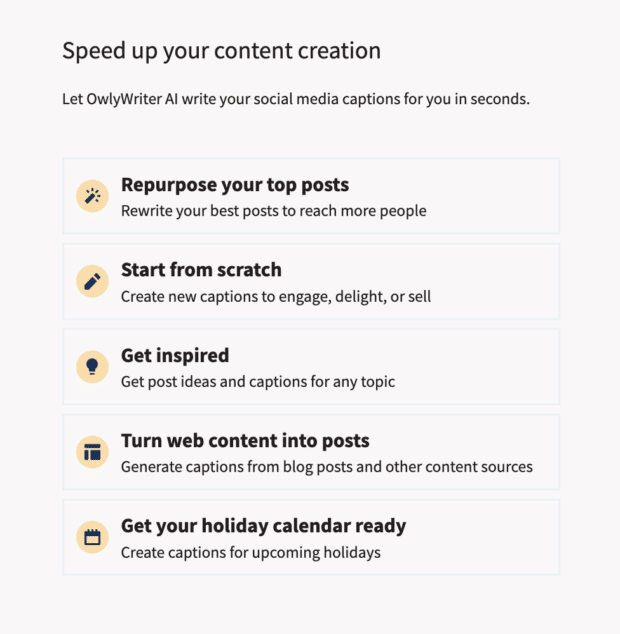
For example, if you’re not sure what to post, click on Get inspired. Then, type in the general, high-level topic you want to address and click Get ideas.
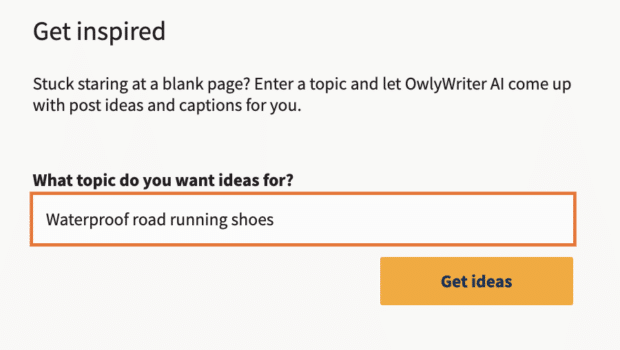
OwlyWriter will generate a list of post ideas related to the topic:
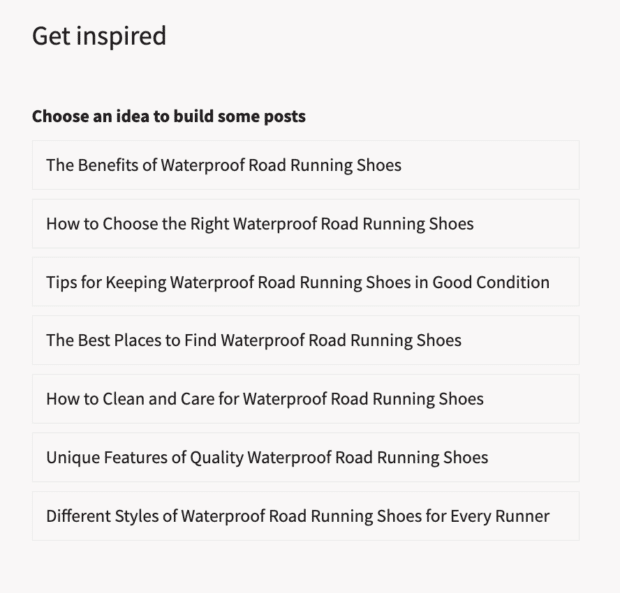
Click on the one you like best to move to the next step: captions and hashtags.
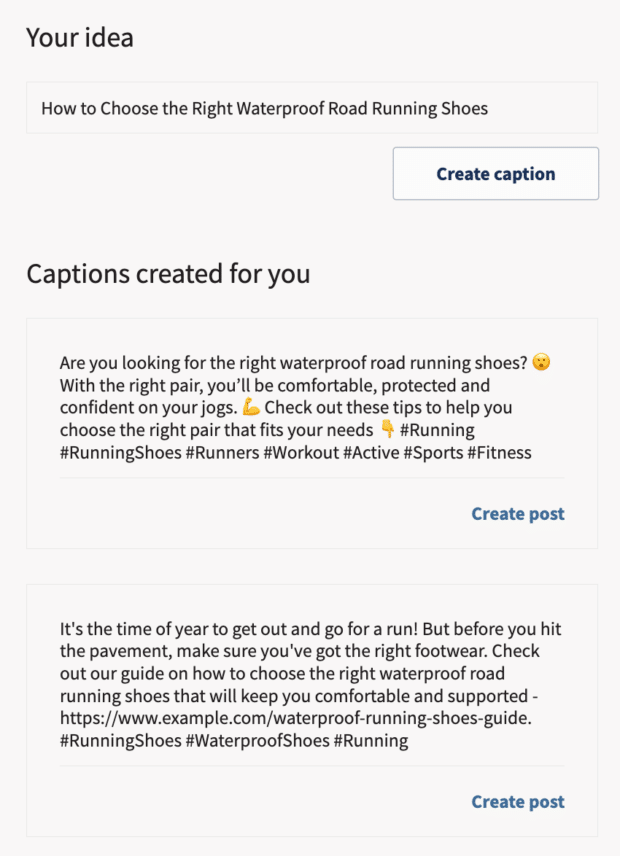
Pick the caption you like and click Create post. The caption will open in Hootsuite Composer, where you can make edits, add media files and links, check the copy against your compliance guidelines, and schedule your post to go live later.
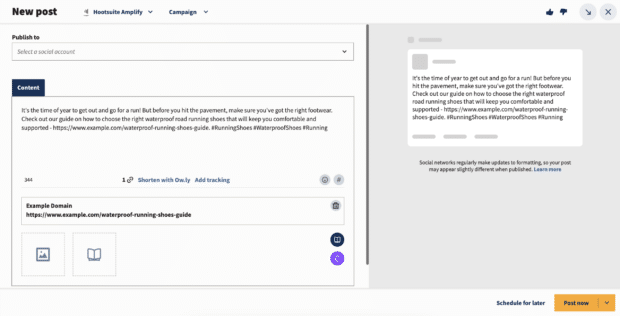
And that’s it! OwlyWriter never runs out of ideas, so you can repeat this process until your social media calendar is full.
Step 7: Create (or source) design assets
You can think up all these amazing campaigns, but without the design assets, they may go unnoticed. However, this is where many marketing teams get bottlenecked.
Having a specific timeline for each part of the content planning process keeps things moving.
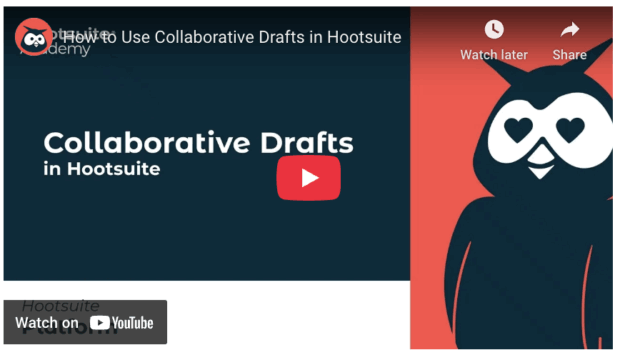
With Hootsuite Planner, you can collaborate with other team members on specific campaigns, view your overall content calendar, and identify opportunities and gaps to fill. Plus, approvals are a snap with the built-in approval process, so the only content that gets posted is the content that should be.

Here’s how everyone can work together inside Hootsuite to bring a campaign from idea to finished:
Step 8: Schedule content in advance
Scheduling your content ahead of time is important for basic efficiency. Plus, it will help bring your social media marketing strategy to life.
Hootsuite can help save you tons of time at this step. You can batch schedule content to all of your favorite platforms in advance from the same dashboard. Plus, you get:
- Easy team collaboration,
- Detailed social media analytics,
- Ads management,
- Social listening, and more
You can create single posts in Composer or dial up your efficiency with the much-loved bulk upload tool, where you can schedule up to 350 posts in under 2 minutes.
7 free content planning resources
From templates to calculators, here are 7 free content planning resources.
This content calendar template
This free content calendar will show you how to organize and schedule your content in advance. Use it to map out campaigns, maintain consistency, and keep your team aligned.
This campaign template
Use this free campaign template as a structured framework to plan your campaign. Answer each of the sections to create a strategy for your next social campaign.
An engagement rate calculator
Running the numbers is never fun. Luckily, this free engagement rate calculator makes it easy to measure the effectiveness of your content or social media efforts.
You’ll be able to quantify how well your audience interacts with your posts. In turn, these insights can help you to optimize your social strategy.
This ROI guide
Knowing what your return on investment (ROI) is can help you communicate the return on your social media initiatives. Use this free ROI guide to connect your strategy to business impact and make smarter budget decisions.
The best free social media audit template
A full-scale social media audit is great for onboarding new clients or getting a lay of the land with existing social media accounts. This free audit template is a systematic checklist for evaluating your current social strategy.
Your cheat sheet for image sizes
This free image size guide is a quick reference guide for the optimal image dimensions across different social platforms. It’ll help your content look polished and professional.
The only social strategy guide you’ll ever need
Want comprehensive insights and best practices for developing effective marketing strategies? Then this guide’s for you. Take these eight steps to achieve long-term success in your marketing efforts.
For those looking to take their strategy even further, a social media request for proposal (RFP) is the starting place for many successful social media strategies, campaigns, and collaborations!
FAQ: Content planning
What is content planning and how does it support social media strategy?
How do businesses create an effective content planning process?
What tools help teams manage content planning and calendars?
How do enterprises scale content planning across teams and regions?
What are best practices for content planning and scheduling for social media?
Hootsuite is your content management partner with robust scheduling, collaboration, analytics, and smart insights like the Best Time to Publish feature. Try it free today.
The post Content planning for social media in 8 steps [2026 guide] appeared first on Social Media Marketing & Management Dashboard.