Key Takeaways
For lean sales teams, a CRM isn’t just a nice-to-have — it’s your growth engine; your lifeblood. Startups and growing businesses all over the world are finding low-cost (and even free) sales customer relationship management (CRM) tools that rival enterprise CRMs.
If you haven’t settled on the right CRM for sales, or you’re shopping around — we’ve compiled a list of the best low-cost, sales-focused CRMs designed to help small businesses organize leads, manage pipelines, and close deals without breaking the bank. Let’s go.
Why you need a CRM for your small business sales
When you’re managing fewer resources and a small roster of sellers, every moment counts. Trying to manage leads, follow-ups, and customer history across spreadsheets, email inboxes, and disparate notes quickly leads to lost opportunities and frustrated customers.
A dedicated sales CRM addresses these challenges by:
- Centralizing data: Key customer interactions, lead status, and communication history live in one place, so your team never wastes time searching for information.
- Creating a clear pipeline: It provides a visual, real-time overview of every deal, helping your small team prioritize hot leads and focus effort where it counts most.
- Workflow consistency: Workflow automation helps to ensure that every lead gets followed up on time, delivering a professional, consistent customer experience that rivals larger competitors.
- Enabling scalability: As you start to hire and grow, a CRM provides the centralized information hub needed to onboard new reps quickly and maintain organized processes.
Attract more customers with Salesforce AI
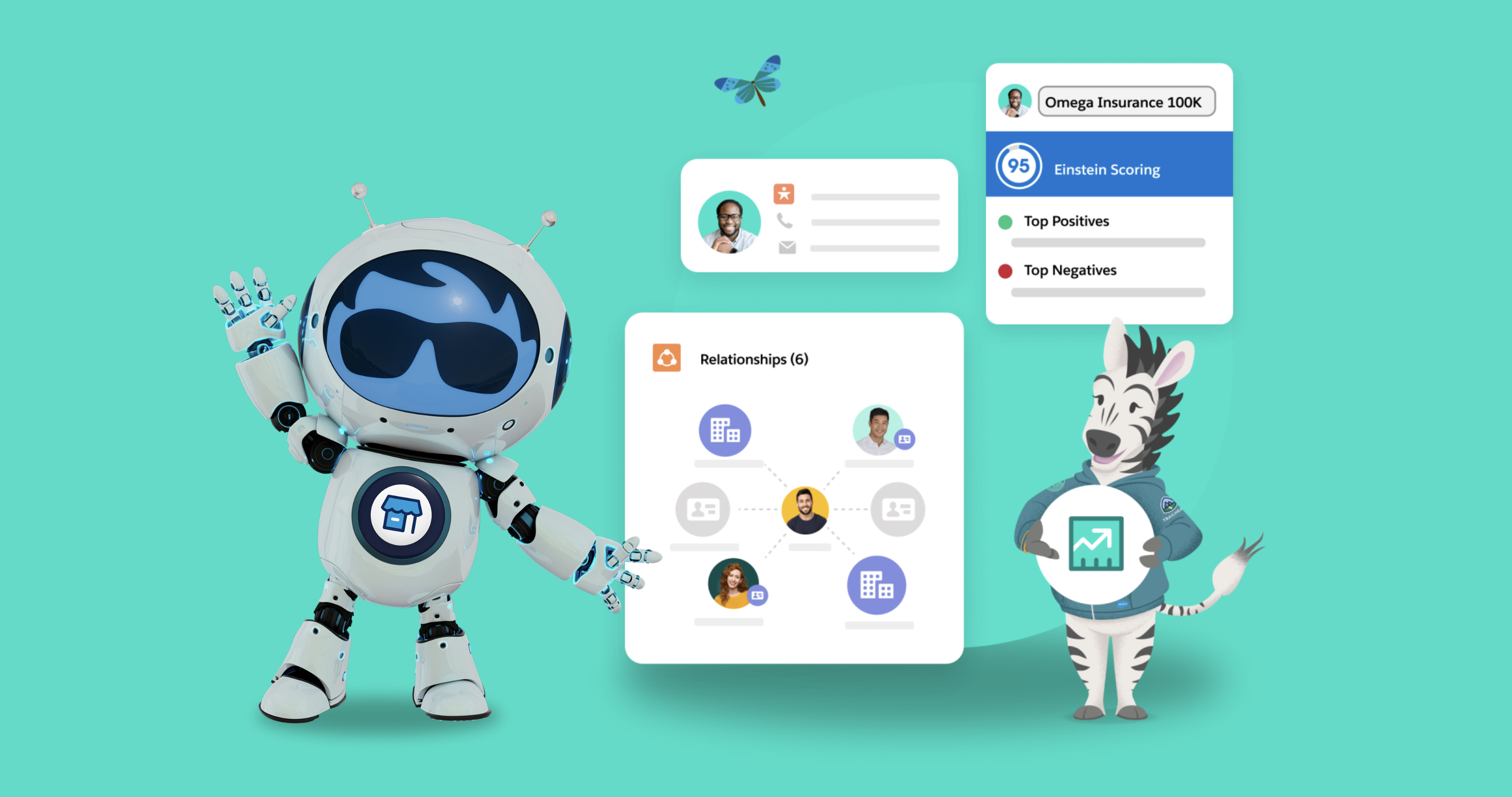



How Salesforce helps small sales teams succeed
Salesforce is built with sales in mind, offering the power of a trusted AI CRM in a low-cost package. It removes disconnected tools by unifying sales, service, commerce, and marketing data. This gives small teams a single source of truth for their customers, allowing them to start selling smarter today while knowing the platform will scale with them as they grow. Let’s get to the list.
Top 6 low-cost CRMs for small business sales teams
Here are six low priced customer tools for sales professionals, chosen based on price point and what they include specifically for small teams. You’ll see who each CRM is best suited for, key features, benefits, and cost of each. Review for yourself and see what you can do with a sales CRM.
1. Salesforce growth tiers: Free and Starter
Whether you are just moving away from spreadsheets or ready to scale your operations, Salesforce offers two entry-level suites designed for simplicity and speed. Both versions run on the same trusted platform, ensuring that your data stays with you as you grow.
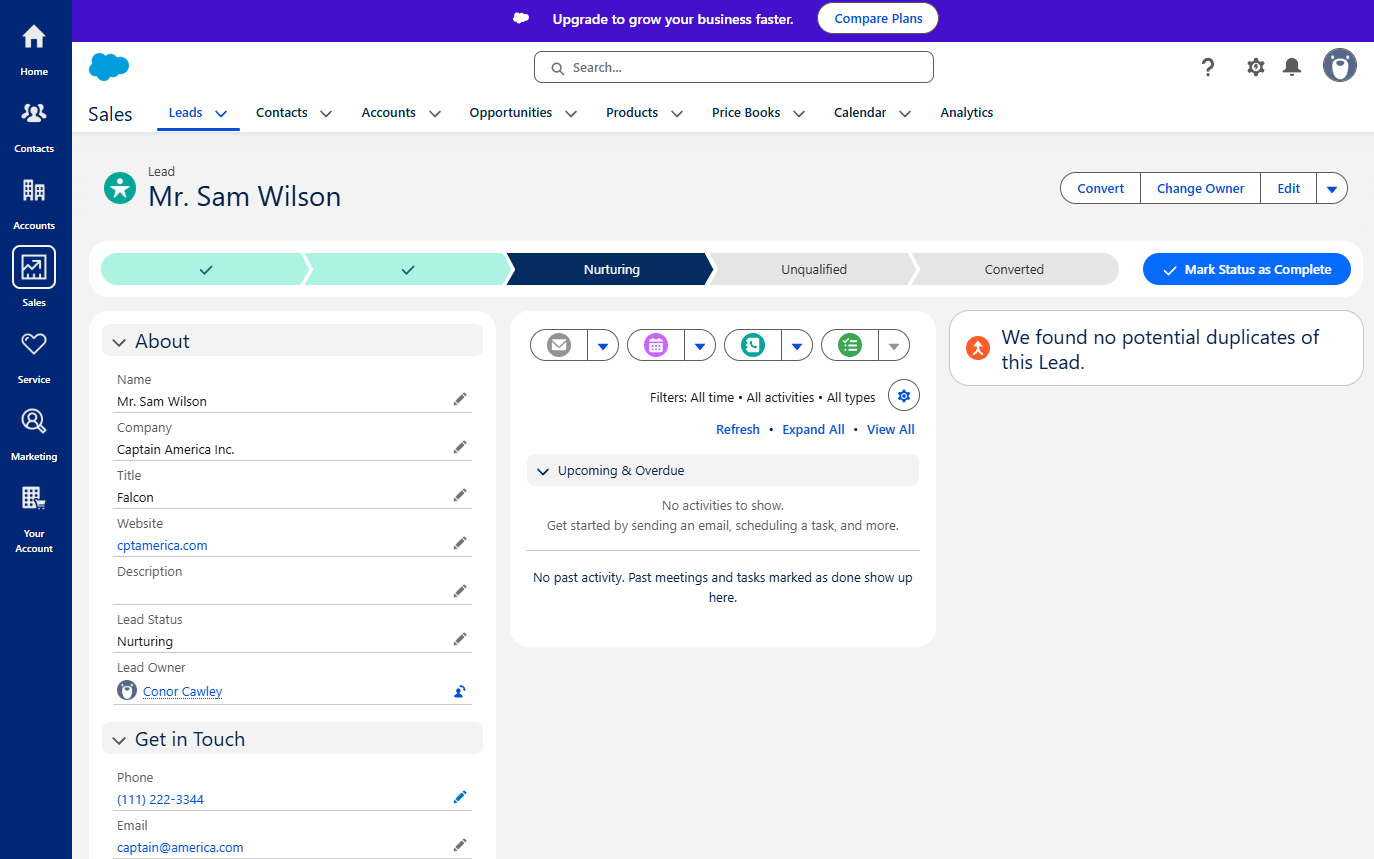
Salesforce Free Suite
Source: Salesforce Free Suite
This free CRM is designed for solopreneurs, freelancers, and small teams looking to centralize their data without any overhead. It’s the perfect “spreadsheet killer” for those who need to ensure no lead falls through the cracks.
- Key capabilities: Core sales tools for tracking leads, accounts, and opportunities; basic case management for service; and simple email marketing.
- The advantage: No admin experience is required. It features a guided, preconfigured setup and includes Slack integration for two users.
- Cost: Free for up to two users.
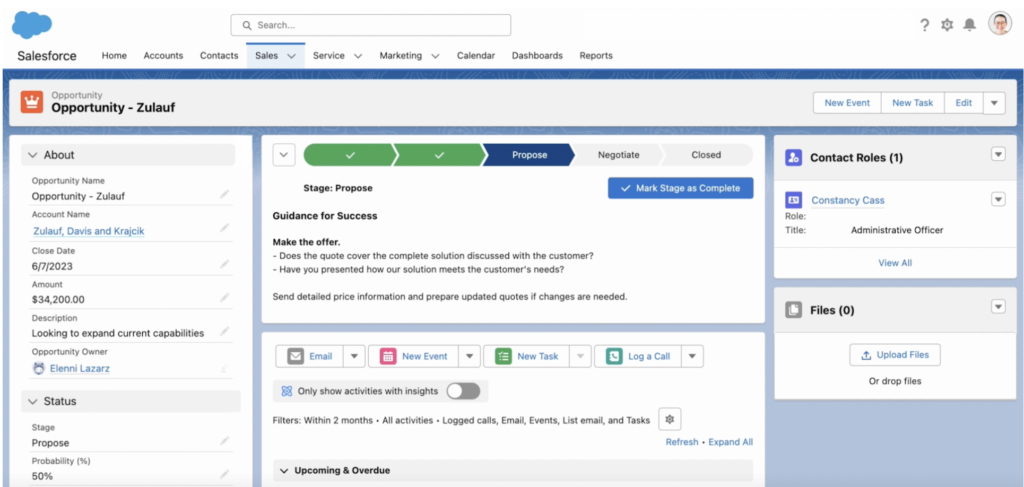
Salesforce Starter Suite
Source: Salesforce Starter Suite
Starter Suite is built for emerging SMBs that need a more robust, unified solution for sales, service, marketing, and commerce. This suite is ideal for teams that want a powerful platform that can scale indefinitely without needing to switch systems later.
- Key capabilities: Everything in Free, plus seamless Gmail and Outlook integration, lead routing, simple sales flows, and a dedicated mobile app.
- The advantage: Offers more customization in reporting and dashboards, alongside integrated commerce tools to handle transactions directly within the suite.
- Cost: Starts at $25 per user/month (Free trial available).
Wherever you are — just get started.
No matter where you are on your journey as a business owner, you can get started with Starter Suite for free — the CRM made for growth.

2. Pipedrive
Source: Pipedrive
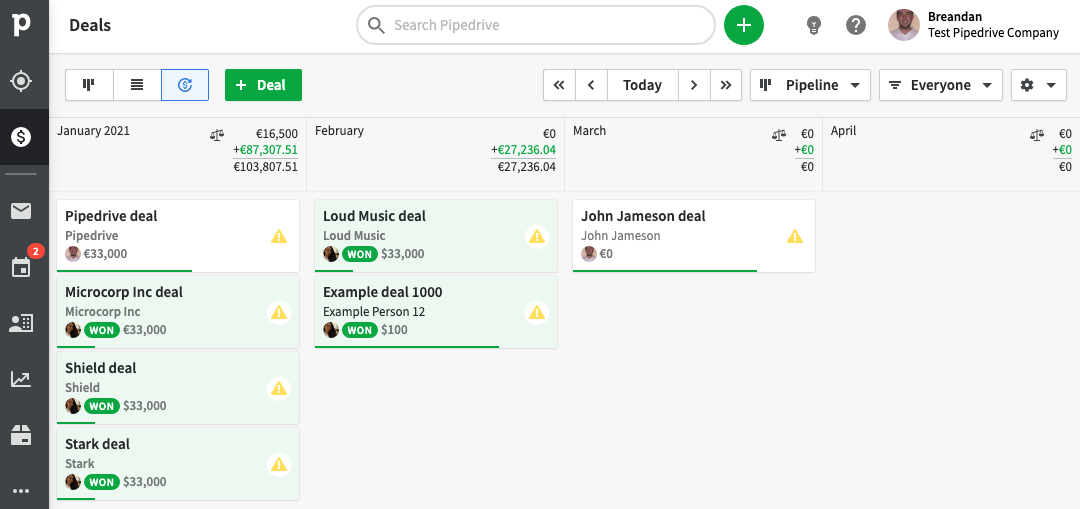
Pipedrive is a sales-centered CRM that puts the sales pipeline front and center, focusing on actions that move deals forward.
- Who it’s for: Sales teams that are highly focused on an activity-based selling process and thrive on a visual, drag-and-drop pipeline to track deal progression.
- Key features: Visual sales pipeline; activity-based selling (prompts next action); email integration and tracking; mobile app for on-the-go management.
- Benefits: Forces a clear, organized, and proactive selling approach; good usability with a minimal learning curve; clear prioritization of deals needing attention.
- Cost: Starts at $14 per user per month (billed annually).
3. Bigin by Zoho CRM
Source: Bigin
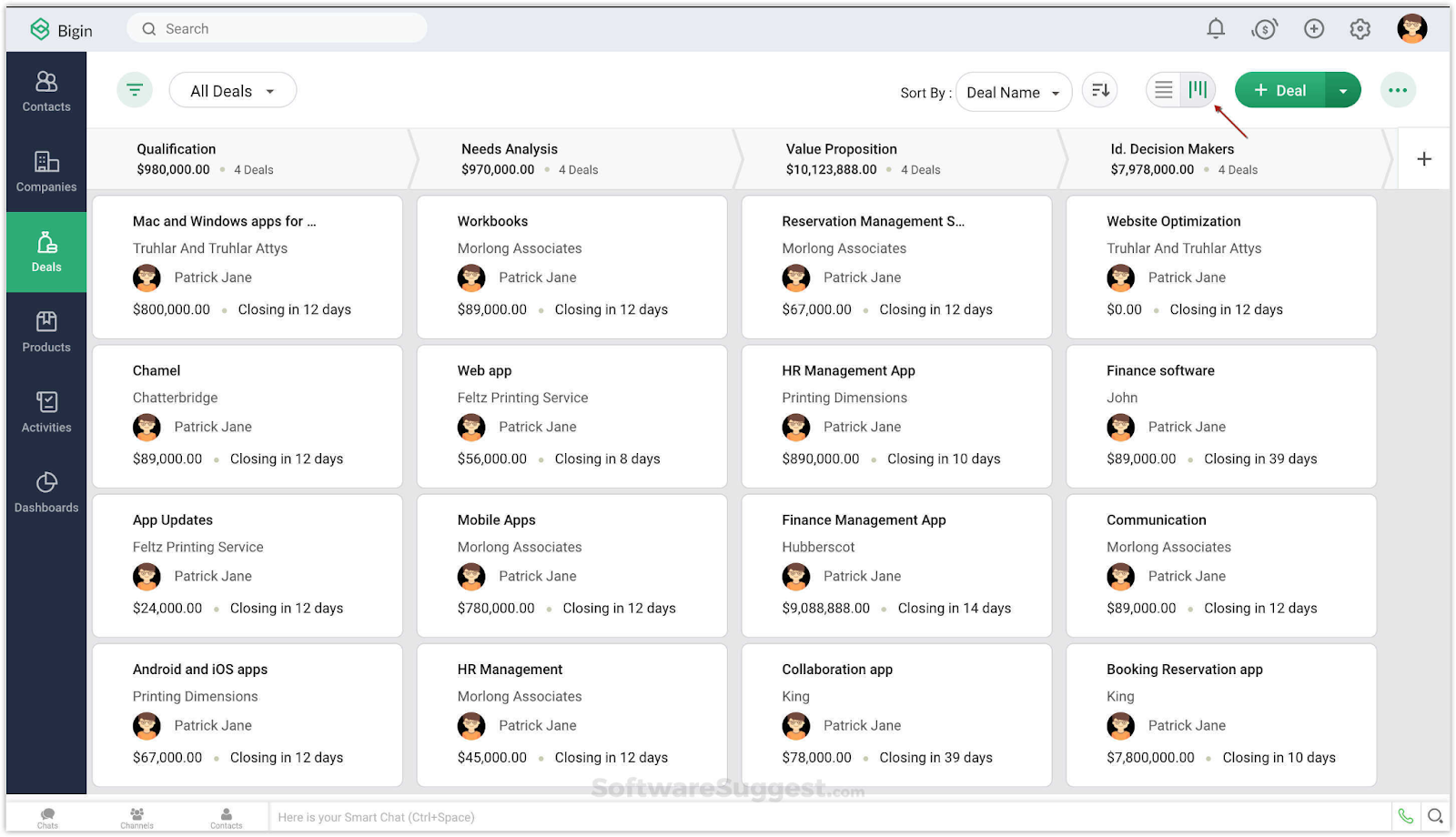
Bigin is the CRM from Zoho, specifically built to strip away enterprise complexity and serve the needs of small teams and solo entrepreneurs that need core sales functions.
- Who it’s for: Solopreneurs, micro-businesses, and small teams that need a clean, straightforward way to manage their pipeline without complex features or a high price tag.
- Key features: Multiple pipelines; built-in telephony; simple workflow automation; integrates with other apps.
- Benefits: Highly affordable entry point; quick to implement; minimalist design focused only on essential sales features.
- Cost: Starts at approximately $7 per user per month (billed annually).
4. HubSpot Sales Hub Starter
Source: HubSpot
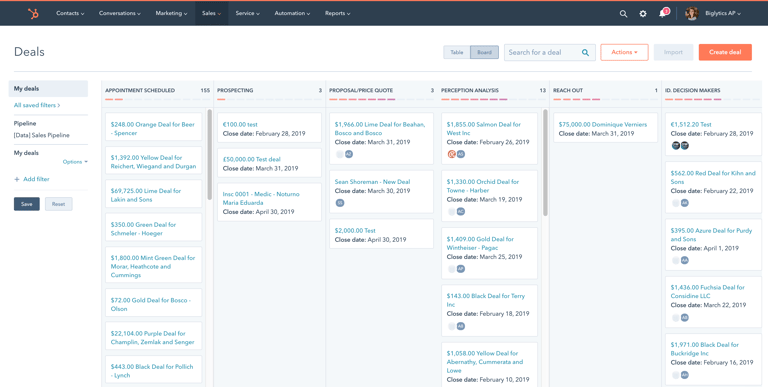
The HubSpot Starter plan provides essential tools for small teams who want to tap into the HubSpot ecosystem and focus on inbound sales.
- Who it’s for: Small businesses that prioritize inbound lead generation and want a deeply integrated platform that can easily connect sales, marketing, and service data.
- Key features: Core CRM (unlimited users on the free tier); meeting scheduling; email sequences; multiple deal pipelines; and live chat.
- Benefits: Free CRM foundation to start with; access to the HubSpot ecosystem; interface unifies sales and marketing tools.
- Cost: Starts at approximately $15 per seat per month (billed annually).
5. Freshsales (by Freshworks)
Source: Freshsales
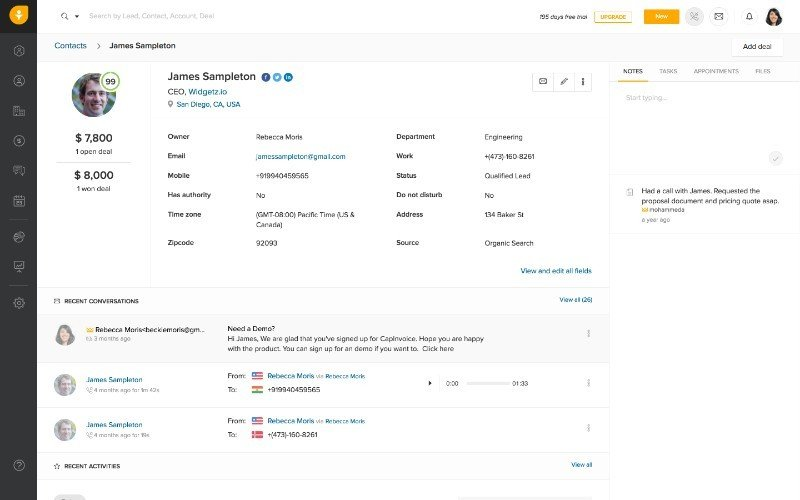
Freshsales is a modern, artificial intelligence (AI)-powered CRM that helps small teams prioritize leads and automate communications using smart technology, even on its most affordable plan.
- Who it’s for: Growing teams that want to use AI to prioritize the hottest leads and leverage built-in calling features for efficient sales outreach.
- Key features: Built-in phone and email; AI-powered lead scoring (identifies sales-ready leads); visual sales pipeline; sales sequences; mobile app.
- Benefits: Strong built-in communication tools (phone and email); AI assistance helps focus team effort on high-value prospects; very competitive pricing for its feature set.
- Cost: Starts at approximately $9 per user per month (billed annually).
Choosing your next sales partner
Selecting the right CRM for sales is about finding the perfect blend of features, usability, and price. Whether you need a highly scalable platform or an AI-supported tool, there is a low-cost option out there to help your business sell smarter.
Start your journey with the Free or Starter Suite today. Looking for more customization? Explore Pro Suite. Already a Salesforce customer? Activate Foundations to try out Agentforce 360 today.
AI supported the writers and editors who created this article.
What is a low-cost CRM, and how is it different from an enterprise solution?
A low-cost CRM is typically designed for small businesses and startups, offering essential sales features like pipeline management, contact tracking, and basic reporting at an affordable, per-user monthly price.
How much should a small business expect to spend on a quality CRM?
For a small business team, a quality, sales-focused CRM can typically start anywhere from $7 to $25 per user, per month, when billed annually for the starter tiers. Many providers also offer strong free plans for one or two users, or for unlimited users with basic features, which is an excellent starting point before committing to a paid subscription.
When is the right time for a small business to adopt a CRM?
The right time is generally before spreadsheets and disparate tools become a barrier to growth. If you are struggling to track leads, follow up consistently, manage a clear sales pipeline, or generate accurate sales reports, it’s time to implement a CRM. The sooner you start, the more historical data you will collect, which is invaluable for staying on track.
What is the single most important factor a small business should consider when choosing a CRM?
Usability and alignment with your sales process. The best CRM is the one your team will actually use. Choose a platform that has an intuitive interface and offers the core features you need right now, ensuring it integrates seamlessly into your team’s daily workflow with minimal friction.
Can a low-cost CRM scale with my growing business?
Yes, the best low-cost CRMs, like Salesforce Starter Suite, are designed with scalability in mind. They offer affordable entry-level plans that can seamlessly transition to more robust mid-market or enterprise tiers as your business grows, adding more advanced features, greater automation, and deeper customization.