
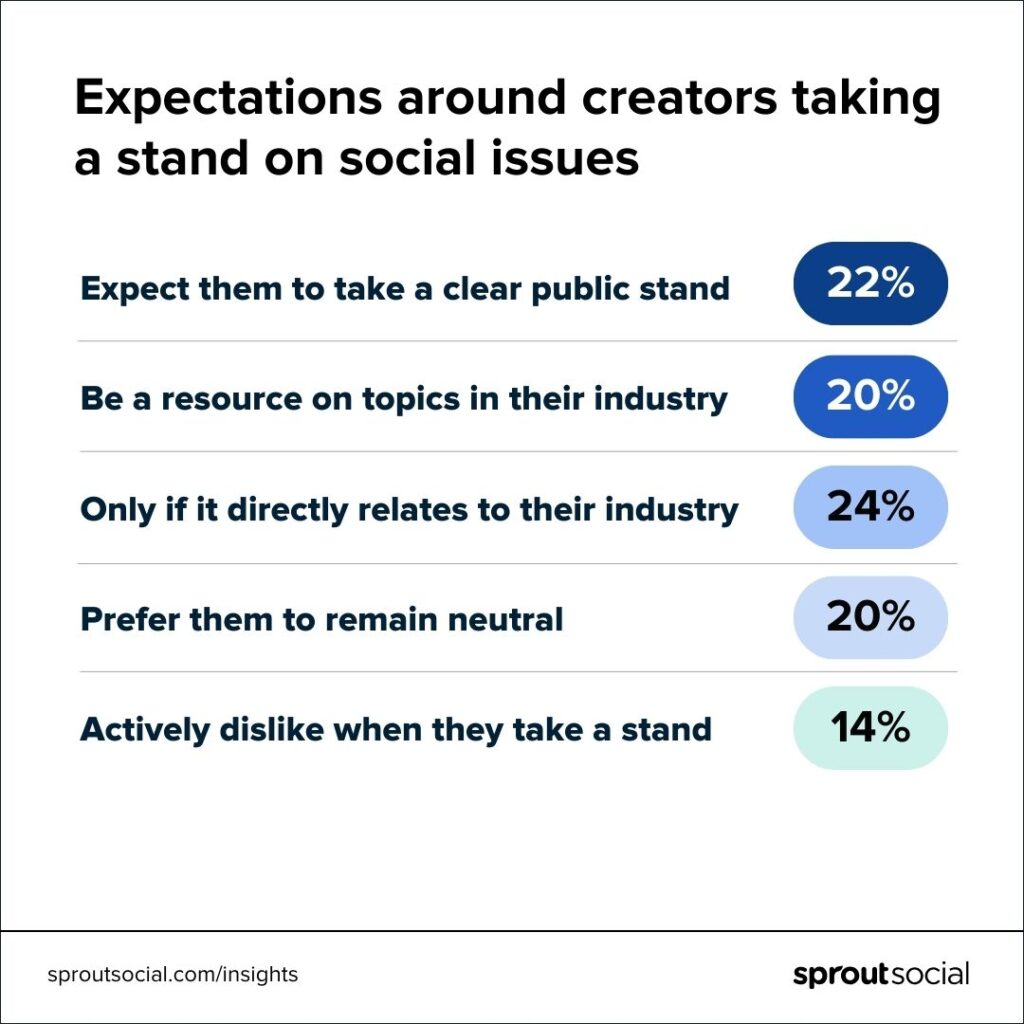
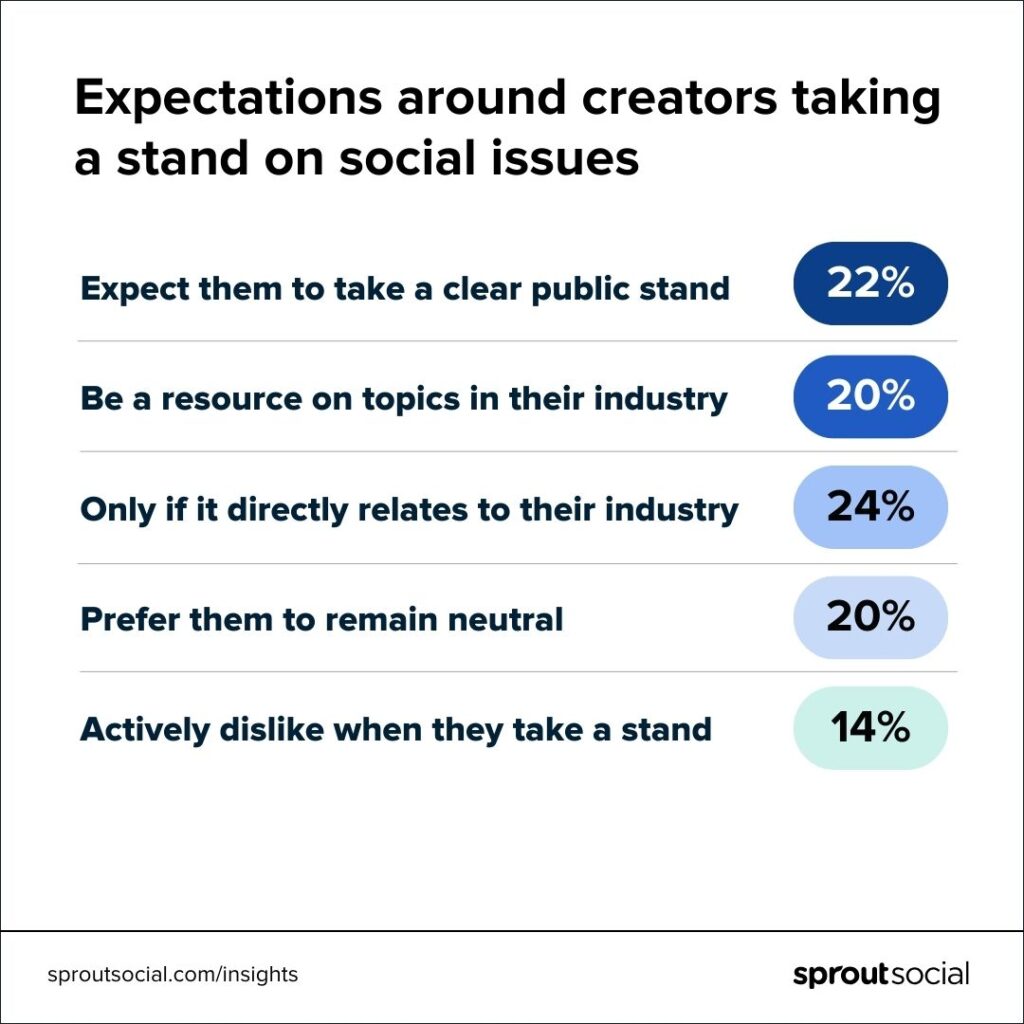
We recently asked 2,000 consumers if they expect influencers to take a stand on social issues. Almost half said they always do or want influencers to speak out if it pertains to their area of expertise and industry. Another 20% went so far as to say they wanted influencers to be a resource for grassroots activism.
As the call for influencer activism grows louder, marketers need to be prepared. People are already demanding that brands themselves take a stance on social and political issues (again). The same pressure applies to creator partnerships, too. This is a critical moment for organizations to reflect on what they stand for and where they can influence positive change long-term—while avoiding performative activism.
In this guide, we explain what influencer activism is, how it affects brand partnerships and how it will alter the future of influencer marketing.
What is influencer activism?
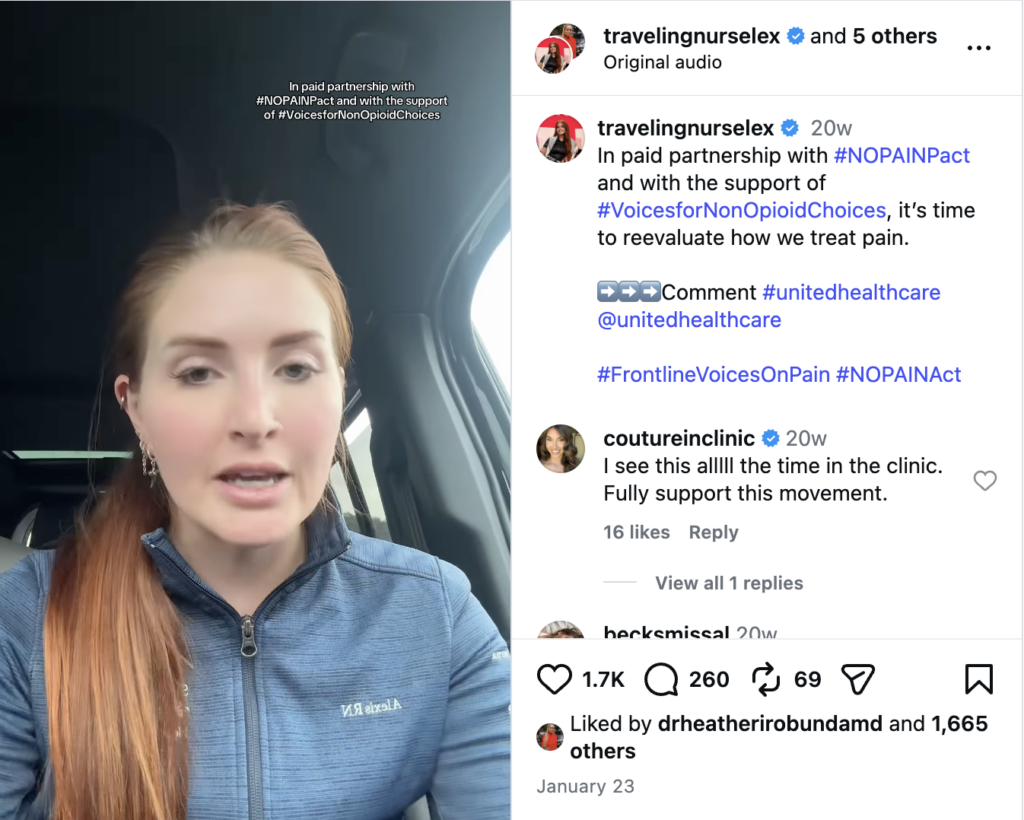
Influencer activism describes influencers and creators using social media as a tool to campaign and advocate for political, social or environmental causes. Influencer activism can include collaborations with nonprofits, and usually serves to raise awareness and mobilize action. Influencers may ask their followers to sign a petition, make a donation, participate in a protest or make lifestyle changes.
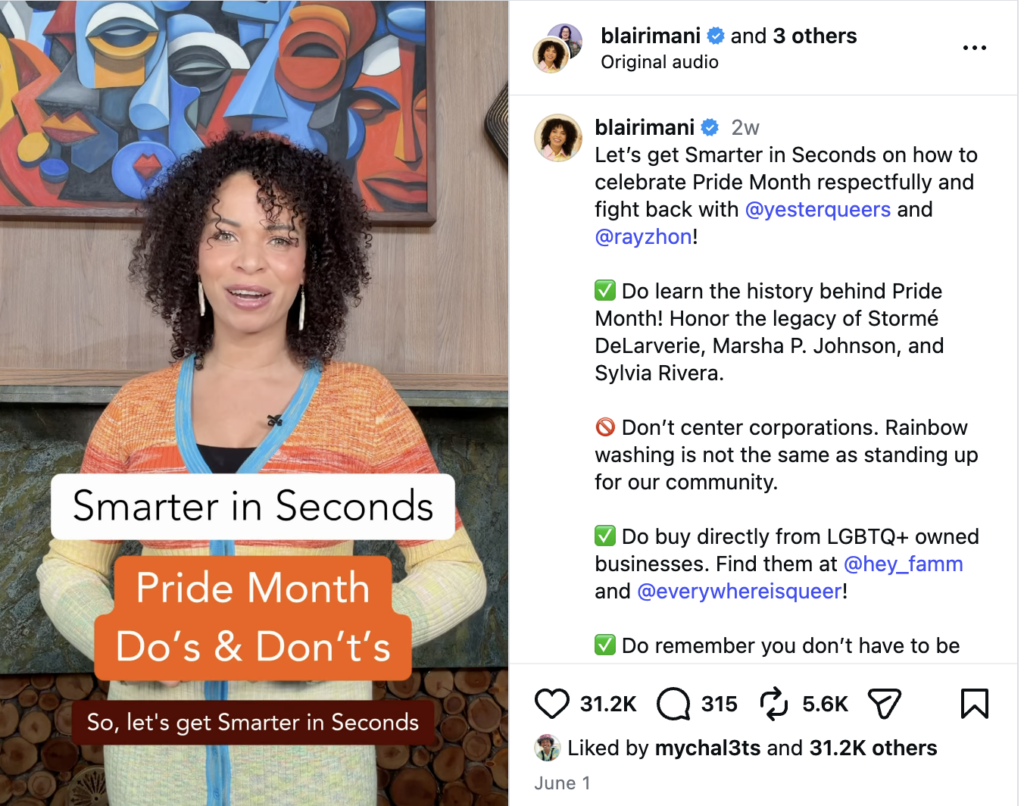
For example, Blair Imani uses her platform to educate her audience on different aspects of identity, including race, sexuality, gender, parenthood, religion and more, and how legislation and historical events influence specific communities. She provides tangible steps in each of her videos, part of her brand “Smarter in Seconds.”
While influencer activism can be very effective, it has also come under fire for being perceived as performative. “Slacktivism,” as performative activism is sometimes called, prioritizes appearances and personal branding over genuine commitment. Superficial engagement without long-term follow-through—like only posting hashtags or posting about an issue just because it’s trending—dilutes the efforts of true activists and shifts focus away from more impactful messages.
Often, influencer activism goes astray when influencers support causes with self-promotion in mind, or, more innocuously, succumb to social pressure to speak out (even if they’re ill- or under-informed).
Brand and influencer activism go hand-in-hand
Where did the demand for influencer activism come from? And why do so many consumers expect influencers to have a public point of view on timely issues?
In 2020, during the wake of the COVID-19 pandemic, the Black Lives Matter mobilization and a contentious US presidential election, brand activism emerged as a non-negotiable business strategy and exploded in the cultural zeitgeist. Brand activism—the act of a business actively advocating for or against certain issues—goes beyond traditional corporate responsibility and beckons tangible cultural change. But the surge of brands putting forth “activist” content largely backfired—many were accused of getting it wrong, overwhelming their audiences or performing to bolster the bottom line.
But now the pendulum has swung back again. Consumers are ready for a brand activism renaissance and are calling out organizations for going quiet.
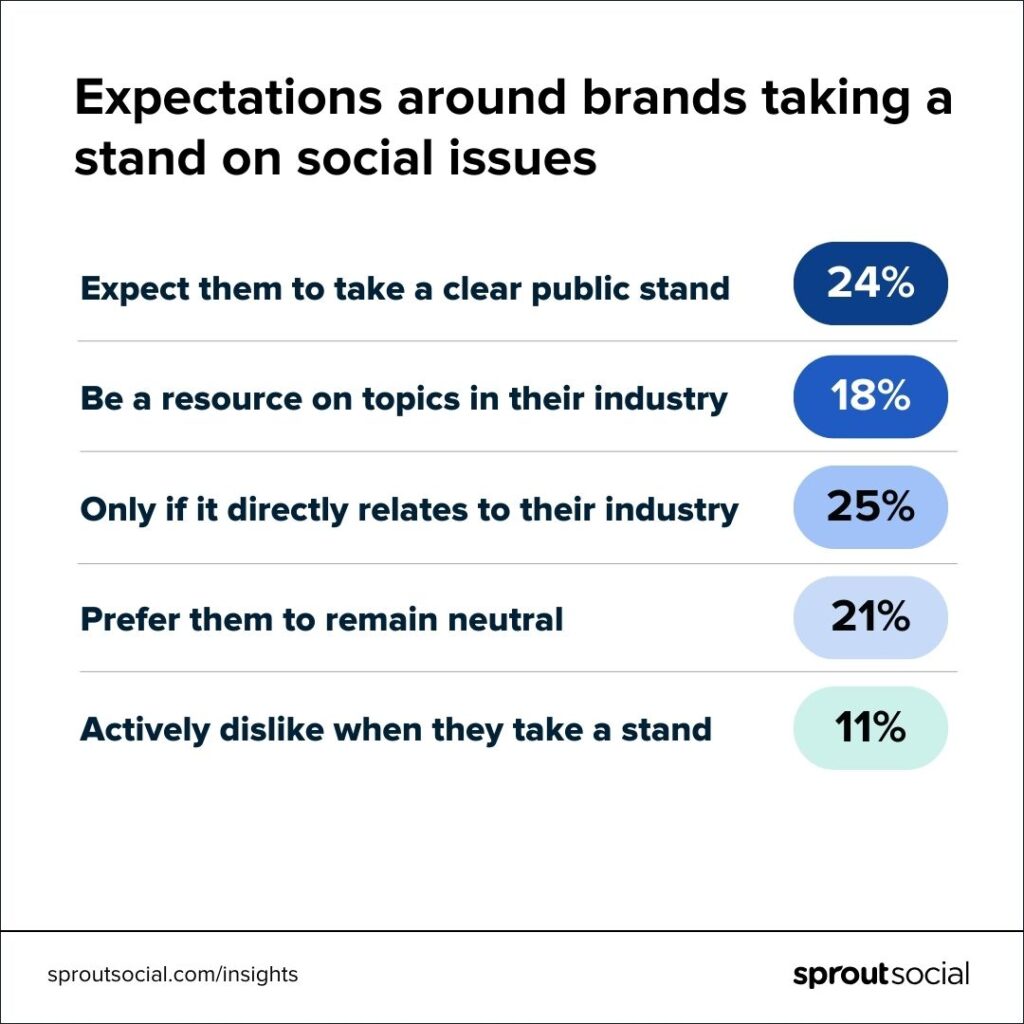
Their expectations of brands are largely on par with their expectations of influencers. The Q1 2026 Sprout Pulse Survey found that 49% of consumers want brands to take a stand on either all issues or those related to their industry. Another 18% want brands to be resources on social and political issues related to their expertise.
Likewise, influencers are being spammed with calls to speak out about nearly every current event. Including topics that they are (admittedly) not qualified to speak on. Audiences threaten to cancel or abandon them (and brands they work with) if they don’t—or if they disagree with their stance.
How influencer activism influences brand partnerships
According to the same pulse survey, 29% of consumers say they will stop buying from brands if their values clash. Another 15% said they actively buy products in support of brands who align with their political and social views. This is especially true for younger consumers, with 83% of Gen Z reporting brand values have at least some impact on their purchase decisions.
With stakes that high, brands need to be extremely careful when selecting influencers so they can meet their audience’s expectations and protect their reputation.
Identifying influencers
In the age of influencer activism, brands need to do more thorough vetting and background research to understand what causes influencers have spoken up about in the past. Finding the right influencers takes more than looking at follower count or engagement rate. It requires digging into what they’ve posted, accounts they’ve interacted with and audience reactions.
That might lead some marketers to believe it’s best to find influencers who are completely cause-agnostic. But, in reality, finding influencers whose advocacy aligns with your brand values endears you to your community and enhances your brand.
Understanding audience expectations
The ultimate barometer of what your brand should be speaking out about is audience sentiment. It’s more important than ever to know what causes customers and prospects want your brand—and the influencers you work with—to lend your platform to.
Done right, partnering with influencers can demonstrate your brand’s year-round commitment to issues that matter most to your audience. By building long-term relationships with influencers who resonate with your target market, you can deliver sustainable brand advocacy that actually makes a difference, and protect your brand health.
Take Avocado. The mattress company is “better for you and the planet,” with products made from natural and certified organic materials with transparent supply chains. Avocado has a mission to become the country’s most sustainable brand.

Influencers Avocado partners with share their passion for climate activism and sustainability. Like their partnership with creator @ReLauren, an influencer who shares actionable advice with her followers ranging from collective action—like how to contact local legislators and participate in grassroots activism—to personal decisions like eating more plant-based foods and reducing waste.
Outlining brand safety measures
Even with comprehensive vetting processes and a clear view of your audiences’ top social, political and environmental concerns, there may be additional brand safety protocols you need to follow when working with influencers in today’s climate.
The best way to find out is by meeting with your legal team and senior leadership. Get clarification on what topics are off the table. Ask questions like:
- What is our historical stance on social and political issues?
- Are there certain issues that our brand shouldn’t align with in any way? Even via influencer partnerships?
- What kinds of political statements are considered too polarizing for our audience?
- Will our brand endorse political candidates? Will we partner with influencers that do?
It’s better to seek this information out proactively than wait until a crisis is already unfolding. From there, build clear brand safety guidelines that outline what’s appropriate and what’s not.
Influencer activists are friend, not foe
There is an intense consumer demand for influencer-led activism, and it can have serious implications on your brand’s perception.
By partnering with influencers who align with your company’s values, you can strengthen your credibility, foster community and forge deeper audience connections. Carefully selecting the right influencers mitigates the risks of audience backlash, and leads to long-term loyalty and advocacy. Embracing influencer activism thoughtfully is essential for maintaining relevancy and sustainable success.
Looking for more on consumers’ evolving expectations toward influencers? Read The Influencer Marketing Report.
The post 66% of social media users expect influencers they follow to participate in activism appeared first on Sprout Social.