
Securing C-suite buy-in isn’t about passion—it’s about proof. To make your vision land, lead with the numbers.
When you take an employee advocacy program up the chain, the right employee advocacy statistics are the backbone of your pitch. Decision makers want to understand what employee advocacy is and the measurable benefits your brand will gain from it.
Below are the 2026 employee advocacy stats that grab attention across your C-suite, grouped by the outcomes leaders care about most.
The employee advocacy statistics your boss needs to see in 2026
Before you walk into the room, arm yourself with the numbers that reframe advocacy as a growth strategy, not a nice-to-have.
-
Adoption is mainstream: Two-thirds of marketers already run an advocacy program, so waiting only cedes ground to competitors.
-
Employees are a discovery engine: Consumers often find new products through employee content your brand’s own accounts can’t reach.
-
Budget multiplier: Advocacy converts a limited ad budget into millions of earned impressions by activating networks you already have.
|
Employee advocacy statistic |
What it means for your pitch |
|---|---|
|
68% of marketers already run an advocacy program |
Advocacy is a proven standard, not an experiment |
|
40% of consumers discover products through employee content monthly |
Employees drive top-of-funnel demand |
|
85% of onboarded employees actively share content on personal channels when provided with a curated tool |
Participation is a content-supply problem you can solve |
|
46% of consumers want to hear from frontline staff, compared to just 10% who want to hear from C-suite executives |
Advocacy builds trust from the bottom up |
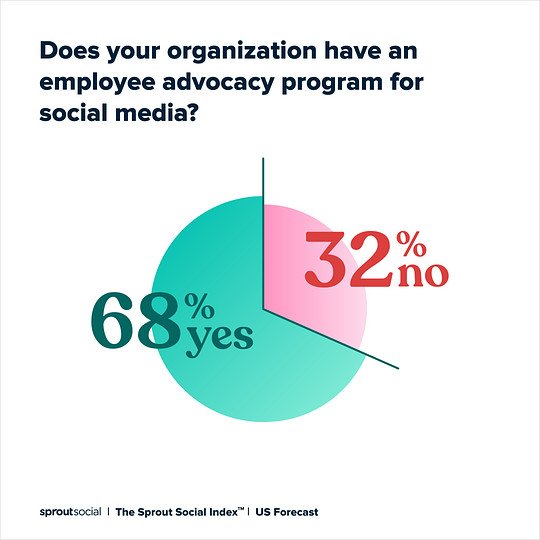
According to Sprout Social research, more than two-thirds (68%) of marketers report their organization already has an advocacy program.
Many advocacy programs start as informal side projects. Sophisticated brands formalize them through dedicated staff, tools, processes and training.
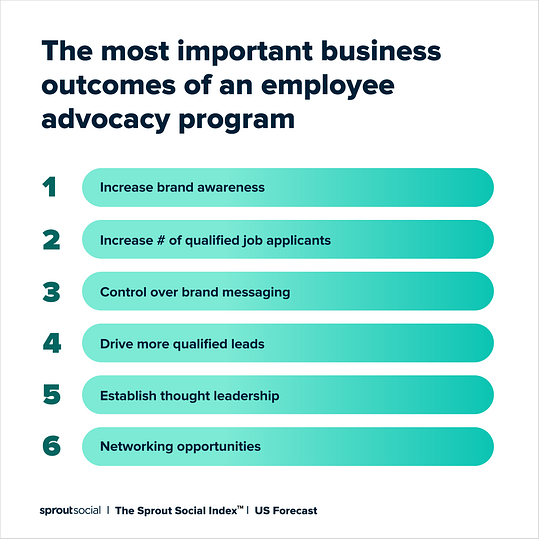
Of the 1,000+ marketers we asked, those with a program named three top objectives: increasing brand awareness, attracting qualified job applicants and controlling brand messaging. Others cited more qualified leads, thought leadership and new networking opportunities.
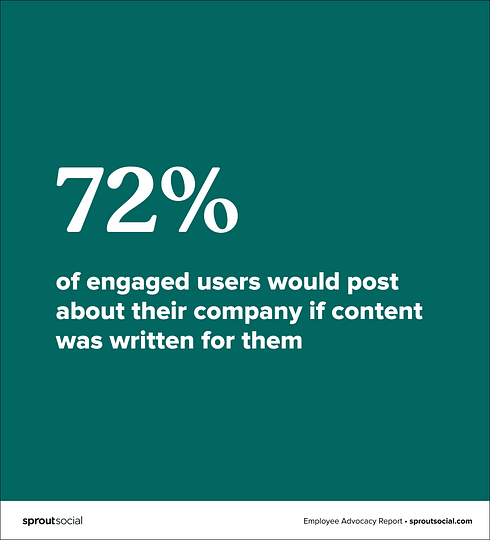
And employees want to post about their companies. According to Sprout’s Employee Advocacy Report, 72% of engaged users would post if their teams wrote the content for them.
Your C-suite pitch: Traditional social tactics are losing their edge. When resources shrink and feeds congest, an advocacy program is your strongest asset. It amplifies content, increases ROI and helps recruit top talent.
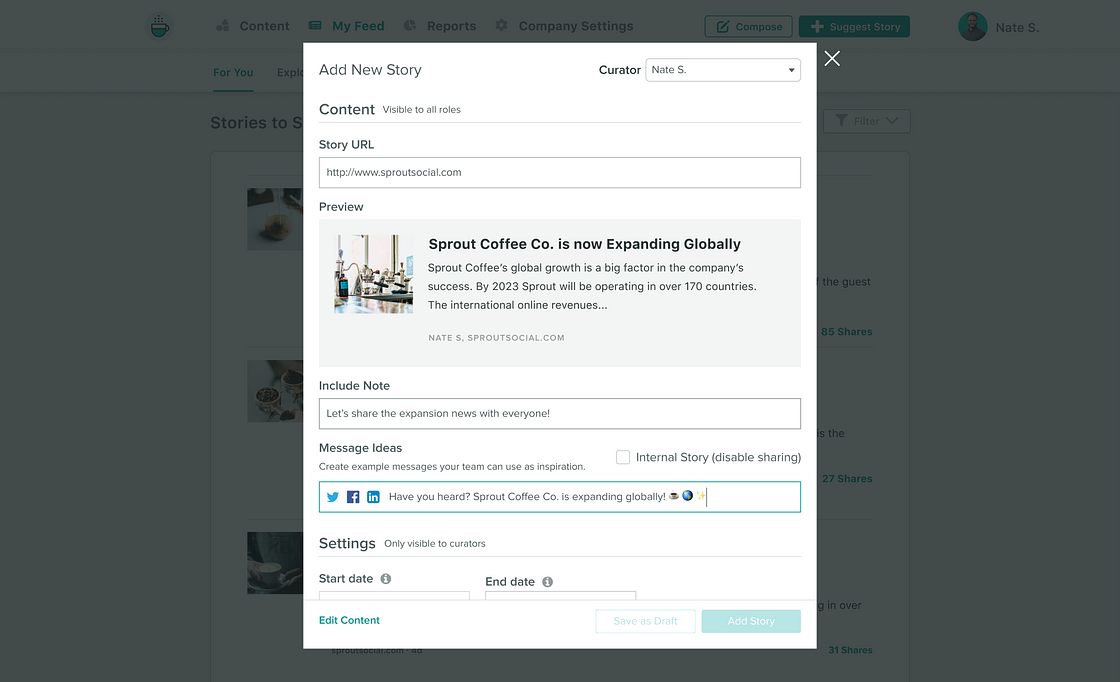
Using Sprout’s Employee Advocacy platform is the easiest way to launch a program. Your team shares pre-approved messaging from one centralized hub and curates articles in Sprout. Employees post in their own voice while staying on-brand.
The takeaway for leaders: Advocacy is a proven standard. The only decision left is how fast you formalize it.
Stats that prove employees are your most trusted voice
Your employees are the most credible voice you have, and the data backs it up. According to Sprout’s 2026 Influencer Marketing Report, 40% of consumers discover new products through employee-generated content at least once a month.
That same report found audiences see frontline employees as far more authentic than a brand’s polished main account.
Your C-suite pitch: Paid reach is increasingly expensive and increasingly ignored. Activating employees scales the one asset audiences still reward: authentic, human credibility, at no added media cost.
Stats that prove the impact of advocacy on brand amplification
Advocacy amplifies your reach far beyond what organic tactics alone can achieve.
Take IT software company Ivanti. After building a brand ambassador program with Sprout’s Advocacy platform, it grew its reach by 16 million in the first month.
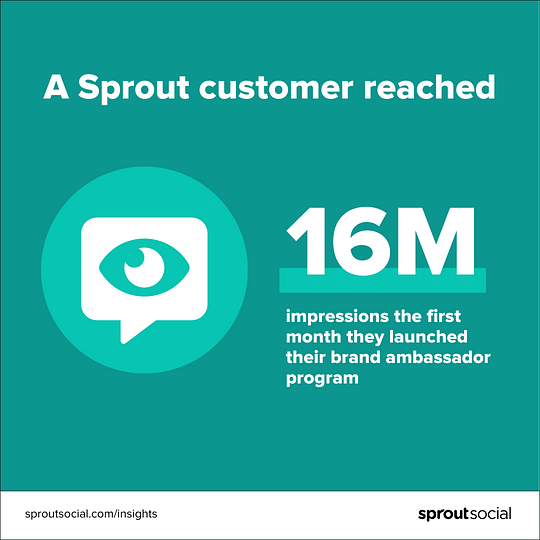
We saw the same at Sprout. Content shared through our Advocacy platform earned more than 28 million impressions in 2024.
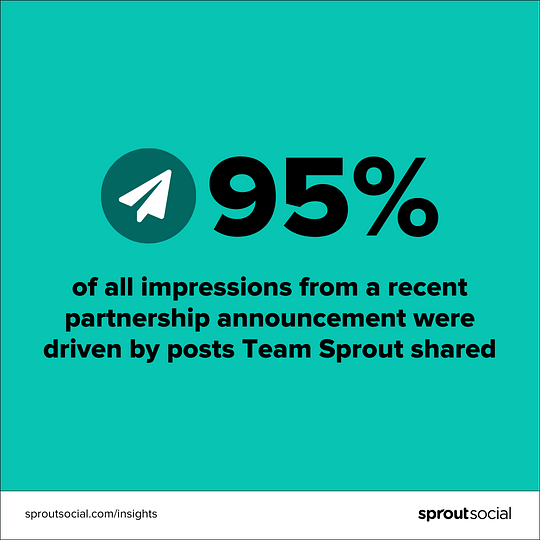
And 95% of the 740,000 impressions from our Salesforce global partnership announcement came from posts our employees shared.
Your C-suite pitch: Across industries, organic social performance has taken a hit. Tapping into employee networks is the most impactful way to amplify your best-performing content and spike impressions—without stretching your bandwidth or ad budget.
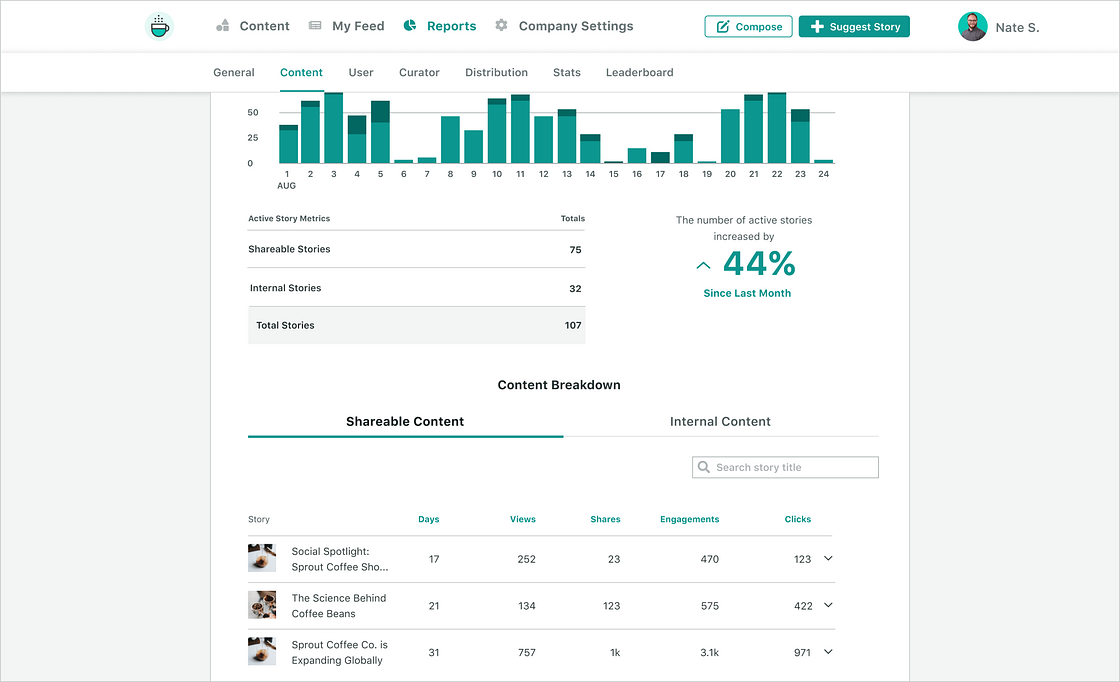
Sprout’s Advocacy platform measures shares, engagements and reach in real time, so you can see your amplification impact.
For planning, treat employee networks as a core amplification channel and budget for the reach they add, not an afterthought.
Stats that prove the impact of advocacy on revenue
Enlisting your employees as brand advocates isn’t just about awareness—it directly accelerates your bottom line and sales targets.
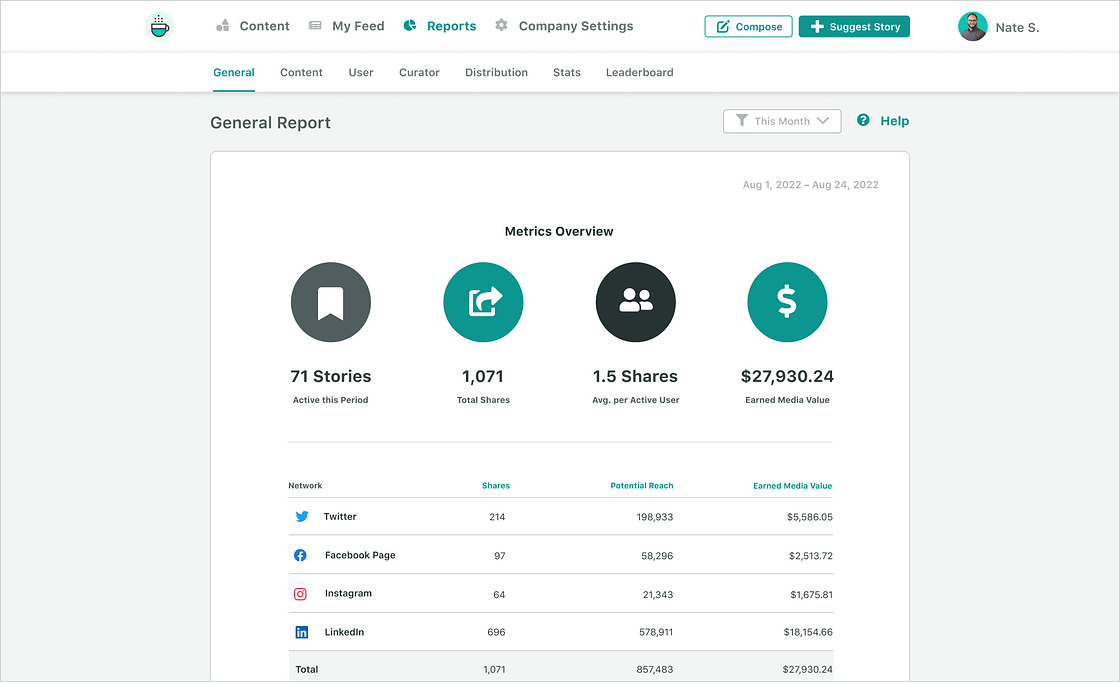
First, advocacy scales your top-performing content, generating qualified leads without draining your ad budget. Sprout customer Infor generated $100,000 in earned media value in a single month.
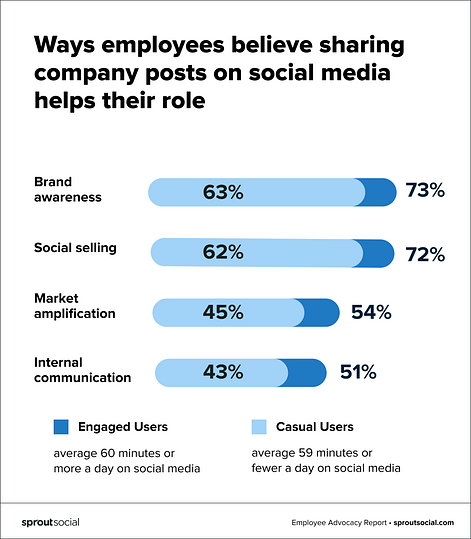
Second, sharing company content supports employees in their day-to-day work, including social selling. Sprout’s Employee Advocacy Report found 72% of engaged users say it supports their social selling. Among casual users, 62% say the same.
Empowering employees to share positions them as thought leaders and opens new business. Salespeople who share about their company are 51% more likely to reach quota, according to LinkedIn’s Social Selling Index.
Your C-suite pitch: Advocacy unlocks revenue by complementing demand generation. From earned media value to stronger sales performance, investing in an employee brand amplification strategy pays dividends.
Sprout’s Employee Advocacy reporting gives you the data to quantify your advocacy program and connect results to leads, event registrations and more.
Revenue teams should tie advocacy shares to pipeline in the CRM, then double down on the content and reps that convert.
Stats on how advocacy attracts and keeps talent
Potential new hires research your company on social, watching what current employees say about it. When employees celebrate your culture, they strengthen your employer brand and interest in your company.
Lean on that authenticity: employee posts can reach candidates that polished corporate accounts miss.
Advocacy also invites your current employees to be stewards of your brand, fostering a sense of ownership, loyalty and belonging. When employees have a stake in your company, it improves their long-term morale, engagement and retention.
Your C-suite pitch: Creating employee advocates strengthens your recruitment and retention strategies. Advocacy expands your candidate pool and generates positive social sentiment and buzz that increases your application volume.
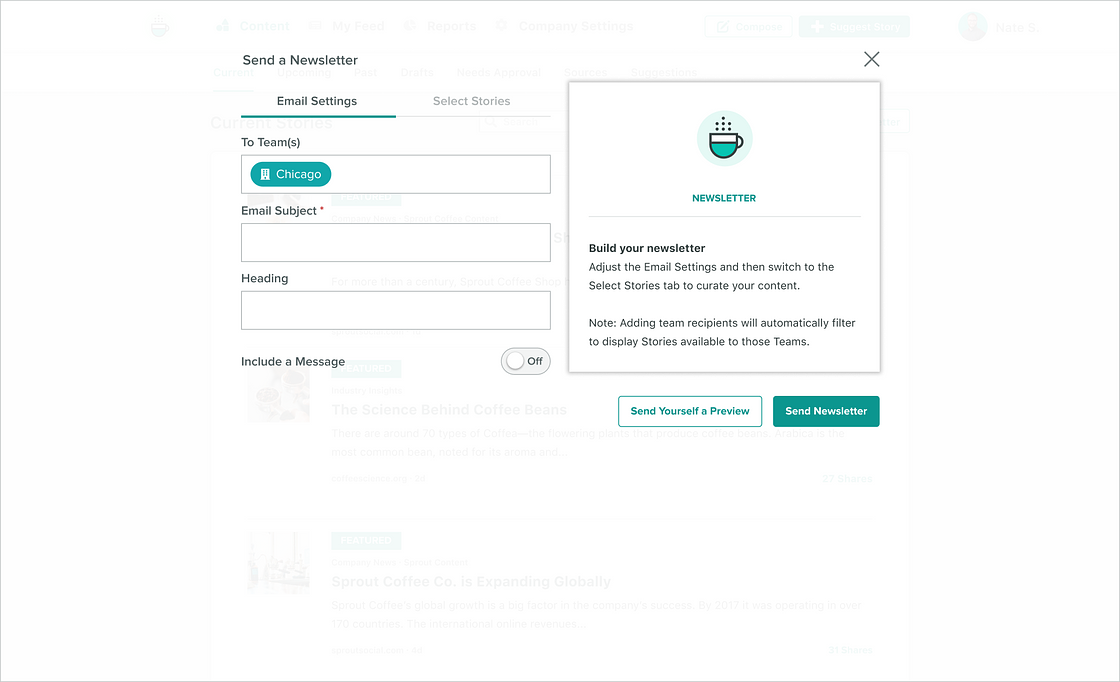
From Sprout’s platform, you can draft and send custom internal newsletters. Broadcast curated stories about open roles, company achievements and employer brand content so employees can share them from their inbox with one click.
Give recruiting a seat in your advocacy program so hiring news reaches candidates through the colleagues they already trust.
The business case for employee advocacy
Employee Advocacy by Sprout Social extends your social reach, increases brand awareness, drives sales and attracts talent. It drives these results on a platform your employees actually want to use.
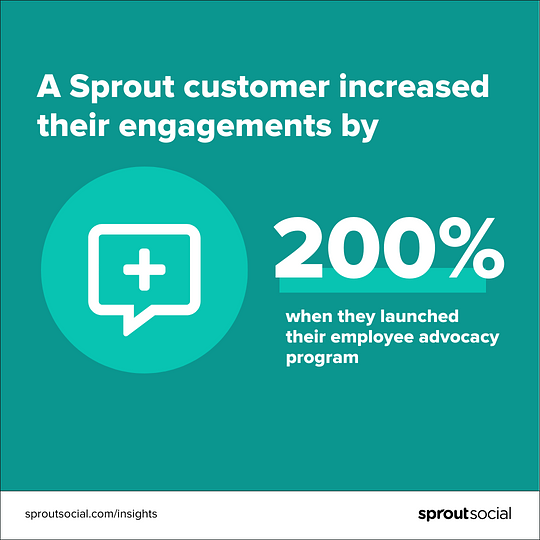
Take one Sprout customer in healthcare that increased engagements by 200% in six months after launching its program. Their employees also reported 98% satisfaction with the platform.
Prove the exact value of your program with our Employee Advocacy ROI calculator.
The bottom line: Advocacy turns your workforce into measurable reach, revenue and recruiting power that paid channels can’t match.
Ready to turn your team into your most effective marketing channel? Request a demo and see how Sprout’s Employee Advocacy platform puts these stats to work for your brand.
The post 2026 employee advocacy stats to secure C-level buy-in appeared first on Sprout Social.