Every sales opportunity represents a fresh start and a potential breakthrough. Because every deal matters, missing one could be a costly setback.
For small and medium businesses (SMBs), the opportunities that come in are a sum of everything you do — and the tools you use. According to the State of Sales report, sales reps spend 60% of their time on non-selling tasks like manual data entry, lead research, and tool-switching. That’s time your team simply can’t afford to waste.
Whether you’re a two-person startup or a growing team of 50, the right opportunity management software for small businesses gives you the visibility, focus, and speed to close more deals. Here are 10 ways it can make a real difference.
What is opportunity management software for smaller businesses?
Opportunity management software helps sales teams track and manage potential deals after a lead has been qualified. Unlike basic contact managers, it focuses on the specific steps, documents, and stakeholders required to move a deal from an initial conversation to a signed contract. Using an opportunity management tool allows sales teams to move beyond basic data storage to actively execute deals.
How is improving sales performance? Let’s dig into the ways here:
1. Full pipeline visibility at a glance
Opportunity management tools replace scattered spreadsheets with a single, live view of every deal your team is working. You can see what stage each opportunity is in, who owns it, and what needs to happen next — all without chasing down updates in Slack or email. That kind of clarity lets you make faster, smarter decisions about where to focus your energy.
2. Better sales forecasting
One of the biggest advantages of a dedicated opportunity management tool is more accurate revenue forecasting. When your pipeline data lives in one place, you can see deal volume, stage progression, and close probabilities in real time — rather than guessing based on last quarter’s spreadsheet. Sales forecasting is significantly more accurate when using a customer relationship management (CRM) platform instead of a spreadsheet.
3. Prioritization of high-value deals
Not all deals deserve equal attention, and opportunity management software helps you focus on the ones most likely to close. Lead and opportunity scoring surfaces your highest-probability deals so reps know exactly where to spend their time. This is especially valuable for SMBs where every hour of selling time matters.
- Opportunity scoring: Ranks deals based on historical data, engagement signals, and deal size so your team stays focused on what’s worth pursuing.
- Stage-based alerts: Flags deals that have gone stale or skipped a critical step, so nothing important falls off the radar.
- Competitive intel: Tracks competitor involvement in active deals so your team can adjust their approach before it’s too late.
4. Automated data entry and activity tracking
Manual data entry is one of the biggest productivity drains for small sales teams. The right opportunity management tool captures emails, calls, and meeting notes automatically — so your CRM stays clean and current without extra effort from your reps. According to the State of Sales report, 84% of sales teams are already using artificial intelligence (AI) to maximize their impact, and automated data capture is one of the most immediate wins.
Try a Sales CRM made for growing teams
Try Salesforce Suites to close more deals and win more customers, today.

5. Reduced deal slippage
Deal slippage — when a deal that looked close suddenly stalls or falls apart — is one of the most frustrating experiences in sales. Opportunity management software gives you real-time health assessments of every deal in your pipeline, flagging at-risk opportunities before they go cold. For example, AI can identify a deal that’s reached day 90 without a legal review when your typical close time is 60 days — a signal something’s wrong that’s easy to miss without the right tool.
6. Smarter collaboration across your team
When a deal involves multiple people — a sales rep, a solutions consultant, a customer success manager — it’s easy for context to get lost. A centralized opportunity management tool gives every team member instant access to the full deal history, recent communications, and next steps. The latest State of Sales states that high-performing teams are 1.3x more likely to use an all-in-one platform, and that alignment is a big reason why.
7. Upsell and cross-sell identification
Your existing customers are often your best growth opportunity — but spotting the right moment to expand a relationship takes data. Opportunity management software surfaces patterns in purchase history and engagement that signal when a customer might be ready for an upgrade or an add-on. This means bigger average deal sizes without the cost of acquiring a net-new customer.
Learn 7 ways reps can use AI to speed up sales
See real-life examples of using AI to sell, from automating prospecting to writing emails and getting real-time guidance.


8. Simplified tech stack
Sales teams at SMBs juggle an average of 8 different tools, according to our research — and 51% of sales leaders say those tech silos actively hurt their ability to use AI. An all-in-one opportunity management tool consolidates your pipeline tracking, forecasting, email, and reporting into a single platform, cutting down on context-switching and keeping your data clean. In fact, 84% of teams without an all-in-one platform plan to consolidate their tech stack this year.
9. AI-powered insights and agents
Modern opportunity management software for small business goes beyond simple deal tracking — it puts AI to work for your team. AI agents can handle repetitive tasks like updating records, summarizing meeting transcripts, and nurturing leads that haven’t been contacted yet.
- Automating data entry: Automatically update records, log calls, and add notes to keep your CRM accurate.
- Qualifying and nurturing: Identify, qualify, and nurture leads that haven’t been contacted yet.
- Summarizing deal context: Generate summaries from meeting transcripts to ensure team alignment.
- Handling sales operations: Create and update sales quotes and contracts to prevent delays.
- Scheduling: Coordinate meetings and appointments with prospects.
- Surface opportunities: Identify patterns to flag upsell and cross-sell possibilities.
10. And a new force that is bringing it all together
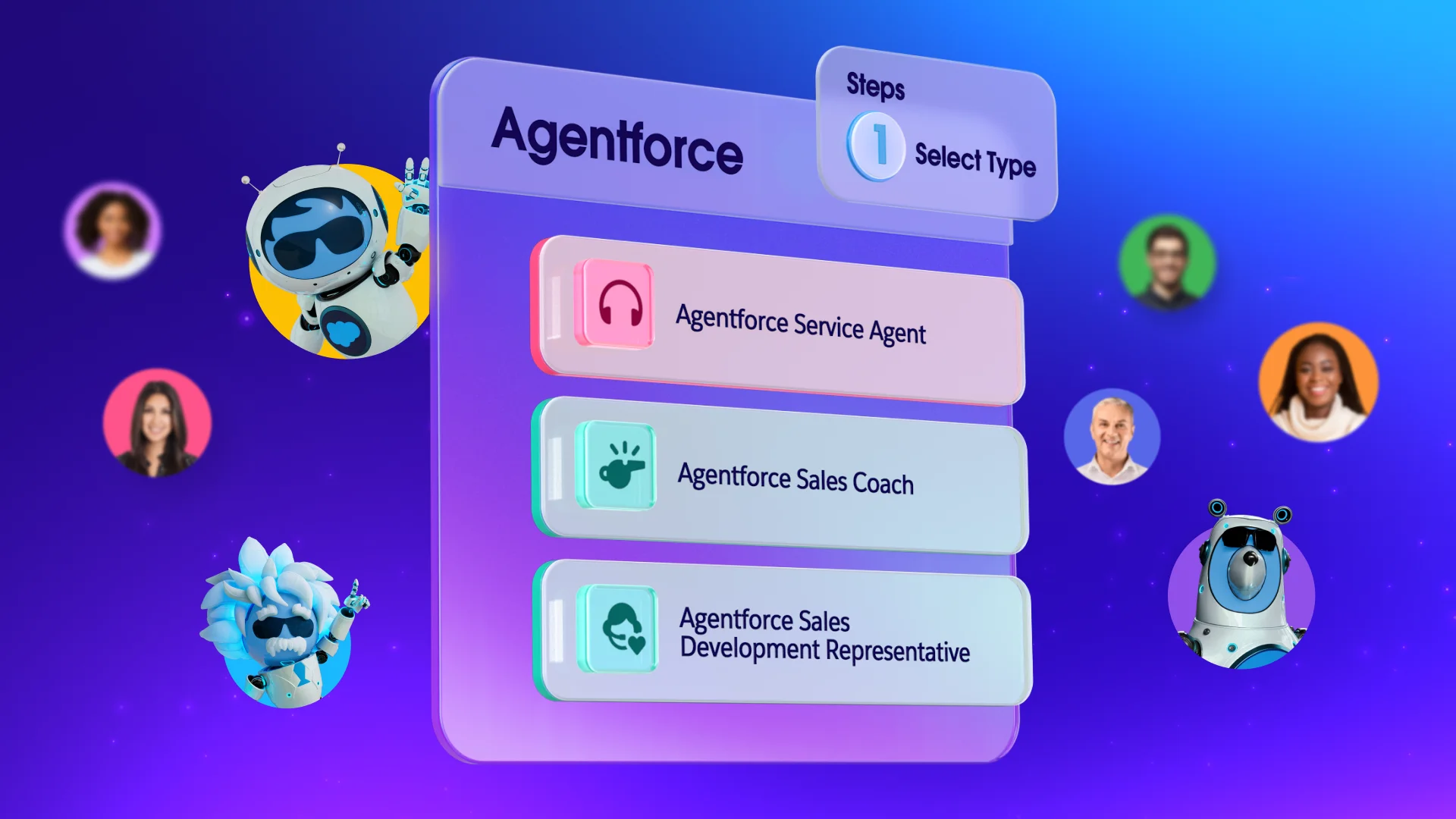
All of these benefits add up to something bigger: A sales operation that can punch above its weight. Agentforce connects your pipeline, your AI agents, and your customer data into a unified experience — so your team has everything they need to close deals faster and keep customers coming back. For SMBs that want to compete with larger players without a bloated tech stack, it’s a genuinely powerful way to work.
Ready for endless opportunities? We’ve got the right tools for the job
Opportunity management transforms sales from a scattered process into a streamlined operation. By automating tasks, providing pipeline visibility, and activating AI for smarter insights, you can focus on what truly matters: Building relationships and closing deals.
Get started with Salesforce Suites for free or activate Foundations to try out Agentforce today.
AI supported the writers and editors who created this article.
What is opportunity management software?
Opportunity management software helps sales teams track and manage potential deals after a lead has been qualified. It gives you a structured view of every stage in the buying journey, from initial interest to closed deal, so nothing slips through the cracks.
How is opportunity management different from lead management?
Lead management focuses on capturing and qualifying early-stage interest — figuring out who’s worth pursuing. Opportunity management picks up from there, focusing on the active negotiation and closing phase once a lead becomes a real business prospect.
Do small businesses really need opportunity management software?
Yes — especially if you’re growing. Once your team is managing more than a handful of active deals, spreadsheets and email threads become a liability. A dedicated opportunity management tool keeps your pipeline organized, your forecasting accurate, and your reps focused on the right deals at the right time.
How does AI improve opportunity management for small businesses?
AI can automate time-consuming tasks like data entry, lead scoring, and follow-up outreach — freeing your reps to spend more time actually selling. AI also helps with AI sales forecasting by spotting trends and risks in your pipeline that are hard to catch manually, especially as your deal volume grows.
What’s the best opportunity management software for small businesses?
The best option is one that’s easy to set up, connects to your existing tools, and scales as you grow. Salesforce Starter Suite is designed specifically for smaller teams — it includes pipeline management, contact tracking, forecasting, and built-in AI, all in one place, with no software to install.