Cloud Computing

Make security simpler: Introducing the Google Cloud recommended security checklist

A secure foundation is essential for tech innovation. As organizations embrace agentic AI, they should also continue to prioritize cloud security and risk management.   To help organizations better manage security requirements and set configurations, today we’re publishing a recommended security checklist inspired by the Minimum Viable Secure Product (MVSP) principles. These curated controls provide a […]

Make security simpler: Introducing the Google Cloud recommended security checklist Read More »

Grow your own way: Introducing native support for custom metrics in GKE

When platform engineers, AI Infrastructure leads and developers think about autoscaling workloads running on Kubernetes, their goal is straightforward: get the capacity they need, when they need it, at the best price.  However, while scaling on CPU and memory is simple enough, scaling on application signals like queue depth or active requests is not. Historically,

Grow your own way: Introducing native support for custom metrics in GKE Read More »

Look What You Made Us Patch: 2025 Zero-Days in Review

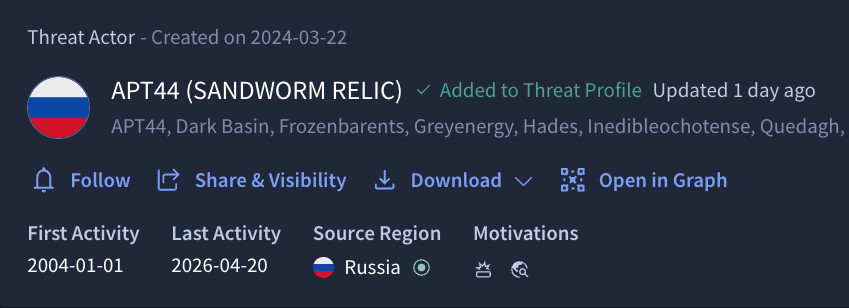
Written by: Casey Charrier, James Sadowski, Zander Work, Clement Lecigne, Benoît Sevens, Fred Plan Executive Summary Google Threat Intelligence Group (GTIG) tracked 90 zero-day vulnerabilities exploited in-the-wild in 2025. Although that volume of zero-days is lower than the record high observed in 2023 (100), it is higher than 2024’s count (78) and remained within the

Look What You Made Us Patch: 2025 Zero-Days in Review Read More »

Small models, high quality: Inside BMW Group’s experiments evaluating domain-specific language models

A car you can talk to has been a longstanding dream, whether as the basis for television shows or more recent smartphone integrations.  One way of achieving better, more natural voice commands is by incorporating AI foundation models into vehicle systems, which offer more intelligence than traditional voice commands. AI foundation models can connect everyday

Small models, high quality: Inside BMW Group’s experiments evaluating domain-specific language models Read More »

H4D VMs, now GA, deliver exceptional performance and scaling for HPC workloads

Today, we’re announcing  the general availability of H4D VMs, our latest high performance computing (HPC)-optimized VM, powered by the 5th Generation AMD EPYC™ processors. H4D VMs deliver exceptional performance, scalability, and value for industries like manufacturing, health care and life sciences, weather forecasting, and electronic design automation (EDA). H4D supports orchestration via Cluster Toolkit with

H4D VMs, now GA, deliver exceptional performance and scaling for HPC workloads Read More »

Scaling the autonomous network: Introducing the Data Steward and Core Network Agents

Last year, Google Cloud unveiled the Autonomous Network Operations framework, a comprehensive blueprint designed to help Communication Service Providers (CSPs) transition from manual management to zero-touch operations. As part of that launch, we introduced a RAN AI agent as a Proof-of-Value (PoV) asset, demonstrating how generative AI could autonomously optimize radio access networks (RAN). Today,

Scaling the autonomous network: Introducing the Data Steward and Core Network Agents Read More »

The rise of the autonomous network: How GraphML is redefining telecom operations

The complexity of modern telecommunications is exploding. Communication Service Providers (CSPs) are no longer managing static, isolated networks; they are orchestrating massive, multi-layer ecosystems that span 5G radio access, transport fiber, edge compute, and centralized cloud cores. To manage this complexity, CSPs are building autonomous networks — self-managing telecommunications networks that use AI, machine learning,

The rise of the autonomous network: How GraphML is redefining telecom operations Read More »

The AI-native core: Highly resilient telco architecture using Google Kubernetes Engine

The telecommunications industry has reached a critical tipping point. Traditional, on-premises-heavy data center models are struggling under the weight of escalating infrastructure costs and an under utilization due to availability and compliance requirements. But the AI era demands exponential scale and beyond-nines reliability. The question for operators is no longer if they should modernize, but

The AI-native core: Highly resilient telco architecture using Google Kubernetes Engine Read More »