Cloud Computing

Integrating AWS with .NET Aspire

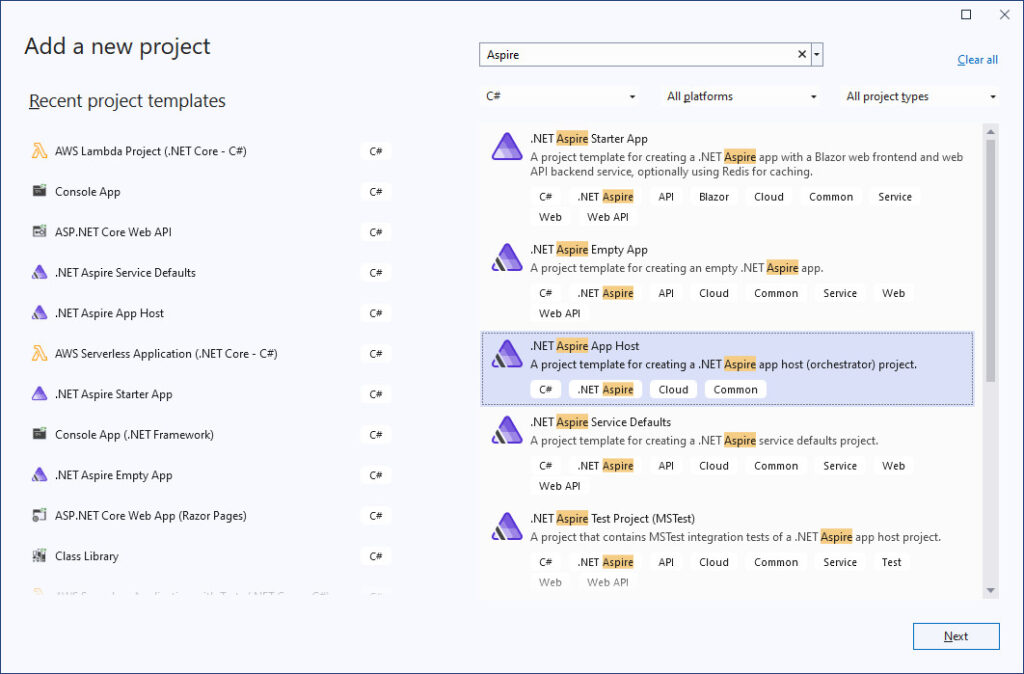
.NET Aspire is a new way of building cloud-ready applications. In particular, it provides an orchestration for local environments in which to run, connect, and debug the components of distributed applications. Those components can be .NET projects, databases, containers, or executables. .NET Aspire is designed to have integrations with common components used in distributed applications. […]

Integrating AWS with .NET Aspire Read More »

Cybercrime: A Multifaceted National Security Threat

Executive Summary Cybercrime makes up a majority of the malicious activity online and occupies the majority of defenders’ resources. In 2024, Mandiant Consulting responded to almost four times more intrusions conducted by financially motivated actors than state-backed intrusions. Despite this overwhelming volume, cybercrime receives much less attention from national security practitioners than the threat from

Cybercrime: A Multifaceted National Security Threat Read More »

Create a serverless custom retry mechanism for stateless queue consumers

Serverless queue processors like AWS Lambda often exist in architectures where they pull messages from queues such as Amazon Simple Queue Service (Amazon SQS) and interact with downstream services or external APIs in a distributed architecture. Robust retry approaches are necessary to provide reliable message processing due to the susceptibility of these downstream services to

Create a serverless custom retry mechanism for stateless queue consumers Read More »

Balance of power: A full-stack approach to power and thermal fluctuations in ML infrastructure

The recent explosion of machine learning (ML) applications has created unprecedented demand for power delivery in the data center infrastructure that underpins those applications. Unlike server clusters in the traditional data center, where tens of thousands of workloads coexist with uncorrelated power profiles, large-scale batch-synchronized ML training workloads exhibit substantially different power usage patterns. Under

Balance of power: A full-stack approach to power and thermal fluctuations in ML infrastructure Read More »

Updating AWS SDK defaults – AWS STS service endpoint and Retry Strategy

AWS Software Development Kits (SDKs) and Command Line Interfaces (CLIs) are bundled with a default configuration that is carefully designed to optimize availability and reliability. Two such settings are the AWS Security Token Service (STS) endpoint and the default retry strategy. To improve the default posture for AWS customers, we will update these two defaults on

Updating AWS SDK defaults – AWS STS service endpoint and Retry Strategy Read More »

5 ways Google Cloud can help you minimize credential theft risk

Threat actors who target cloud environments are increasingly focusing on exploiting compromised cloud identities. A compromise of human or non-human identities can lead to increased risks, including cloud resource abuse and sensitive data exfiltration. These risks are exacerbated by the sheer number of identities in most organizations; as they grow, the attack surface they represent

5 ways Google Cloud can help you minimize credential theft risk Read More »

Why build your own vector DB? To process 25,000 images per second

Ben and Ryan chat with Babak Behzad, senior engineering manager at Verkada, about running a pipeline that vectorizes 25,000 images per second into a custom-built vector database. They discuss whether the speed is due to technical brains or brawn, the benefits of processing on device vs. off, and the importance of privacy when using image

Why build your own vector DB? To process 25,000 images per second Read More »