Cloud Computing

Spanner’s enduring impact: Celebrating the 2025 ACM SIGMOD Systems Award

Earlier this year, the Association for Computing Machinery’s Special Interest Group on Management of Data (ACM SIGMOD) announced that Spanner, Google’s globally distributed database, was awarded the 2025 SIGMOD Systems Award. The SIGMOD Systems Award specifically honors systems whose technical contributions have profoundly impacted the theory or practice of large-scale data management. On behalf of […]

Spanner’s enduring impact: Celebrating the 2025 ACM SIGMOD Systems Award Read More »

Gemini momentum continues with launch of 2.5 Flash-Lite and general availability of 2.5 Flash and Pro on Vertex AI

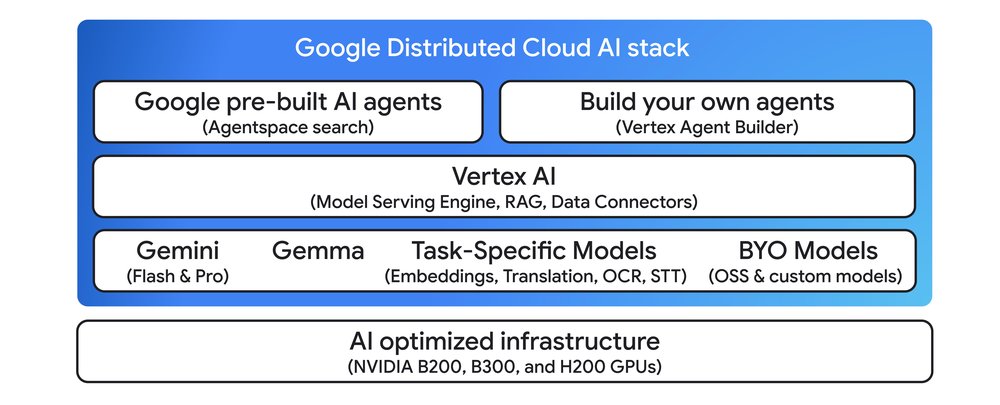
The momentum of the Gemini 2.5 era continues to build. Following our recent announcements, we’re empowering enterprise builders and developers with even greater access to the intelligence, and flexibility of our most capable models yet, directly within Vertex AI, our unified platform for enterprise-scale AI development. The significant updates announced today are designed to help

Gemini momentum continues with launch of 2.5 Flash-Lite and general availability of 2.5 Flash and Pro on Vertex AI Read More »

Build and Deploy a Remote MCP Server to Google Cloud Run in Under 10 Minutes

Integrating context from tools and data sources into LLMs can be challenging, which impacts ease-of-use in the development of AI agents. To address this challenge, Anthropic introduced the Model Context Protocol (MCP), which standardizes how applications provide context to LLMs. Imagine you want to build an MCP server for your API to make it available

Build and Deploy a Remote MCP Server to Google Cloud Run in Under 10 Minutes Read More »

Build a multi-agent KYC workflow in three steps using Google’s Agent Development Kit and Gemini

Know Your Customer (KYC) processes are foundational to any Financial Services Institution’s (FSI) regulatory compliance practices and risk mitigation strategies. KYC is how financial institutions verify the identity of their customers and assess associated risks. But as customers expect instant approvals, FSIs face pressure to streamline their manual, time-consuming and error-prone KYC processes.  The good

Build a multi-agent KYC workflow in three steps using Google’s Agent Development Kit and Gemini Read More »

C4D now GA: up to 80% higher performance for your business critical workloads

We’re excited to announce the general availability of our next-generation C4D virtual machine family. Powered by 5th Gen AMD EPYC processors (Turin) paired with Google Titanium’s latest advancements, C4D provides customers with meaningful performance improvements — up to 80% higher throughput for web serving and 30% better performance for general computing workloads compared to the

C4D now GA: up to 80% higher performance for your business critical workloads Read More »

Simplify your multi-cloud strategy with Cloud Location Finder, now in preview

As cloud environments expand beyond traditional architectures to include multiple clouds, managing your infrastructure effectively becomes more complex. Imagine easily accessing consistent and up-to-date location information across different cloud providers, so your multi-cloud applications are designed and optimized with performance, security, and regulatory compliance in mind. Today, we are making this a reality with Cloud

Simplify your multi-cloud strategy with Cloud Location Finder, now in preview Read More »

How Google Cloud is securing open-source credentials at scale

Credentials are an essential part of modern software development and deployment, granting bearers privileged access to systems, applications, and data. However, credential-related vulnerabilities remain the predominant entry point exploited by threat actors in the cloud. Stolen credentials “are now the second-highest initial infection vector, making up 16% of our investigations,” said Jurgen Kutscher, vice-president, Mandiant

How Google Cloud is securing open-source credentials at scale Read More »

Save early and often with multi-tier checkpointing to optimize large AI training jobs

As foundation model training infrastructure scales to tens of thousands of accelerators, efficient utilization of those high-value resources becomes paramount. In particular, as the cluster gets larger, hardware failures become more frequent (~ few hours) and recovery from previously saved checkpoints becomes slower (up to 30 minutes), significantly slowing down training progress. A checkpoint represents

Save early and often with multi-tier checkpointing to optimize large AI training jobs Read More »

How good is your AI? Gen AI evaluation at every stage, explained

As AI moves from promising experiments to landing core business impact, the most critical question is no longer “What can it do?” but “How well does it do it?”.  Ensuring the quality, reliability, and safety of your AI applications is a strategic imperative. To guide you, evaluation must be your North Star—a constant process that

How good is your AI? Gen AI evaluation at every stage, explained Read More »