AI

Build agentic creative workflows with Amazon Quick and fal

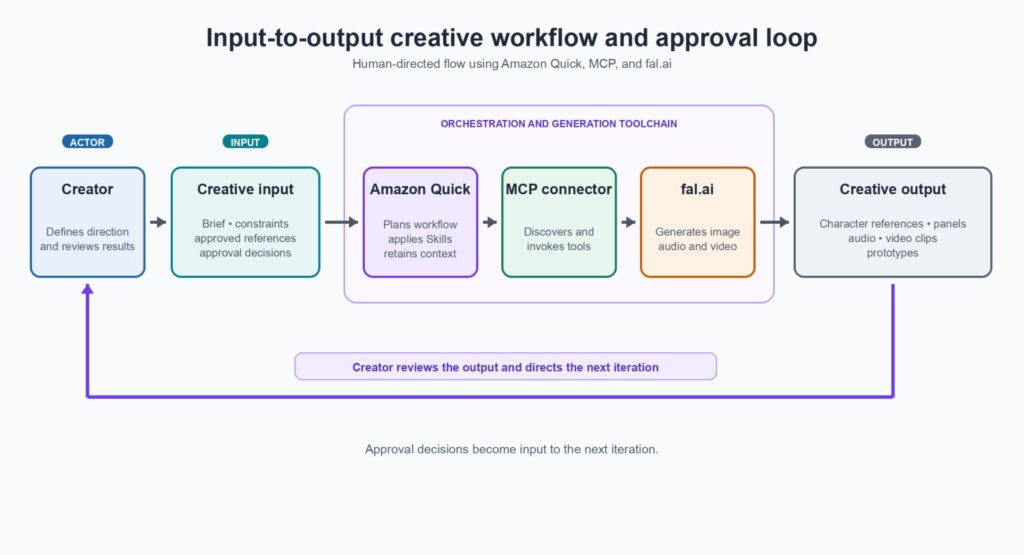
Creative teams face growing demand for more assets, formats, and revisions, while their scripts, references, models, and outputs often remain fragmented across tools. Creators must repeatedly transfer context and assemble results manually. With 78% of creative leaders saying demand exceeds their teams’ capacity, faster generation alone does not solve the underlying workflow problem. To address […]

Build agentic creative workflows with Amazon Quick and fal Read More »

Looking beyond natural sequences

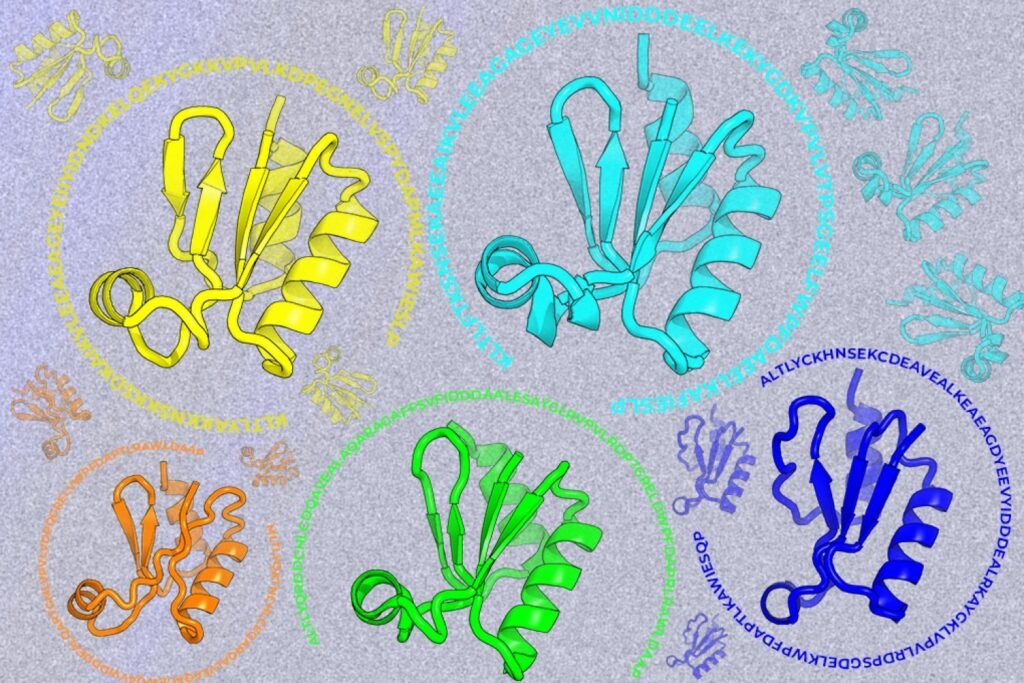
A protein’s function is determined by its structure, and structure — the way a protein folds — is determined by its sequence of amino acids, the building blocks of proteins.  Many methods for designing novel proteins, including examples that could bind to a disease-causing molecule in our cells, involve a two-step process: The structure comes

Looking beyond natural sequences Read More »

Introducing India cross-Region inference for OpenAI GPT-5.6 models on Amazon Bedrock

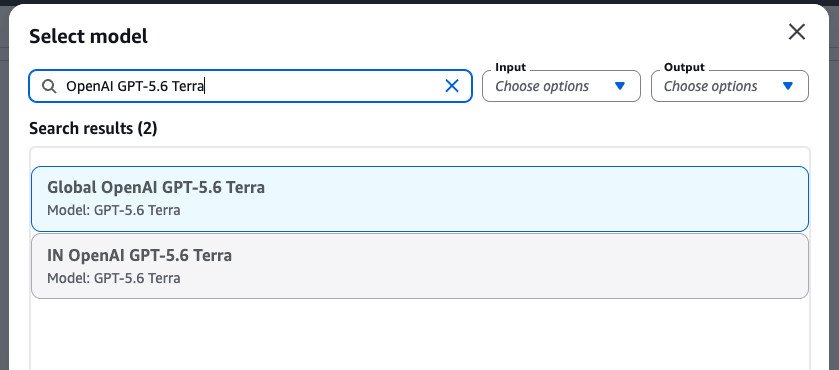
Amazon Bedrock now supports the OpenAI GPT-5.6 models, Terra and Luna, in India, with India geographic cross-Region inference. If you have local data processing requirements in India, including in financial services, healthcare, and the public sector, you can now use these OpenAI models at scale. Amazon Bedrock processes inference requests and data within India. Both

Introducing India cross-Region inference for OpenAI GPT-5.6 models on Amazon Bedrock Read More »

Deepgram deepens Amazon SageMaker AI observability with Enhanced Metrics

Self-hosted speech AI has historically carried an observability trade-off. The service can tell you an endpoint is up and how many requests it served. The questions that actually drive capacity planning and cost management stay locked inside the vendor’s container: what you are billed for, which features your traffic uses, and what the inference engine

Deepgram deepens Amazon SageMaker AI observability with Enhanced Metrics Read More »

Reduce ASR inference costs by 75% with NVIDIA MPS on Amazon EC2

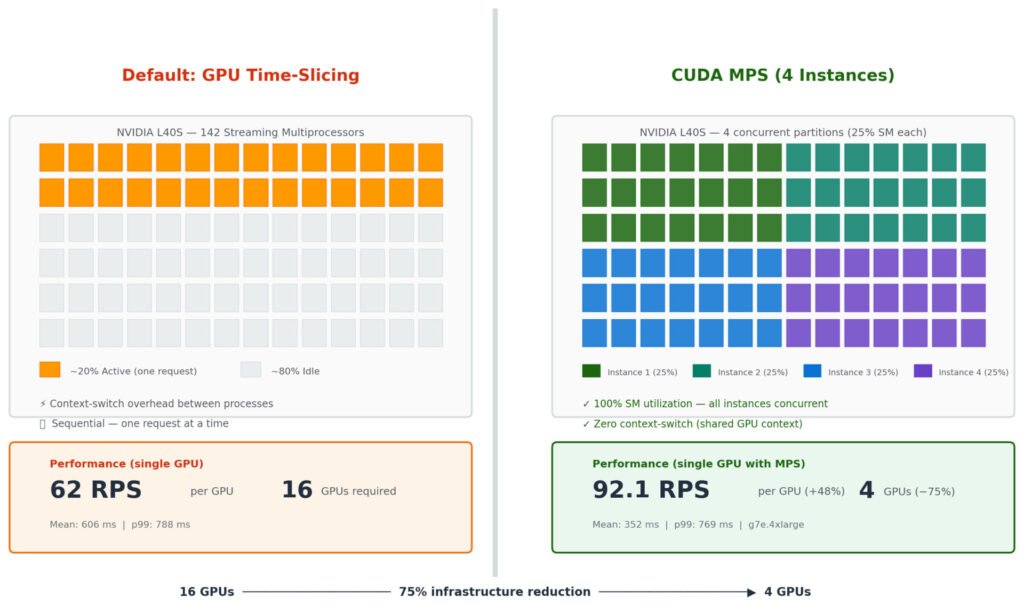
This post is a collaboration between AWS, NVIDIA and Heidi. Reducing automatic speech recognition (ASR) inference costs on Amazon Elastic Compute Cloud (Amazon EC2) becomes critical when GPU utilization per request is low but latency requirements are strict. A single ASR inference request typically uses only 15–20 percent of a GPU’s compute capacity, yet the default

Reduce ASR inference costs by 75% with NVIDIA MPS on Amazon EC2 Read More »