Can AI Avoid the Enshittification Trap?
Cory Doctorow’s theory of “enshittification” explains how tech platforms rot from within. As AI grows more profitable—and powerful—it risks the same fate.
Can AI Avoid the Enshittification Trap? Read More »
Cory Doctorow’s theory of “enshittification” explains how tech platforms rot from within. As AI grows more profitable—and powerful—it risks the same fate.
Can AI Avoid the Enshittification Trap? Read More »
Many will assume that OpenAI’s Sora app represents a new era of social media. But that’s wrong—all it does is reanimate our current one.
The Blurred Truths of Sora Read More »
ByteDance is paying for ads and partnering with influencers to promote its AI chatbot app Cici in countries like the UK, Mexico, and Indonesia.
ByteDance’s Other AI Chatbot Is Quietly Gaining Traction Around the World Read More »
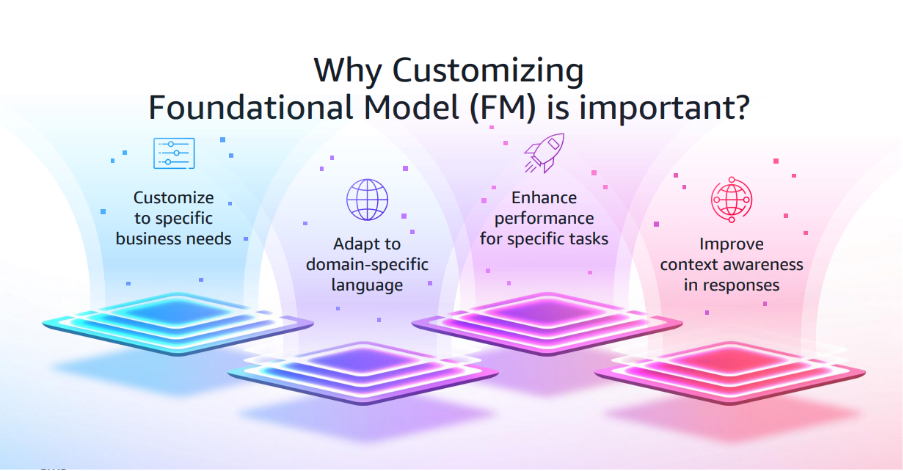
Organizations often face challenges when implementing single-shot fine-tuning approaches for their generative AI models. The single-shot fine-tuning method involves selecting training data, configuring hyperparameters, and hoping the results meet expectations without the ability to make incremental adjustments. Single-shot fine-tuning frequently leads to suboptimal results and requires starting the entire process from scratch when improvements are
Iterative fine-tuning on Amazon Bedrock for strategic model improvement Read More »
Artificial Intelligence (AI) is transforming the quick-service restaurant industry, particularly in drive-thru operations where efficiency and customer satisfaction intersect. Traditional systems create significant obstacles in service delivery, from staffing limitations and order accuracy issues to inconsistent customer experiences across locations. These challenges, combined with rising labor costs and demand fluctuations, have pushed the industry to
Voice AI-powered drive-thru ordering with Amazon Nova Sonic and dynamic menu displays Read More »
Multimodal fine-tuning represents a powerful approach for customizing vision large language models (LLMs) to excel at specific tasks that involve both visual and textual information. Although base multimodal models offer impressive general capabilities, they often fall short when faced with specialized visual tasks, domain-specific content, or output formatting requirements. Fine-tuning addresses these limitations by adapting
Niantic is giving its cute AR cartoon companions a voice that will let them guide you around in the real world and point out interesting facts. The feature is being demo’d first in Snap Spectacles.
Niantic’s Peridot, the Augmented Reality Alien Dog, Is Now a Talking Tour Guide Read More »
An AI chatbot developed by TikTok’s parent company, ByteDance, is now more popular than DeepSeek. The feat proves that user-friendly design often matters more than having the most advanced AI model.
How ByteDance Made China’s Most Popular AI Chatbot Read More »
All Windows 11 users will soon be able to talk to the Copilot AI assistant more easily via voice, and Copilot Vision can understand the context of your screen.
All Windows 11 PCs Will Get These Advanced Copilot AI Features Read More »
Say a person takes their French Bulldog, Bowser, to the dog park. Identifying Bowser as he plays among the other canines is easy for the dog-owner to do while onsite. But if someone wants to use a generative AI model like GPT-5 to monitor their pet while they are at work, the model could fail
Method teaches generative AI models to locate personalized objects Read More »